
The most fascinating story you’ll ever read isn’t found in a fiction novel it’s in the mirror. It’s yours. The idea of writing an autobiography can feel intimidating, something reserved for geniuses, world-class artists, or historical figures. But the truth is, every life with its highs and lows, its silences and its shouts is an epic worthy of being told.
This article isn’t just a cold list of definitions. It’s an invitation to a journey. Throughout these pages, we will break down the anatomy of an autobiography, explore practical examples for different purposes, and give you the tools you need to write the story that beats inside of you.
What is an Autobiography? The Foundation of Your Story
An autobiography is a fundamental narrative genre where the author and the protagonist are the same person. It represents a profound act of introspection: a voluntary journey through memories that allows us to organize, understand, and ultimately make sense of the events that have shaped our existence.
Unlike a simple dry chronicle of facts, an autobiography is inherently soaked in the author’s subjectivity. In these pages, the “what happened” takes a backseat to the “how it felt.” It is the author’s emotional truth that guides the pen.
Fundamental Distinctions of the Genre
To better understand the nature of an autobiography, it helps to distinguish it from other genres it’s often confused with. While they share the raw material of human life, their approaches and purposes vary considerably:
The Author
While in an autobiography or a memoir the author is the protagonist narrating their own experience, in a biography, a third party (a historian, journalist, or researcher) is responsible for telling someone else’s life.
Scope and Focus
An autobiography generally seeks to cover the full arc of the author’s life, from their origins to the present. Conversely, memoirs usually focus on specific periods, key events, or particular themes that marked a milestone, without needing to be a total chronological account.
The Quest for Objectivity
A biography tries to maintain a standard of objectivity, relying on documents and external sources. An autobiography and a memoir, however, embrace subjectivity and the personal. They don’t look for the “absolute truth” of data, but the authenticity of emotion and individual perception.
The Purpose of the Narrative
The ultimate goal of an autobiography is to make sense of one’s own life an exercise in self-discovery. Memoirs aim to share deep reflections on crucial moments, while a biography fulfills a documentary function to preserve a third party’s legacy for history.
The Art of Remembering
Writing an autobiography is like putting together a puzzle with scattered pieces of memory. In this process, you’ll discover that some pieces are clear and bright, easy to place; others, however, might be dusty or seem hard to fit into your current narrative.
The true art doesn’t lie simply in accumulating memories, but in deciding which pieces to use and in what strategic order to place them so the reader can see the full picture of who you are today.
The Structure of an Autobiography: The Three Essential Parts
While there are no fixed rules, most autobiographies follow a narrative thread with three key parts. Understanding this structure makes the writing process easier and ensures the story has a logical and emotional flow.
The Introduction: The First Step in the Journey
The beginning of an autobiography is crucial. It doesn’t just introduce the author; it sets the tone and purpose of the story. This is where you answer the question: What goes into an autobiography’s introduction? and establish your timeline.
- The Origin: Date and place of birth are presented.
- The Context: Describes the family, cultural, and social environment that marked your childhood.
- The Purpose: Explains the “why” behind the autobiography. Is it a legacy for your children? A way to process the past?
The Development: Building the Path
This is the most extensive and deepest part. The development is the heart of the story, where the most significant events are woven together. Here, you define the shape of your narrative.
- Chronology: You can follow a timeline from childhood to the present or jump between eras for narrative effect.
- Turning Points: Details the crucial moments that molded your personality: a failure at school, first love, a move, the loss of a loved one.
- Reflections: Invites the reader into the author’s mind, sharing thoughts, fears, and joys.
The Conclusion: Reaching the Harbor
The conclusion isn’t just the end of the story; it’s the closing of a cycle. Here is where you offer a final reflection.
- Legacy and Learning: Summarizes the journey and shares the life lessons learned.
- Looking Forward: Can end with a message of hope, a new beginning, or an open-ended question that invites reflection.
35 Practical Examples of Autobiographies: Templates and Models to Inspire You
This section is the crown jewel of our guide. Beyond literary excerpts, we have created functional models you can adapt for different purposes, outperforming any other resource online.
Short and Personal Examples
Short Autobiography
“I was born in a small mountain town where time seemed to move slower. At eighteen, the hum of the big city called my name. I learned to find beauty in chaos and face the fear of failure. Today, the path isn’t fully mapped out, but every step is a new chance to keep writing this story of discovery, resilience, and a love for life’s small details.”
Artist’s Autobiography
“From the moment my hands first touched a brush, the world stopped being just a place and became a canvas. My works are a reflection of my dreams and the melodies that resonate in my soul. Every brushstroke is an echo of laughter or the trace of a tear. My story isn’t found in dates, but in the colors I’ve mixed and the light I’ve captured.”
Entrepreneur’s Autobiography
“My journey began with an idea and a heavy dose of fear. I failed more times than I can count, but every failure was a brick in the foundation of my success. Today, I look back and see that the value of my story isn’t in the numbers, but in the resilience that made me who I am. My company is just a reflection of the passion that forged my path.”
Academic’s Autobiography
“My life has been a conversation with the great thinkers of the past. In books, I found not just answers, but questions that sparked my curiosity. I’ve dedicated my life to the pursuit of knowledge and the exploration of ideas. My story isn’t told through grand adventures, but in the hours of study and the moments of revelation that come after long periods of reflection.”
Self-Acceptance Focus
“I spent most of my life trying to fit into molds that weren’t mine. I wanted to be someone I wasn’t. My story is one of rediscovery of learning to embrace my imperfections, my quirks, and my talents. It’s not a tale of success, but of acceptance. I’ve learned that true strength isn’t about being perfect; it’s about being bravely yourself.”
Life-Change Focus
“I lived the first part of my life following a script that wasn’t mine, chasing a dream that belonged to someone else. The day I decided to break away and start from scratch was the day my story truly began. It’s been a tough road, but I’ve learned that courage isn’t the absence of fear, but facing it. My story is proof that it’s never too late to rewrite your life.”
Examples for Specific Purposes
Student Autobiography
“My story as a student began in a classroom where, more than numbers, I learned to be fascinated by logic and order. My passion for programming was born from a simple desire: to turn abstract ideas into something functional and tangible. Throughout my studies, I’ve participated in projects that taught me the value of teamwork and problem-solving. I’m looking toward a future where my skills are applied to creating solutions that positively impact people.”
For Kids
“Hi! My name is Ana and I’m eight years old. I was born in a house with a huge backyard where my dog Max and I play every day. My favorite food is strawberries and I love drawing unicorns. My dad and I like to make up stories about dragons, and my mom reads me fairytales before bed. When I grow up, I want to be an astronaut and travel to the Moon to see the stars up close!”
For a Parent
“My life took on a whole new meaning the day I met you. My story has been written to the beat of your growth your first words, your first stumbles. Being your parent has taught me patience and how to be a better human being. My life is a reflection of your soul, and every day is a chance to honor the love I feel for you. My greatest legacy won’t be what I did, but who I became because I loved you.”
For a Volunteer
“My life has been a path of service. I found my purpose not in a place, but in the smiles of the people I’ve helped. My story isn’t in the trips I’ve taken, but in the hands I’ve held. I’ve learned that the purest happiness is found in the act of giving without expecting anything in return. My life is proof that a single heart can change the world.”
Musician’s Autobiography
“My life has a soundtrack. Ever since my fingers first touched the keys of a piano, I’ve spoken the language of emotions. Music has been my refuge, my voice, and my therapy. My story isn’t just in the notes I play, but in the silence between them.”
Expat’s Autobiography
“My identity isn’t tied to a single land. My roots have stretched across continents. I left home with a heart full of fear and a suitcase full of dreams. I learned to communicate with gestures and find family in the most unexpected places. My story is a testament to how life challenges you to reinvent yourself and how your true home is wherever you decide to be.”
Life and Reflection Examples
Lawyer’s Autobiography
“From a young age, I felt a thirst for justice. My life has been a constant battle for principles. I’ve fought battles I’ve won and others I’ve lost, but each has strengthened my commitment to truth and fairness. My story has been written in courtrooms and in the lives I’ve defended.”
Retiree’s Autobiography
“My story doesn’t end with retirement. It’s only now that I’ve had the time to reflect on my life and understand its meaning. I’ve worked hard, loved, and learned. I look back and see a path of growth. My greatest legacy isn’t what I did, but the person I became. Now, my story continues, but with a new focus: living with gratitude.”
Traveler’s Autobiography
“My home isn’t in one place; it’s in the backpack I carry. I was born with an insatiable thirst for the unknown and for getting lost to find myself. My life is a mosaic of landscapes and a language of smiles. Through my travels, I’ve discovered the world isn’t that big, and the most exciting adventure is the one that leads me to discover who I am.”
Scientist’s Autobiography
“As a child, the world wasn’t just a place to me; it was a mystery waiting to be decoded. My life has been a constant search for answers. I’ve spent countless hours in labs, failing over and over, until a small discovery reminded me why I do it all. My story is a testament to the beauty of the search.”
Chef’s Autobiography
“My culinary journey began in my grandmother’s kitchen, where the aroma of spices was more than a smell; it was a language. Through cooking, I’ve explored cultures, told stories, and expressed my love. My life is a complex recipe: a dash of passion, a pinch of creativity, and a heavy dose of hard work. Every dish I serve is a part of me.”
Gardener’s Autobiography
“My story is tied to the earth. I was born and raised with my hands in the dirt, and that connection to nature has defined my life. I’ve learned that patience is the seed of wisdom and that every season brings a new beginning. My garden isn’t just a workplace; it’s my teacher.”
Sibling’s Autobiography
“My life has been tied to my sibling’s from the start. We’ve shared laughs, secrets, and tears. We’ve been confidants, rivals, and each other’s biggest support. My story cannot be told without theirs. Our connection has been my compass in moments of chaos and my anchor in the storm.”
Photographer’s Autobiography
“My life is a collection of captured moments. My eyes, through the lens, have learned to see beyond the obvious, finding beauty in the most unexpected places. I’ve traveled the world, but my greatest adventure has been finding my own perspective. My story isn’t told with words, but with light and shadow.”
More Examples for Inspiration
Teacher’s Autobiography
“My classroom was always more than just a room with desks; it was a sanctuary for ideas. My life has been a journey set to the rhythm of generations of students I’ve watched grow. Through their eyes, I rediscovered the magic of curiosity and the joy of small wins. Every lesson I gave was, in reality, a lesson I received.”
Builder’s Autobiography
“My hands have built buildings, and my mind has built dreams. My life has been one of hard work, planning, and execution. I’ve learned that patience is the key to building anything worthwhile, whether it’s a house or a life project. My story isn’t just in the structures I’ve built, but in the vision I had for each of them.”
Expat’s Autobiography (Variation)
“My identity isn’t tied to a single land. My roots have stretched across continents. I left home with a heart full of fear and a suitcase full of dreams. I learned to communicate with gestures and find family in the most unexpected places. My story is a testament to how life challenges you to reinvent yourself.”
Healthcare Worker’s Autobiography
“My hands have held onto life and witnessed its loss. I’ve seen the fragility of the human spirit and its incredible strength. Medicine isn’t just my profession; it’s my calling. My story has been written in hospital hallways and in the faces of the people I’ve helped heal.”
Orchestra Musician’s Autobiography
“My life is a symphony. I am not just a solo instrument, but part of a larger orchestra. I’ve learned that harmony isn’t just the result of the notes played, but of collaboration and respect among musicians. My story isn’t just mine; it belongs to everyone who has played by my side.”
Chef’s Autobiography (Variation)
“My life is a celebration of food. I was born into a family where the kitchen was the heart of the home, and flavors were the language of love. I’ve dedicated my life to honoring the culinary traditions of my ancestors. My story has been written in the kitchens of the world.”
Retiree’s Autobiography (Variation)
“My story doesn’t end with retirement. Now I have the time to reflect on my life’s meaning. I’ve worked hard, loved, lost, and learned. I look back and I don’t see a path without mistakes, but a path of growth. My greatest legacy is the person I became.”
Expat’s Autobiography (Variation 2)
“I left everything to start over in an unknown country, without friends or family. My story is a testament to resilience and the courage it takes to break from the familiar to build a new future.”
Social Entrepreneur’s Autobiography
“My life is a search for a greater purpose. I’ve dedicated my time to building a fairer and more equitable world. My story isn’t measured in profits, but in the number of lives I’ve been able to touch through my work.”
Athlete’s Autobiography
“My life is a constant quest for my limits. Sports taught me that discipline is the key to overcoming obstacles and that pain is only temporary. My story isn’t in the medals, but in the sacrifices I’ve made to be a better version of myself.”
Writer’s Autobiography
“My life is a hunt for stories. I’ve spent countless hours in solitude, but I’ve never been alone. My mind is a universe of characters and plots. My story is proof that imagination is the engine of creativity.”
Academic’s Autobiography (Variation)
“My life is a quest for truth. I’ve dedicated my time to research, exploring ideas that have shaped my perspective of the world. My story isn’t one of “success” in the traditional sense, but of a constant search for knowledge and understanding.”
Retiree’s Autobiography (Variation 3)
“My life is proof that age is just a number. I’ve used my time to reflect, learn new skills, and spend time with family. My story is a testament that life is an endless adventure.”
Artist’s Autobiography (Variation)
“My life is a celebration of creativity. I’ve used my art to express my emotions, my dreams, and my fears. My story isn’t in the dates, but in the colors I’ve chosen to paint my world with.”
Self-Acceptance Focus (Variation)
“My life is a search for peace. I’ve learned to accept my imperfections and my quirks. My story is not a tale of success, but of acceptance. I’ve learned that true strength isn’t about being perfect, but about being bravely yourself.”
A 5-Step Guide to Writing Your Life Story
Writing an autobiography isn’t a sprint; it’s a marathon. Here is a step-by-step guide to help you get started.
Step 1: Find Your Purpose and Main Theme
Before you start, ask yourself: What should I write in a life story? An autobiography isn’t a dry list of dates. Choose a central theme. Is it a story of overcoming? A journey of self-discovery? Defining the “why” of your story will give it a common thread and a reason to exist.
Step 2: Organize Your Memories
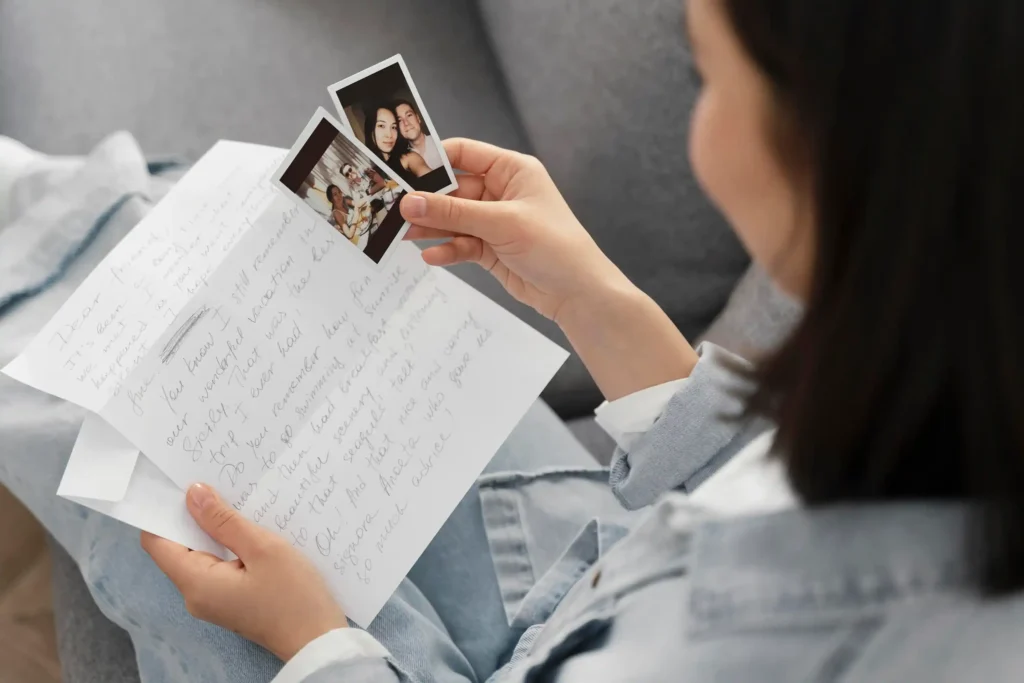
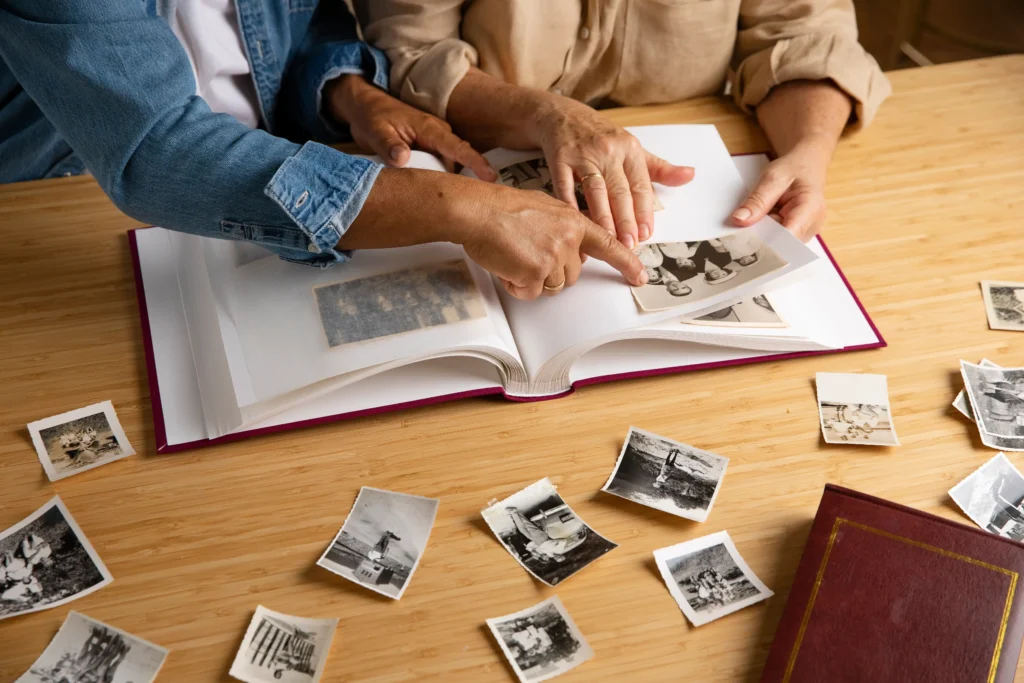
This is the most crucial step. Gather photos, letters, journals, and any other objects that spark a memory. Talk to family and friends. Sometimes, someone else’s perspective can illuminate moments you had forgotten. Write down every memory without judging it.
Step 3: Choose Your Narrative Style
Once you have the information, decide how you’re going to tell it. This is where you answer: How do I start writing my life story?
- Chronological Style: The most common. Tells your life from birth to the present.
- Thematic Style: Organizes the story by themes (love, career, travel) rather than by dates.
- Non-linear Style: Plays with time, jumping between the past and the present.
Step 4: Write Your Draft
Don’t worry about perfection. This is the time to let the words flow. Follow your stream of consciousness. It’s time to put your heart on the keyboard and let the story tell itself.
Step 5: Review and Polish
Once the draft is ready, take some time to review it. Read the text out loud. Cut what isn’t necessary and look for clarity. A good story is like a diamond; it must be polished to shine.
Storytelling Techniques to Make Your Autobiography Engaging
Storytelling is the art of telling stories in a way that connects emotionally with the audience. When writing an autobiography, it’s not just about reporting facts; it’s about bringing them to life.
What is Storytelling?
At its core, storytelling is using narrative to convey a message. Unlike a simple report, storytelling creates a connection through emotion, characters, and conflict. It means making your life an adventure for the reader.
The Narrative Arc: Your Life as an Adventure
A good story has a narrative arc, which can be applied to an autobiography:
- Introduction: The protagonist’s “normal world.”
- Conflict: The event that disrupts that world.
- Resolution: The protagonist adapts and overcomes the conflict.
- Climax: The point of maximum tension.
- Conclusion: The protagonist’s life is changed forever.
Using Emotion and Conflict
The engine of any story is conflict. Don’t be afraid to show your struggles, your fears, and your moments of weakness. These are what make you human and what the reader can relate to. Look at how famous authors do it: the conflict is often an internal struggle, and the resolution is using that struggle as a tool to grow.
At the end of the day, your autobiography is an act of courage. It’s an opportunity to honor your path, understand the past, and build a bridge to the future. It doesn’t matter if your story is quiet or chaotic, famous or anonymous. What matters is that it’s yours. Now, it’s time to pick up a pen, open a blank document, and let the story begin.

Frequently Asked Questions about Autobiographies
What is the difference between a biography and an autobiography?
An autobiography is written by the person themselves about their own life, while a biography is written by someone else.
What goes in the introduction of an autobiography?
Your name, date and place of birth, and a brief description of your family and cultural background.
How do I start writing an autobiography?
Define your purpose and gather memories (photos, journals). Then, choose between a chronological or thematic approach.
What is an example of a short autobiography?
A summary of a few paragraphs capturing your life’s milestones, perfect for professional profiles.
What are the parts of an autobiography?
Introduction (presentation), Development (key events), and Conclusion (reflections).
How do you write an autobiography for kids?
Use simple, direct language. Include fun details like hobbies, favorite foods, and dreams for the future.
What is a “life story”?
It is the complete account of a person’s life, including experiences and the meaning they give them. It’s synonymous with an autobiography.
How can I write my own story?
Start with an outline, choose a central theme, and write a draft without worrying about perfection.
What elements must an autobiography have?
A protagonist (you), a conflict or challenge, and a resolution. It should have a personal, subjective tone.
How do I end an autobiography memorably?
With a reflection on life lessons, your story’s impact on the present, or a look toward future paths you hope to explore.
Writing an autobiography might seem like a monumental task, but as you’ve seen, it’s a journey taken one step at a time. You don’t need to be a public figure or have lived an extraordinary life; your story is unique and deserves to be told. At the end of the day, an autobiography is an act of bravery and a gift to yourself and those around you.
You now have the tools: you know what it is, how it’s structured, and you have practical examples to inspire you. Use this guide to start, pick a template, and take that first step. Your story is the most valuable legacy you can leave behind. Don’t just keep it in your memories share it with the world.