
At the heart of every great achievement lies an exceptional team. However, the simple sum of individual talents rarely equates to true cohesion. This guide addresses the harsh reality of group dysfunction where tension, fear of conflict, and “silo mentality” take a heavy toll in the form of low productivity, employee turnover, and stagnant innovation. Group dynamics are not just “games”; they are strategic interventions designed to accelerate a team’s natural development. Think of them as the emotional gymnasium where trust, effective communication, and constructive conflict management are trained.
This article stands as the most comprehensive guide on the subject, offering 100 actionable ideas meticulously classified by objective, duration, and environment (both in-person and remote). Beyond providing concrete activities, this content dives deep into advanced team leadership models and, crucially, equips the reader with tools to measure and quantify the tangible impact of these dynamics on performance and organizational health.
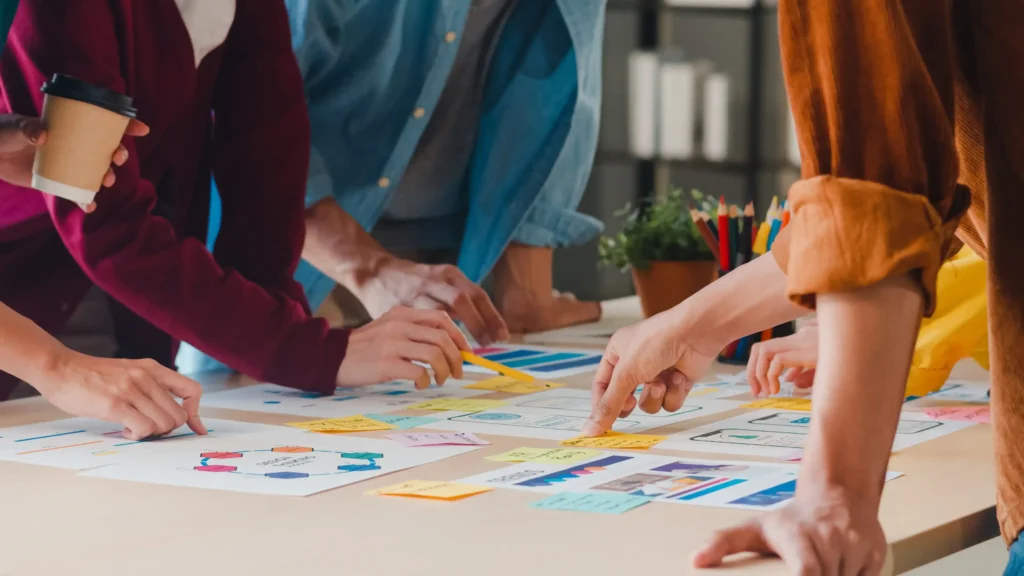
The Core Objectives and Purpose of Group Dynamics
Every dynamic serves a clear and fundamental purpose for team development:
- Icebreakers: Designed to reduce initial anxiety and integrate new members. They serve as the “warm welcome.”
- Trust and Collaboration: Focused on increasing psychological safety within the team and enhancing interdependence among members.
- Strategy and Leadership: These focus on complex problem-solving and effective decision-making under pressure.
- High-Value Niches: Specialized for specific contexts, such as Agile Retrospectives, sales team training, or virtual team building.
- Educational: Designed to foster classroom community and improve student focus, often serving as “Brain Breaks.”
Foundations of Cohesion: The Theoretical Framework for Success
Before jumping into action, a facilitator or leader must understand the science behind cohesion. If you ignore the fundamentals, a dynamic effectively becomes a “game without a purpose.”
Leadership and Vulnerability: Patrick Lencioni’s Pyramid
In his work “The 5 Dysfunctions of a Team,” Patrick Lencioni establishes that failure is not due to a lack of intelligence or resources, but rather a hierarchical series of human flaws. Group dynamics are the antidote to each, addressing the problem from the ground up:
Absence of Trust
This is the fear of being vulnerable before the team. Without fundamental trust, no one dares to admit a mistake or ask for help, paralyzing the team. The solution lies in self-discovery and personal trust-building dynamics.
Fear of Conflict
Without trust, people fear passionate debate. Intellectual conflict is healthy; personal conflict is destructive. Teams that fear conflict have boring meetings where no one says what they actually think. This is solved through structured debate dynamics.
Lack of Commitment
When there is no genuine debate, people don’t “buy in” to decisions. They simply nod in the meeting to avoid trouble, resulting in ambiguity and mediocre execution. The solution involves rapid decision-making dynamics where everyone must weigh in.
Avoidance of Accountability
Members don’t hold each other accountable for fear of interpersonal discomfort, creating “comfort zones.” This is corrected with role-playing and 360-degree feedback dynamics, where responsibility is visible.
Inattention to Results
When the team is distracted by internal politics or egos, collective goals are ignored in favor of personal agendas. This is countered with prioritization and “single-goal” dynamics that force focus.
Team Development: The Tuckman Cycle and the 5 C’s
Bruce Tuckman described the natural evolution of a team in five stages. The key to leadership is knowing which dynamic to apply in each phase:
- Forming: Characterized by anxiety and uncertainty. Ideal Dynamic: Icebreakers to lower people’s guard.
- Storming: The most difficult stage, full of conflict, egos, and power struggles. Ideal Dynamic: Leadership and Conflict Management to handle tension.
- Norming: Roles are established, diversity is accepted, and norms are created. Ideal Dynamic: Collaboration and Strategy to cement processes.
- Performing: The team is high-performing and works autonomously. Ideal Dynamic: Innovation and Retrospectives to maintain excellence.
- Adjourning: The project ends. Ideal Dynamic: Closing and Recognition to celebrate success and manage the transition.
Success in each phase is guided by The 5 C’s of Teamwork: Trust (Confianza), Communication, Coordination, Complementarity, and Commitment. These C’s are the “muscles” developed in every group exercise.
100 Group Dynamics (Structured and Classified)
Category 1: Integration and Icebreakers (Icebreakers)
The Web of Connection
- Objective: Facilitate introductions in an active way while demonstrating the interconnection and mutual dependency within the group.
- Materials: A large ball of yarn or thick string.
- Duration: 15–20 minutes.
- Group Size: Ideal for 8–20 people.
Process: The group sits in a circle. The first participant, holding the end of a ball of yarn, introduces themselves and shares a personal fact before tossing the ball to another teammate while keeping the string taut. This action is repeated successively, with each person presenting and tossing the ball, until a network or “web” connects all members, symbolizing group interdependence. The dynamic can conclude by unraveling the web in reverse order.
- Reflection:
- How does it feel to be part of this “network”?
- What happens if one person lets go of their string? (Illustrating interdependence).
- What did you learn about others that you didn’t know before?
Two Truths and a Lie
- Objective: Stimulate informal interaction and help participants get to know each other through observation and intuition.
- Materials: None (optional: pen and paper for writing statements).
- Duration: 10–15 minutes.
- Group Size: 5–30 people.
Process: Each participant prepares three statements about themselves, two of which are completely true and one that is a lie designed to be believable. Participants share their three statements out loud with the group. After hearing the declarations, the rest of the team must debate and vote to try and identify the false statement. Finally, the participant reveals the truth, leading to surprises and laughter.
- Reflection:
- Was it easy to spot the lie? What cues did you use (body language, tone, prior knowledge)?
- How does it feel to share something personal, even if it’s a lie?
The Human Knot
- Objective: Foster collaboration, non-verbal communication, and rapid problem-solving in a confined space.
- Materials: None.
- Duration: 10–15 minutes.
- Group Size: 8–12 people per knot (split larger groups into subgroups).
Process: The group stands in a circle and, facing the center, reaches out with their right hand to grab the hand of someone who is not adjacent to them. Then, they reach out with their left hand to take the hand of a different person, creating a complex “human knot.” The team’s mission is to untangle this mess of arms and bodies until a perfect circle is formed again, which must be achieved without letting go of hands at any time.
- Reflection:
- How did communication change once the knot was formed?
- Did someone take the initiative to plan a strategy?
- How did you handle frustration or physical discomfort?
The Personal Object (Deep Dive)
- Objective: Encourage empathy by sharing deep values or interests through symbols.
- Materials: None (requires participants to bring an object from home).
- Duration: 20–30 minutes.
- Group Size: 5–15 people.
Process: Before the session, participants are asked to bring a personal object that holds special meaning or represents something important to them (e.g., a souvenir, a value, a hobby). One by one, each person presents their object to the group and explains the story or reason behind their choice, relating it to their values or aspirations. The rest of the group must practice active listening and may ask clarifying questions.
- Reflection:
- Which value or story surprised you most?
- What did you learn about your teammates that will help you work better with them?
- How does this type of vulnerability build a stronger team?
The Birthday Lineup (Non-Verbal)
- Objective: Stimulate non-verbal communication, problem-solving, and silent collaboration.
- Materials: None.
- Duration: 10–15 minutes.
- Group Size: 10–30 people.
Process: The group is asked to stand up and form a line in ascending order based on their birthdays (day and month, not the year). The fundamental rule is that speaking, writing, or using phones is absolutely forbidden; all communication must be through gestures, signs, and mímica. Once the line is formed, the group verifies the order by calling out their dates, revealing if they achieved the “perfect order.”
- Reflection:
- How difficult was it to communicate without words?
- What signals were most effective?
- Who took the initiative to establish a communication system?
The Guided Walk (Trust Building)
- Objective: Build mutual trust and emphasize the importance of following rigorous instructions.
- Materials: Blindfolds (one for every two participants).
- Duration: 15–20 minutes.
- Group Size: 6–20 people (working in pairs).
Process: Participants pair up. One person is blindfolded (the Follower) and the other acts as the Guide. The Guide leads the Follower through a pre-established or improvised course featuring obstacles and changes in terrain, using only verbal instructions and light touches on the shoulder. After 5 to 7 minutes, the course stops and the pairs switch roles, repeating the activity with the new Follower.
- Reflection:
- What kind of instructions built the most trust?
- How did it feel to be completely dependent on another person?
- Were there moments when communication failed? Why?
The Imaginary Trip (Expectation Mapping)
- Objective: Uncover expectations, interests, and motivations regarding the session or project.
- Materials: Pen and paper.
- Duration: 15–20 minutes.
- Group Size: 4–15 people.
Process: Participants are asked to imagine they are going on a trip. They must write three things on their paper: 1) Destination (their objective or goal for the session). 2) What they pack (the skills, resources, or expectations they bring). 3) Who they leave at home (the concerns, fears, or prejudices they want to let go of). Then, responses are shared with the group to discuss commonalities and differences.
- Reflection:
- What common goals did we discover?
- How can the “things left at home” affect performance if we bring them back?
- How can we use our “packed resources” to reach the goal?
The Missing Piece Puzzle (Interdependence)
- Objective: Demonstrate that sharing resources and interdependence are essential for team success.
- Materials: Several simple puzzles with pieces intentionally mixed between boxes.
- Duration: 20–25 minutes.
- Group Size: 4–6 people per team.
Process: The group is divided into teams, and each is given a puzzle box. Each team begins to assemble their puzzle only to realize that essential pieces are missing or that they have pieces belonging to another team. Without speaking to the other group initially, they must deduce that they must collaborate or trade to complete their tasks, promoting a systemic rather than individual vision.
- Reflection:
- At what point did you realize you needed the other teams?
- What internal or communication barriers hindered the initial exchange of pieces?
- How does the concept of “my success” shift to “our success” in this dynamic?
The Team Slogan (Identity and Mission)
- Objective: Define team identity and values creatively and concisely.
- Materials: Flipchart or whiteboard, markers.
- Duration: 15–20 minutes.
- Group Size: 5–15 people.
Process: The group is asked to create a slogan or motto that summarizes what they represent, their core value, or what they hope to achieve together. A time limit is set (5 minutes) for individual brainstorming, followed by a group debate to choose or compose the final slogan by consensus. The slogan is written large, and its meaning is explained to all participants, strengthening the sense of belonging.
- Reflection:
- Which word or concept generated the most debate?
- Does the slogan reflect the vision of all members?
- How can we use this to remember our goals during tough times?
Collective Storytelling (Creativity and Listening)
- Objective: Stimulate active listening and collaborative idea-building without a prior plan.
- Materials: None.
- Duration: 10–15 minutes.
- Group Size: 5–20 people.
Process: The exercise begins with the facilitator providing an opening phrase to start a narrative, such as “Once upon a time…”. Progressively, each participant in the circle must add one or two sentences to the story, building on what the previous teammate said. The main goal is to keep the story as coherent and fluid as possible, fostering active listening and improvised team creativity.
- Reflection:
- Was it hard to build on others’ ideas?
- How does this relate to building a project or team ideas in real life?
- Why was it crucial to listen to the very last word?
Category 2: Trust and Communication
The Minefield (Trust and Verbal Communication)
- Objective: Foster trust, develop active listening, and practice precise verbal communication under pressure.
- Materials: Blindfolds, various objects (cones, balls, chairs) to act as “mines,” defined play area.
- Duration: 20–30 minutes.
- Group Size: 10–24 people (working in pairs).
Process: The facilitator scatters objects across the area. Participants pair up: one is blindfolded (the Walker) and the other is the Guide. The Guide stays outside the area and directs the Walker verbally through the field, aiming to cross without stepping on a mine, while physical contact is prohibited. Then, roles are reversed so both experience both positions.
- Reflection:
- Was it harder to guide or be guided? Why?
- How did your way of giving instructions change as the dynamic progressed?
- Was trust lost at any point? How did you get it back?
Blind Drawing (Communication Accuracy)
- Objective: Highlight the importance of precision, feedback, and the ability to translate visual ideas into words.
- Materials: Paper, pens, simple drawings (shapes, landscapes), a visual barrier (folder, book).
- Duration: 15–20 minutes.
- Group Size: Pairs.
Process: Participants sit back-to-back, separated by a visual barrier. The “Sender” receives a simple drawing and must describe it verbally to the “Receiver,” who tries to replicate it without seeing the original. In Phase 1, communication is one-way (no questions). In Phase 2, feedback and questions are allowed, illustrating how precision and feedback drastically improve final results.
- Reflection:
- How different was the experience when feedback was allowed?
- How frustrating was the lack of detail or ambiguity in Phase 1?
- How can we apply this need for precision to our daily projects?
Rumors (Message Distortion)
- Objective: Demonstrate how information distorts as it passes through people and the need for verification.
- Materials: None.
- Duration: 10–15 minutes.
- Group Size: 10–30 people.
Process: The group sits in a line or circle. The facilitator whispers a complex or long message into the ear of the first person. That person must whisper exactly what they heard to the next, and so on, until the last participant. The last person says the message out loud. The facilitator reveals the original message, showing the distortions produced during transmission.
- Reflection:
- At what point in the chain did the distortion begin?
- How did the pressure feel?
- What strategies can we use at work to avoid rumors or critical info distortion?
The Peer Interview (Listening and Presentation)
- Objective: Practice active listening, synthesis, and effective peer presentation.
- Materials: None.
- Duration: 20–30 minutes.
- Group Size: 8–30 people (working in pairs).
Process: Participants divide into pairs. Each person has 5 minutes to interview their partner about interests, achievements, or expectations. After the interviews (10 mins total), the group reconvenes. Each person presents their partner, highlighting the most interesting and relevant points learned, practicing the skill of listening to summarize.
- Reflection:
- How well did you listen and retain important info?
- What details were lost or exaggerated?
- How can summarizing others improve team meetings?
The Thread of Life (Vulnerability and Connection)
- Objective: Create a safe space for sharing life stories and building deep emotional bonds.
- Materials: A ball of yarn.
- Duration: 20–30 minutes.
- Group Size: 5–10 people.
Process: The group sits in a circle. The facilitator starts by sharing a significant life milestone—positive or challenging—and then tosses the yarn to another person. The receiver holds the thread, shares a milestone, and tosses it to a third person without cutting the string. This continues until a web of threads visualizes the interconnection of the group’s life experiences.
- Reflection:
- How does it feel to share a vulnerable part of your story?
- What key lessons can we draw from each other’s shared experiences?
- How does knowing a teammate’s history contribute to team trust?
Simplified Johari Window (Self-Awareness)
- Objective: Help participants understand how they see themselves versus how others perceive them (conscious and unconscious).
- Materials: Paper with four quadrants, pens.
- Duration: 25–35 minutes.
- Group Size: 5–15 people.
Process: Each participant gets a sheet divided into four areas (Known, Hidden, Blind, Unknown). In Phase 1, they choose 3-4 adjectives for themselves (Known/Hidden Area). Then, teammates write 3-4 adjectives for that participant (Blind Area). The participant compares their self-perception with the external perception, analyzing overlaps and differences to discuss their own “blindness.”
- Reflection:
- Which perception from others surprised you most?
- How can the Blind Area affect communication and teamwork?
- What can you do to reduce your Blind Area?
The Trust Tunnel (Physical Support)
- Objective: Foster physical trust and the assurance that the team will be there to support you.
- Materials: Wide space.
- Duration: 15–20 minutes.
- Group Size: 10–20 people.
Process: The group divides into two parallel lines, standing face-to-face with arms extended and hands joined to form a “tunnel.” A participant (the Truster) stands at one end, crosses their arms over their chest, and must fall rigidly forward and backward, being “passed” through the tunnel without touching the ground. The line of people is responsible for holding and passing them gently to the other end.
- Reflection:
- How safe did you feel initially letting yourself fall?
- What did the dynamic demonstrate about collective group strength?
- How does this physical support compare to emotional or professional support at work?
Pictionary Telephone (Visualization and Clarity)
- Objective: Emphasize the difficulty of translating visual or written messages without losing meaning.
- Materials: Paper, pens, initial written message for the first participant.
- Duration: 15–20 minutes.
- Group Size: 6–10 people.
Process: The group sits in a line. The first participant receives a written message shown to no one. Instead of passing it verbally, they must draw that concept. The second participant only sees the drawing and must write what they think it represents. The third draws what they read, alternating until the end. Finally, the last written message is compared with the original.
- Reflection:
- Where was the biggest information loss: drawing or interpreting the drawing?
- How do personal assumptions influence our interpretation?
- Why is feedback crucial in communicating complex or design ideas?
The Wall of Achievement (Recognition)
- Objective: Foster mutual recognition, appreciation for individual strengths, and boost morale.
- Materials: Colored post-its, pens, designated wall or board.
- Duration: 15–20 minutes.
- Group Size: 5–30 people.
Process: Each participant anonymously writes an achievement or specific strength of a teammate on a post-it—something they admired or that benefited the group (e.g., “I appreciate your creativity on Project X”). All post-its are stuck to the wall to form an “Achievement Wall.” Then, everyone takes a moment to read them, and the facilitator asks for volunteers to share a message they received or wrote.
- Reflection:
- How did it feel to receive unexpected, specific recognition?
- Was it easier or harder to recognize others than yourself?
- How can we make this recognition a regular part of team culture?
Passing the Hula Hoop (Rapid Sync)
- Objective: Foster physical teamwork, coordination, and energize the group in a fun way.
- Materials: A hula hoop.
- Duration: 5–10 minutes.
- Group Size: 8–20 people.
Process: The group forms a circle and holds hands, keeping the chain unbroken. The facilitator places a hula hoop on the arms of two adjacent people. The team’s mission is to move the hula hoop through each person’s body around the circle and back to the start without letting go of hands. This requires physical coordination and a synchronized movement strategy to complete successfully.
- Reflection:
- What strategy did you use to speed up the process?
- Was there non-verbal communication that helped the group?
Category 3: Problem Solving and Planning
The Spaghetti and Marshmallow Tower (Planning and Creativity)
- Objective: Stimulate planning, collaboration under limited resources, time management, and the ability to prototype and learn from failure.
- Materials: For each team: 20 raw spaghetti sticks, 1 meter of adhesive tape, 1 meter of string or thread, 1 marshmallow. A stopwatch and a measuring tape.
- Duration: 30 minutes (18 min construction, 12 min measurement and reflection).
- Group Size: Small groups of 3 to 5 people.
Process: Teams receive a limited amount of spaghetti, tape, string, and one marshmallow. The challenge consists of building the tallest possible freestanding structure within an 18-minute time limit. The fundamental rule is that the marshmallow must be placed at the top of the tower and support itself. Once the construction time has elapsed, the facilitator measures the height of each tower to determine the winning team, emphasizing the importance of planning and rapid execution.
- Reflection:
- What was your team’s first step? Did you stop to plan?
- Who took the lead or how were roles distributed?
- What would you change if you had to build another tower now?
The Perfect Square (Leadership and Execution)
- Objective: Develop situational leadership skills, communication under limited conditions, and the importance of planning before execution.
- Materials: A long rope (5 to 8 meters) knotted at its ends to form a closed circle. Blindfolds for all participants.
- Duration: 20 to 25 minutes.
- Group Size: Groups of 6 to 10 people.
Process: Participants are blindfolded and asked to take hold of a rope previously laid out on the floor forming a circle. Without letting go of the rope at any time, the team must collaborate and communicate exclusively verbally to transform that circular figure into a perfect square. This dynamic demands clear leadership, active listening, and a coordinated strategy for the group to achieve its goal without the aid of sight.
- Reflection:
- Who took the leadership and how did they do it?
- How did you ensure everyone understood the instructions?
- How important was the verbal description of shape and distances?
Resource Island (Decision Making)
- Objective: Practice consensus-based decision making, resource prioritization, and group negotiation.
- Materials: A predefined list of 15 to 20 survival items. Paper and pen for each participant.
- Duration: 35 to 45 minutes.
- Group Size: Groups of 5 to 7 people.
Process: Participants are presented with a shipwreck scenario, where they must select only 5 essential items from a list of 15 to 20 to take to a deserted island. First, each person chooses and ranks their 5 items individually. Subsequently, the team must negotiate and debate intensely for 20 minutes to reach a group consensus on the final 5 items, without resorting to voting. The dynamic culminates with reflection on the prioritization process and decision-making under pressure.
- Reflection:
- Was it difficult to reach consensus? Why?
- How were differences of opinion handled?
- What role did individual logic play versus the team’s needs?
The Water Bucket Challenge (Idea Transfer)
- Objective: Improve collaboration, coordination, and the execution of a complex action plan.
- Materials: A bucket full of water, a perforated hose or pipe, cups or buckets to collect the water.
- Duration: 20 to 30 minutes.
- Group Size: Groups of 6 to 12 people.
Process: The team must move the largest amount of water possible from Point A to Point B (usually a certain distance away) using only the perforated pipe, which requires multiple people to hold it. The difficulty lies in the fact that water spills easily if there is not precise coordination in the angle and speed of the pipe’s movement. The group must plan how to plug the holes and how to march together to minimize liquid loss.
- Reflection:
- What happened to coordination when pressure increased?
- How different was the initial plan from the actual execution?
- What key role did you identify and how was its fulfillment ensured?
Machine Design (Shared Vision)
- Objective: Foster systems thinking and the creation of a shared vision regarding an objective or process.
- Materials: None.
- Duration: 15 to 20 minutes.
- Group Size: Groups of 8 to 20 people.
Process: The group is asked to design a “machine” that performs a specific function (e.g., “the efficiency machine,” “the joy machine,” “the sales machine”), using only their bodies as parts of the machine. One participant starts with a movement and a sound, and progressively the others join in to create gears and processes that interact with each other. The machine only works if all parts are synchronized, representing the interdependence of roles.
- Reflection:
- How easy was it to adapt to others’ movements?
- What happens when one part of the machine moves too fast or too slow?
- What is the “function” of our machine in the work team?
The Impossible Survey (Information Management)
- Objective: Practice managing, prioritizing, and filtering large volumes of information in a short time.
- Materials: A long list of survey questions with numerical or multiple-choice answers. Stopwatch.
- Duration: 25 to 35 minutes.
- Group Size: Groups of 4 to 6 people.
Process: Each team is given a list of 30 to 50 questions from an “Impossible Survey” and informed that they only have 15 minutes to answer 10 of them, but those 10 must be the most relevant for a specific objective. Teams must first determine relevance criteria, then prioritize information, and finally answer the 10 selected questions, simulating decision-making under data saturation.
- Reflection:
- What criteria did you use to decide which questions were “important”?
- How did you manage the conflict between the need to analyze all information and the time limit?
- Who acted as the information “filter” within the team?
The Blind Maze (Strategy and Memory)
- Objective: Improve strategy, precise communication, and working memory in the execution of a plan.
- Materials: A large grid or board on the floor (made with tape), objects to mark the correct path.
- Duration: 25 to 35 minutes.
- Group Size: Groups of 6 to 10 people.
Process: A secret correct path is designated through the grid, which only the facilitator knows. One participant with eyes uncovered (the Explorer) must try to cross the maze, receiving immediate feedback (a sound, like a whistle) every time they step on an incorrect square. The team can observe and memorize the Explorer’s pattern of errors, but only the team can help the following explorers, creating group knowledge to solve the problem.
- Reflection:
- How did the team’s strategy evolve as they accumulated more errors?
- How effective were the group’s instructions for the Explorer?
- Who was in charge of the team’s “memory” and what system did they use to retain information?
The Gordian Knot (Out-of-the-Box Thinking)
- Objective: Challenge the group to find non-obvious solutions to a seemingly unsolvable problem.
- Materials: A very long and coiled rope or cord.
- Duration: 15 to 20 minutes.
- Group Size: Groups of 5 to 10 people.
Process: Participants are presented with a rope coiled in a very tight knot, the “Gordian Knot,” with the instruction to undo it without letting go at any time. The problem is designed to be impossible to solve following obvious rules. The real challenge is for the group to realize they must break the rope paradigm to find the solution, which usually involves changing the way they approach the problem or reinterpreting the rules.
- Reflection:
- At what point did the group feel frustrated?
- What idea or suggestion allowed the team to change the solution paradigm?
- What limitations do we self-impose when starting problem solving?
Construction with Toothpicks (Material Restriction)
- Objective: Encourage inventiveness and collaboration under extreme scarcity of construction materials.
- Materials: Toothpicks or cotton swabs, a small jar of glue or putty per team.
- Duration: 25 to 35 minutes.
- Group Size: Small groups of 3 to 4 people.
Process: Each team receives a very limited amount of toothpicks or cotton swabs and glue, with the task of building a structure that can support a small object (e.g., a coin, a ping-pong ball) at the highest possible height. This activity requires precise engineering and an extremely efficient use of material to build a solid base and a light structure. The facilitator times the task and then measures height and stability.
- Reflection:
- How did you handle the scarcity of material? Was there conflict over the use of glue?
- How did the team feel about the need to work with such precision?
- How important was rapid prototyping instead of perfect planning?
The Color Puzzle (Prioritization Coordination)
- Objective: Demonstrate the conflict that arises when subgroups have different objectives for the same project.
- Materials: A large puzzle divided into sub-packs (each pack with pieces of various colors, but each subgroup has instructions to prioritize only one color).
- Duration: 20 to 30 minutes.
- Group Size: Groups divided into 3 or 4 subgroups of 3 people each.
Process: The group is divided into subgroups, and each is given a set of puzzle pieces and a secret instruction to “complete red pieces first” or “complete blue pieces first.” Teams realize they need pieces that are in the hands of other groups. The challenge is that they must complete the entire puzzle without revealing their secret color prioritization objective, forcing negotiation without exposing the conflict of interest.
- Reflection:
- At what point did you realize that others’ priorities were different from yours?
- How did you manage to get the pieces you needed? Was there collaboration or just bartering?
- How does it feel to work when your individual goal conflicts with the team’s global goal?
Category 4: Leadership and Roles
The Blind Leader (Direction and Following)
- Objective: Develop the ability to give clear instructions and the team’s ability to follow a leader without questioning (trust in vision).
- Materials: None.
- Duration: 15 to 20 minutes.
- Group Size: Groups of 8 to 12 people.
Process: The group stands in a straight line. One participant is chosen as the “Blind Leader” and must keep their eyes closed or blindfolded. The leader is responsible for guiding the group through a designated route full of obstacles (chairs, tables, or the natural environment), using only verbal commands. The rest of the team can help avoid disaster (always verbally), but the leader is the only one who makes the final decision on direction.
- Reflection:
- Leader: How difficult was it to lead without being able to see the result of your instructions?
- Team: At what points did you doubt the leader’s direction and why?
- How did the responsibility of being both guide and follower feel?
Leadership Rotation (Situational Leadership)
- Objective: Practice different leadership styles and recognize that each situation requires a different leader.
- Materials: A series of 4 to 5 short and varied group tasks (e.g., assembling a puzzle, answering a riddle, organizing an area).
- Duration: 30 to 40 minutes.
- Group Size: Groups of 5 to 6 people.
Process: The team must complete a series of short, timed group tasks. For each new task, a different team member must automatically assume the leadership role, rotating the position mandatorily. The new leader must evaluate the task quickly and decide the best approach (democratic, autocratic, laissez-faire), forcing participants to adapt quickly to a new role and direction style.
- Reflection:
- Which leadership style worked best for each task?
- How easy or difficult was it to switch from being a follower to being a leader?
- Which leader demonstrated the best fit between their style and the problem’s need?
The Task Factory (Role Efficiency)
- Objective: Demonstrate the efficiency of role specialization versus performing all tasks by all members.
- Materials: Paper, scissors, pens, instructions to create a simple product (e.g., a folded and sealed envelope).
- Duration: 15 to 20 minutes.
- Group Size: Groups of 8 to 15 people.
Process: The team must produce the largest quantity of a simple product (e.g., an envelope) in 10 minutes. In the first round (3 minutes), each person must complete the product from start to finish individually. In the second round (7 minutes), the team must divide the process into stages (cutting, folding, sealing, verifying) and each person specializes in a single function, creating an “assembly line.” Total production from both rounds is compared.
- Reflection:
- How did the frustration of Round 1 feel compared to the efficiency of Round 2?
- What are the advantages or disadvantages of extreme specialization?
- How does the assembly line relate to our work team processes?
Belbin Roles Case Analysis (Role Identification)
- Objective: Identify the natural roles that participants assume in a team, according to Belbin’s team role theory (e.g., Plant, Shaper, Completer Finisher).
- Materials: A business case study or complex problem without a clear solution. Paper and pen.
- Duration: 30 to 40 minutes.
- Group Size: Groups of 6 to 9 people.
- Process: The team receives a case study and has 20 minutes to read, debate, and propose a solution. The facilitator observes discreetly how they interact and what roles emerge (who asks questions, who pushes to advance, who focuses on details). Then, the facilitator introduces Belbin’s theory and asks participants to identify, based on observation, the role they believe each teammate assumed during the debate, opening a discussion on role complementarity.
- Reflection:
- Did your self-perception of your role match the team’s perception?
- What roles do you think were missing or overrepresented in our debate?
- How can knowledge of Belbin roles improve future task allocation?
The Invisible Bridge (Vision and Trust)
- Objective: Emphasize that a leader must articulate a clear vision and generate trust for the team to execute it.
- Materials: Ropes or wooden slats to simulate the bridge. Blindfolds.
- Duration: 20 to 30 minutes.
- Group Size: Groups of 6 to 8 people.
Process: A simple “bridge” is built on the floor using ropes, but only the team leader can see the shape. The rest of the team must cross the bridge blindfolded. The leader cannot touch anyone and can only use verbal instructions to guide their teammates on the location and width of the invisible bridge. Success depends on the clarity of the leader’s vision and the team’s blind trust in their commands.
- Reflection:
- What happened to the leader’s communication when the team drifted or showed fear?
- What kind of language does a leader use to build trust in execution?
- How important is it for the team to “buy into” the vision, even if they cannot see the path?
The Orchestra Conductor (Coordination and Vision)
- Objective: Understand the need for centralized vision and coordination to integrate individual efforts toward a harmonious collective result.
- Materials: Various simple or noisy instruments (tambourines, claves, whistles, everyday objects).
- Duration: 15 to 20 minutes.
- Group Size: Groups of 8 to 20 people.
Process: Each participant is given an “instrument.” The group, without a leader, must try to create a coherent and harmonious musical piece. After the chaotic first attempt, an “Orchestra Conductor” is chosen whose only job is to use non-verbal gestures and signals to coordinate the rhythm, volume, and entries of each instrument. The second attempt, under direction, seeks radical improvement in sound cohesion.
- Reflection:
- How did the chaos of the first round without a leader feel?
- Which Conductor signals were most effective in unifying the sound?
- How does the role of the Orchestra Conductor translate to the role of a project manager or team leader?
Airplane Design (Task Distribution)
- Objective: Practice efficient division of labor, prior planning, and time management.
- Materials: Sheet of paper per participant, list of detailed instructions for making a complex paper airplane.
- Duration: 20 to 25 minutes.
- Group Size: Groups of 4 to 6 people.
Process: Each team is given a list of 20 to 30 detailed steps to build a very complex paper airplane. The team has 5 minutes to plan the task division before the construction stopwatch begins (10 minutes). The goal is for all team members to have built a perfect paper airplane by the end of the time, which requires dividing the workload and verifying the quality of intermediate “parts.”
- Reflection:
- How effective was your 5-minute planning?
- Were there bottlenecks in any of the assigned tasks?
- Who ensured the final product had the appropriate quality (the “finisher”)?
The Difficult Decision (Ethical Leadership)
- Objective: Force the group and the leader to debate and make decisions based on values and ethical principles, with simulated consequences.
- Materials: A complex ethical scenario (e.g., The Trolley Problem, or a workplace dilemma). Paper and pen.
- Duration: 30 to 40 minutes.
- Group Size: Groups of 5 to 7 people.
Process: The facilitator presents a hypothetical scenario involving an ethical dilemma with multiple negative outcomes. The group has 20 minutes to debate and reach a consensus decision on the course of action to follow, naming a leader who must justify the decision to the facilitator. The dynamic focuses on the justification process and identification of the values underlying the team’s final choice.
- Reflection:
- What values or principles did you have to sacrifice to reach the decision?
- How did the leader feel being the spokesperson for an unpopular or difficult decision?
- How do leaders ensure ethical decisions reflect the team’s values and not just their own?
Role Mapping (Contribution Clarity)
- Objective: Clarify roles, responsibilities, and areas of influence for each team member.
- Materials: A large paper or whiteboard, colored markers.
- Duration: 20 to 30 minutes.
- Group Size: Groups of 5 to 10 people.
Process: The team draws a visual map of its structure. Each participant writes their name and, around it, in a circle, their primary responsibilities. Then, with arrows and lines, they indicate where their roles overlap, connect, or depend on other roles. The goal is to identify redundancies (duplicate functions) or gaps (areas not covered by anyone). The map is used for a discussion on optimizing human resources.
- Reflection:
- Did you discover any unexpected overlapping responsibilities?
- Are there key tasks that no one has formally assumed (“the gap”)?
- How can this map help us reduce territory conflicts or lack of clarity?
Inverted Chain of Command (Empowerment)
- Objective: Foster team empowerment, where followers define needs and the leader puts themselves at their service.
- Materials: Paper and pen.
- Duration: 20 to 25 minutes.
- Group Size: Groups of 5 to 10 people.
Process: The leader is asked to leave the room. The team members (the followers) have 10 minutes to write down the 3 most important things they need from their leader to be more effective or happy in their work (e.g., more autonomy, fewer meetings, better feedback). The leader returns and sits in silence while the team presents their “demands.” The leader can only ask clarifying questions, not justify themselves, inverting the traditional power dynamic.
- Reflection:
- Leader: What was the most revealing thing you heard?
- Team: How did it feel to have control over defining the leader’s priorities?
- What commitment can the leader make immediately to demonstrate support?
Category 5: Negotiation and Consensus
The Prisoner’s Dilemma (Trust and Outcome)
- Objective: Explore trust, betrayal, and how the pursuit of individual interest can sabotage the collective result.
- Materials: Voting cards (Cooperate or Compete), scoring sheet.
- Duration: 25 to 35 minutes.
- Group Size: Groups of 10 to 30 people (working in pairs or trios).
Process: Teams participate in a series of rounds where they must secretly choose between Cooperate or Compete with the rival team, without knowing their choice. The results are scored according to a matrix (e.g., Both Compete = -10; One Cooperates and the other Competes = Gain for the competitor/Loss for the cooperator; Both Cooperate = +5). A brief period of negotiation and promises is allowed between rounds before the secret choice, illustrating whether self-interest outweighs the promise of cooperation.
- Reflection:
- Was there a moment of betrayal? How did that affect trust in subsequent rounds?
- How different was the final result from what would have been achieved if everyone had always cooperated?
- How does this dilemma apply to business decisions about competition and collaboration?
Limited Resource Exchange (Win-Win)
- Objective: Develop negotiation skills focused on finding mutually beneficial (win-win) solutions.
- Materials: Packs of limited and varied materials (e.g., 5 sheets of paper, 1 pencil, 3 paper clips, 1 marker) for each team. A final group task that requires all materials.
- Duration: 25 to 35 minutes.
- Group Size: Groups of 4 to 5 people.
Process: Each team is assigned a construction or design task that requires a combination of all materials, but is given an incomplete and inadequate resource pack for the task. To succeed, teams must negotiate and exchange resources with other groups, seeking an agreement where both get what they need, rather than simply trying to hoard material. Success is measured by the completion of the project and the quality of the negotiations.
- Reflection:
- What was the key to a successful agreement (need or generosity)?
- Were there teams that did not want to cooperate? How did that feel?
- How can we apply the search for mutual value in internal and external work negotiations?
Random Object Sale (Persuasion and Value)
- Objective: Improve persuasion skills, rapid value identification, and negotiation of prices or conditions.
- Materials: Random everyday objects (e.g., a paper clip, a plastic spoon, an eraser, a stone, a clothespin). Note sheets and pens.
- Duration: 20 to 30 minutes.
- Group Size: Groups of 4 to 8 people.
Process: Each participant receives a random object and has 5 minutes to think about the unique value of that object and how they would sell it at an exorbitant price. Then, in pairs, they must negotiate the “sale” of their respective objects. The goal is not to finalize the sale, but to use persuasion and negotiation techniques to obtain the highest price or the best possible sales conditions.
- Reflection:
- Which arguments were most convincing when assigning value to the object?
- What negotiation techniques did you use to justify a high price?
- Was it easier to sell or buy? Why?
The Group Contract (Mutual Commitment)
- Objective: Establish behavioral norms and clear expectations by consensus for a long-term project or team.
- Materials: Flipchart or whiteboard, markers.
- Duration: 30 to 45 minutes.
- Group Size: Groups of 5 to 15 people.
Process: The team works to draft a “Group Contract” that defines how they are going to work together (e.g., meeting rules, conflict management, communication). The process must be inclusive and consensual, ensuring that all members contribute at least one rule. Once the contract is drafted, all members must “sign” it as a public commitment to adhere to the established rules.
- Reflection:
- Which rule or norm was the most debated?
- How different is working with an agreed contract compared to tacit or unwritten rules?
- How does the group ensure that the contract is fulfilled in the future?
Vacation Agreement (Managing Multiple Interests)
- Objective: Practice negotiation and planning of a limited resource (time) when there are conflicting personal interests.
- Materials: A fictitious calendar for next year with marked vacation periods. Priority sheets (each participant notes their 3 ideal vacation weeks).
- Duration: 25 to 35 minutes.
- Group Size: Groups of 5 to 8 people.
Process: Each participant secretly writes down the 3 weeks of the year in which they wish to take vacations. The group must collectively negotiate to create a vacation plan where everyone gets at least 2 weeks of rest, but only one person from the team can be absent at a time. The team must negotiate and compromise, seeking creative solutions to satisfy both personal and operational needs.
- Reflection:
- Who demonstrated the most flexibility and who the least?
- How can empathy be applied to understand why week X is more important to a teammate than to you?
- What method did you use to manage the conflict: turn, draw, or justification of need?
The Priority Roulette (Hidden Interests)
- Objective: Teach participants to negotiate based on the other party’s underlying interest, not just their stated position.
- Materials: Secret role cards with a “hidden interest” (e.g., “You need to finish fast”, “You need the most blue”, “You need to be the one who talks the most”). A simple object-sorting task.
- Duration: 20 to 30 minutes.
- Group Size: Groups of 6 to 8 people.
Process: The team must sort a series of objects according to an ambiguous criterion. Each participant receives a secret role card with a personal goal they must achieve during the negotiation (e.g., get all the blue balls). The team must negotiate openly, without revealing the secret goal on their card, forcing each member to justify their “position” (e.g., “I think blue goes first”) based on their hidden interest, until a final order is reached.
- Reflection:
- How frustrating was the negotiation when you did not know your teammates’ real interests?
- Who was effective at deciphering others’ underlying interests?
- How can asking “why” instead of “what” improve negotiation in real life?
The Incomplete Puzzle (Dependency and Collaboration)
- Objective: Demonstrate how teams depend on each other and how hoarding resources sabotages collective success.
- Materials: Three identical puzzles, with pieces mixed into three different packs.
- Duration: 20 to 25 minutes.
- Group Size: Groups of 9 to 12 people, divided into 3 teams.
Process: The group is divided into three teams and assigned the task of completing their puzzle. Each team has only one third of the necessary pieces and pieces from the other two puzzles. The goal is for all three teams to complete their respective puzzles. The rule is that they cannot speak, only exchange pieces with gestures or leave them on the table, forcing a non-verbal barter system and patience for collaboration.
- Reflection:
- How easy was it to let go of a piece that was not yours?
- How did you establish a system for exchanging pieces without using words?
- What lessons does the dynamic offer about the need to see beyond the immediate task to see the global goal?
The Skills Auction (Collective Prioritization)
- Objective: Foster prioritization of skills and negotiation on how to invest team resources.
- Materials: Play money (equal amount for each participant), a list of “skills” or “services” to auction.
- Duration: 30 to 40 minutes.
- Group Size: Groups of 8 to 15 people.
Process: A list of skills or services the team needs is created (e.g., “Programming ability”, “Meeting leadership”, “Creativity”). Each participant receives an equal amount of fictitious “money”. Skills are auctioned one by one, and participants must bid. The goal is for the team, collectively, to end the auction with the most balanced set of skills, forcing negotiation and collaboration so that certain members obtain key skills.
- Reflection:
- Which skills were overvalued and which undervalued? Why?
- Was there any pre-auction negotiation to ensure someone obtained a key resource?
- How does the money spent relate to the real value we give to those skills at work?
Silent Card Negotiation (Non-Verbal Techniques)
- Objective: Practice negotiation and body language as influence tools without the use of words.
- Materials: Playing cards or cards with numbers (two cards per participant: one high and one low).
- Duration: 15 to 20 minutes.
- Group Size: Groups of 8 to 20 people (working in pairs).
Process: Participants receive a high card (e.g., Ace) and a low card (e.g., Two). The task is for each participant to negotiate with as many teammates as possible in 10 minutes to exchange their low card for a high card, or vice versa, depending on the secret goal (e.g., “End with the highest total value”). Verbal communication is strictly forbidden, forcing the use of eye contact, posture, and gestures to convince the other of the validity of the exchange.
- Reflection:
- What gestures or facial expressions made you trust or distrust a teammate?
- How frustrating was it not being able to speak to close a deal?
- How can body language affect the perception of our sincerity in a real negotiation?
Inheritance Split (Interests vs. Positions)
- Objective: Distinguish between stated “positions” (what I ask for) and real “interests” (why I ask for it) in a negotiation.
- Materials: A fictitious inheritance split scenario (e.g., a chest with 5 objects of sentimental value). Secret role cards with the real interest.
- Duration: 30 to 40 minutes.
- Group Size: Groups of 4 to 5 people.
Process: Each participant receives a role card describing their character and a “secret interest” (e.g., “You need the family photo to prove a point”, “You need the watch for its resale value”). The team must negotiate the split of 5 inheritance objects, seeking that each one obtains at least one object that satisfies their secret interest, but without revealing that interest at the beginning. The negotiation focuses on forcing the other to reveal the “why” behind their request.
- Reflection:
- How effective was asking “why do you need that object” instead of just discussing who gets it?
- Was there any case where two people had different interests but requested the same object?
- How can this distinction between interest and position improve conflict resolution in the team?
Category 6: Creativity and Innovation
Six Thinking Hats (Method)
- Objective: Apply Edward de Bono’s method to structure group thinking and approach problems from six defined perspectives (optimistic, critical, emotional, creative, data-driven, and management).
- Materials: Sheets of paper or cards in 6 colors (White, Red, Black, Yellow, Green, Blue).
- Duration: 30 to 45 minutes.
- Group Size: Groups of 6 to 12 people.
Process: An innovation problem or challenge is presented to the team. The facilitator guides the group through the six thinking “hats”: White (data), Red (feelings), Black (criticism), Yellow (optimism), Green (creativity), and Blue (process management). During the time assigned to each hat (e.g., 5 minutes), the entire group must think and contribute only under that specific perspective, ensuring a complete and structured exploration of the problem from multiple angles.
- Reflection:
- Which hat was hardest for you to put on or take off?
- How did the hat structure help avoid polarized discussions?
- How can you use this method to evaluate creative proposals in the future?
Brainstorming in Silence (Idea Generation)
- Objective: Maximize individual idea generation, ensuring equal participation and avoiding the blocking of creativity by leaders or strong personalities.
- Materials: Post-its, pens.
- Duration: 15 to 20 minutes.
- Group Size: Groups of 5 to 15 people.
Process: A clear creative challenge is posed (e.g., “Ten ways to use a paper clip”). For 10 minutes, participants must generate as many ideas as they can, writing one idea per post-it, without speaking or sharing with anyone. At the end of the silent phase, all post-its are collected and stuck to the wall to group them by theme or affinity. Initial silence guarantees that all voices are heard.
- Reflection:
- How did the pressure of generating ideas in silence feel?
- Did you discover ideas that would not have been shared in a traditional, verbal brainstorming?
- Which ideas generated by silence are most disruptive?
The Napkin Challenge (Rapid Prototyping)
- Objective: Foster visual communication, iterative thinking, and the ability to sketch a solution quickly.
- Materials: Napkins or small pieces of paper, pens.
- Duration: 20 to 30 minutes.
- Group Size: Groups of 3 to 5 people.
Process: The team receives a complex problem. The challenge is that they must design a complete and viable solution in the limited space of a single napkin. Once the initial “prototype” is drawn, teams rotate their napkins and have 5 minutes to criticize and improve another team’s design, emphasizing speed and visual conciseness.
- Reflection:
- What was harder: drawing the idea or making constructive criticism of another’s idea?
- How did the space limitation force you to focus on the essential part of the solution?
- Why is rapid and “flawed” prototyping better than waiting for perfection?
Forced Connection (Association)
- Objective: Unlock creativity by forcing connections between elements that have no apparent relation to generate innovative ideas.
- Materials: Two lists of words: one of project themes and another of random objects (e.g., toaster, giraffe, old television).
- Duration: 15 to 20 minutes.
- Group Size: Groups of 5 to 15 people.
Process: A project theme is selected from the list (e.g., “Improving the online store experience”) and a random object (e.g., “Giraffe”). The challenge is to generate 3 innovation ideas by forcing a logical connection between both elements (e.g., What would we do if the online store were a giraffe?). The technique forces the brain to leave its usual thinking patterns to find disruptive solutions.
- Reflection:
- How absurd did the connection seem at the beginning?
- Were there absurd ideas that, when refined, became viable?
- How can you introduce random elements into your usual brainstorming process?
The Broken Objects Game (Repurposing)
- Objective: Foster lateral thinking and the ability to see potential in limited or seemingly useless resources.
- Materials: Various waste or broken objects (cardboard, scraps of fabric, old cables, bottles). A design or construction task.
- Duration: 25 to 35 minutes.
- Group Size: Groups of 3 to 5 people.
Process: A box of broken objects or recycled materials is delivered to each team, with the mission of building a functional tool to solve a problem (e.g., “a device to move an object without touching it”). The team must collaborate to re-imagine the original function of the waste materials, fostering innovation through restriction and necessity. The functionality of the prototype is tested at the end.
- Reflection:
- How difficult was it to stop seeing the objects for what they were and start seeing them for what they could be?
- How was the initial discouragement due to the poor quality of the materials managed?
- What resources in our daily work are we underestimating or seeing as “trash”?
The Inverted Wizard of Oz (Future Thinking)
- Objective: Use reverse thinking to identify barriers and plan how to overcome them.
- Materials: Flipchart, markers.
- Duration: 20 to 25 minutes.
- Group Size: Groups of 5 to 10 people.
Process: An ambitious goal is set for the team (e.g., “Achieve 200% of the sales goal this year”). Instead of planning for success, the team assumes they failed spectacularly (“We are in Oz and the goal has failed”). The task is to do a “failure autopsy” and list all the catastrophic steps that were taken to ensure that failure. Then, the list is inverted, creating an action plan for success.
- Reflection:
- Was it easier to plan for failure than for success? Why?
- What real fears or risks were revealed when planning the disaster?
- How can we use this method to prevent errors before they occur?
Reframe the Question (Shift in Perspective)
- Objective: Teach participants that the quality of the solution depends on the quality of the question.
- Materials: Whiteboard or paper.
- Duration: 15 to 20 minutes.
- Group Size: Groups of 5 to 15 people.
Process: A poorly defined question or problem is presented (e.g., “How can we make meetings less boring?”). The team has 10 minutes to rewrite that question in at least 5 different ways, focusing on a different aspect of the problem (e.g., “How can we improve decision-making?” or “How can we reduce meeting time?”). The dynamic ends by choosing the question that opens the way to the best solution.
- Reflection:
- Which of the new questions seemed most powerful to you and why?
- How often in real life is the wrong question being solved?
- How does the formulation of the question define the framework for innovation?
The Future Diary (Visualization)
- Objective: Foster long-term vision and the creation of an emotional success narrative.
- Materials: Paper, pen.
- Duration: 20 to 30 minutes.
- Group Size: Groups of 5 to 15 people.
Process: Participants are asked to imagine it is the year 2028 and that the project or team has been a resounding success. They must write a personal diary entry from that future, describing in first person specific achievements, overcome challenges, and how they feel about it. The diaries are read aloud, allowing the collective vision of success to be articulated personally and emotionally.
- Reflection:
- What specific success details (not just numbers) were repeated in the diaries?
- What intermediate steps (which were not mentioned) are necessary to reach that 2028?
- How can you use the success narrative to motivate the team today?
The Madness Harvest (Extreme Ideas)
- Objective: Release thinking by intentionally generating illogical or extreme ideas to force a high level of innovation.
- Materials: Post-its, markers.
- Duration: 15 to 20 minutes.
- Group Size: Groups of 5 to 15 people.
Process: The group receives a specific goal. For 5 minutes, the rule is to generate only ideas that are ridiculous, illegal, impossible, or extremely expensive (“The Madness Harvest”). In the second phase, the team must take the 5 craziest ideas and work them until they become viable ideas, identifying the guiding principle behind the madness and applying it to a realistic solution.
- Reflection:
- How liberating was the permission to be illogical?
- Which crazy idea contained a brilliant principle?
- How can extreme idea generation help us avoid mediocre solutions?
Monster Design (Abstract Creativity)
- Objective: Use metaphors to describe a complex business process in a creative and simple way.
- Materials: Paper, colored markers.
- Duration: 20 to 25 minutes.
- Group Size: Groups of 4 to 6 people.
Process: A work process or system (e.g., The customer onboarding process) is assigned to the team. The task is to draw a “Monster” that visualizes that process, where each part of the monster’s body represents a stage of the process. If the process has problems (bottlenecks), the monster must represent them (e.g., an atrophied arm, a mouth that is too small). The team presents and explains the monster’s anatomy.
- Reflection:
- How did the monster metaphor help identify process problems?
- Which parts of the process turned out to be the largest or weakest?
- How would the monster change if the process were perfect?

Category 7: Conflict Management and Feedback
The Blanket Agreement (Physical Resolution)
- Objective: To resolve a physical conflict within a limited space, requiring extreme coordination and cooperation.
- Materials: A large blanket or sheet.
- Duration: 15 to 20 minutes.
- Size: Groups of 6 to 10 people.
Development: The team is asked to stand on the blanket. The task is to flip the blanket over completely so that the side that was on the floor is now facing up, without any team member stepping off the blanket onto the floor. This challenge forces intense physical coordination and the negotiation of precise movements and sequences, as the space for action is extremely restricted, simulating a conflict over resources or space.
- Reflection:
- Who took the initiative to coordinate the most difficult movements?
- How important was it to listen to the voice of the smallest member or the one with the worst angle?
- How does the need to move together apply to conflict resolution within the team?
The Empathy Map (Understanding the Stance)
- Objective: To force participants to understand and articulate each other’s perspectives in a conflict.
- Materials: Flipchart divided into sections (Says, Thinks, Feels, Does).
- Duration: 25 to 35 minutes.
- Size: Groups of 4 to 6 people.
Development: An internal conflict scenario is presented. The team divides into two, representing the conflicting parties (A and B). Group A creates an “Empathy Map” for group B (What does B think? What does B feel?). Then, group B does the same for A. Finally, the maps are shared to see how well each party understood the opponent’s position, feelings, and motivations, closing the perception gap.
- Reflection:
- How accurate was the prediction of what the other party “Feels” or “Thinks”?
- What assumptions about the other were revealed to be incorrect?
- How can this empathetic understanding change the approach to conflict resolution?
You See It, I See It (Perception)
- Objective: To demonstrate that perception is subjective and that two people can describe the same reality differently.
- Materials: A complex, abstract, or ambiguous image; paper and pen.
- Duration: 15 to 20 minutes.
- Size: Groups of 5 to 15 people.
Development: The facilitator shows an ambiguous image to the group. Each participant has 2 minutes to write a description of the image without talking to anyone. Afterward, some descriptions are collected and read aloud. The contrast between the descriptions highlights differences in perception, the details each person pays attention to, and how this can be the root of a misunderstanding.
- Reflection:
- Why do you think two people see such different things in the same image?
- How does this perception dynamic translate to progress reports or project requirements?
- What can be done to ensure everyone has a shared mental “image”?
The Feedback Tray (Receptivity)
- Objective: To practice the skill of giving and receiving feedback in a constructive and assertive manner, focusing on behavior.
- Materials: Sheets of paper divided into two columns (To Improve / To Maintain).
- Duration: 25 to 35 minutes.
- Size: Groups of 5 to 10 people.
Development: Each participant receives an anonymous feedback sheet about themselves (written by the team before or during the session) with comments classified into “To Improve” and “To Maintain.” The receiver must read the feedback in silence. Then, one by one, they must share how they feel about the feedback and what actions they will take, without justifying themselves or blaming others. The group can offer support but not debate the content.
- Reflection:
- What was harder: receiving negative or positive feedback?
- How did it feel to need to listen to the feedback without defending yourself?
- What specific actions can you take to create a culture of continuous feedback in the team?
The “I Feel” (Assertive Communication)
- Objective: To teach participants the assertive communication formula for expressing complaints or frustrations without blaming the other person.
- Materials: Cards with conflict situations.
- Duration: 15 to 20 minutes.
- Size: Groups of 6 to 15 people.
Development: The facilitator explains the structure of assertive communication (I feel [emotion] when you [specific behavior], because [consequence] and I would like [solution]). Participants take turns practicing the formula, transforming common phrases of blame or frustration (e.g., “You are irresponsible”) into assertive statements using the “I Feel” structure. An example conflict card is used for the exercise.
- Reflection:
- How difficult was it to stop using the word “you” to blame?
- How does the tone and the possibility of resolution change when this structure is used?
- Why is it important to focus on behavior and not personality when giving feedback?
Escalation Scenarios (Crisis Management)
- Objective: To practice managing conflicts as they escalate and making decisions under pressure.
- Materials: 3 conflict scenario cards, each with a level of escalation (Low, Medium, High).
- Duration: 30 to 40 minutes.
- Size: Groups of 4 to 6 people.
Development: The team receives the first conflict card (Low). They must debate and decide how to resolve it in 5 minutes. Then, they receive the second card, showing that the conflict has escalated (Medium) due to poor initial management. They repeat the decision-making process and finally receive the Total Crisis card (High). The dynamic illustrates the importance of early intervention.
- Reflection:
- At what point in the escalation did the team stop listening to everyone’s ideas?
- Which initial decision (Low) contributed most to the subsequent escalation?
- How was panic or frustration managed at the High escalation level?
The Worry Wall (Venting)
- Objective: To provide a safe channel to express team concerns, frustrations, and fears anonymously.
- Materials: Post-its, whiteboard or wall.
- Duration: 15 to 20 minutes.
- Size: Groups of 5 to 30 people.
Development: Participants are asked to write all their concerns, frustrations, or fears related to the team or project anonymously on post-its. The post-its are stuck on the wall to create the “Worry Wall.” The team and the leader read the wall in silence. The second phase involves the group voting on which 3 concerns are the most urgent to be addressed immediately with an action plan.
- Reflection:
- How useful was anonymity in expressing concerns that might otherwise not have been said?
- Was there any concern that surprised the team or the leader?
- How does it feel to know that the most voted concerns will be addressed?
The Position Game (Role Reversal in Conflict)
- Objective: To improve understanding of another’s point of view by physically assuming their position in a debate.
- Materials: None.
- Duration: 20 to 30 minutes.
- Size: Groups of 6 to 10 people.
Development: A real conflict in the team is identified. Two key people in the conflict are named. The rest of the group divides to each side. The leader asks the two people in conflict to switch places. Now, they must continue the debate but actively defend the other party’s position. The role change forces a genuine articulation of the opposing stance, increasing mutual understanding.
- Reflection:
- How difficult was it to defend your “opponent’s” point of view?
- Did you discover new information or logic while defending the other position?
- How can this dynamic help depersonalize conflict and focus on the position?
The Third Person (Mediation)
- Objective: To practice the role of an impartial mediator and the ability to reframe conflict toward a solution.
- Materials: Workplace peer conflict scenario.
- Duration: 20 to 30 minutes.
- Size: Groups of 3 people (A, B, and Mediator).
Development: A conflict scenario between two colleagues is presented. Participants divide into trios: A (plaintiff), B (defendant), and C (Mediator). A and B discuss the conflict but can only speak to the Mediator. The Mediator must actively listen to both, reframe complaints into interests, and help the parties find a mutual solution agreement without taking sides at any time. Roles are rotated.
- Reflection:
- Mediator: What strategy did you use to avoid taking sides or giving your opinion?
- A and B: How different was it to express the conflict to an impartial third party?
- What key skills (questioning, listening, summarizing) are necessary for successful mediation?
Anger Mail (Emotional Channeling)
- Objective: To provide a controlled and private outlet for expressing negative emotions before a debate.
- Materials: Paper, pen, envelopes.
- Duration: 15 to 20 minutes.
- Size: Groups of 5 to 20 people.
Development: Participants are asked to privately and anonymously write a letter to a colleague (real or hypothetical) expressing all the frustration, anger, or annoyance they feel. They are reminded to write everything without censorship. Once finished, the letter is sealed in an envelope and destroyed without being read. The act of writing releases emotions, allowing the actual debate to be more rational and constructive.
- Reflection:
- How liberating was it to write without fear of censorship or hurting the other person?
- Do you feel more ready to have a rational conversation now that the emotions have been “taken out”?
- How can we recognize and release emotion before a conflict without damaging the relationship?
Category 8: Change Management and Adaptability
The Lethal River (Facing Obstacles)
- Objective: To practice rapid decision-making and collaboration in an environment of resource scarcity and high risk.
- Materials: Rope or tape to mark a “river” on the ground, limited cards (e.g., 4 planks) to cross.
- Duration: 20 to 30 minutes.
- Size: Groups of 6 to 10 people.
Development: The team must cross a “lethal river” (the delimited space) from point A to point B. They only have a limited number of “planks” or cards they can step on. The challenge is that if anyone touches the ground outside a plank, the whole team must start over. This encourages planning, leadership, and adaptability to error in a risk scenario.
- Reflection:
- How did you change your strategy after the first or second mistake?
- Who demonstrated the most adaptability when seeing the initial plan fail?
- How does this lethal river compare to high-risk challenges in your daily work?
The 4 Corners Challenge (Rapid Adaptation)
- Objective: To improve attention, active listening, and the ability to react quickly to changing instructions.
- Materials: None.
- Duration: 10 to 15 minutes.
- Size: Groups of 10 to 30 people.
Development: A category (e.g., Fruit, Country, Color, Animal) is assigned to each corner of the room. The facilitator names an item from each category. Participants must run to the corner representing the item. At random intervals, the facilitator abruptly changes the categories assigned to the corners or the classification rule, forcing immediate adaptation to new conditions.
- Reflection:
- How frustrating was it when the rules changed without notice?
- How did participants react to error or confusion?
- How can the team improve how it incorporates and applies new information?
Musical Chairs (Loss and Acceptance)
- Objective: To simulate the loss of resources or space (layoffs, budget cuts) and the need to adapt to constraints.
- Materials: Chairs (one fewer than the number of participants), music.
- Duration: 10 to 15 minutes.
- Size: Groups of 10 to 20 people.
Development: Similar to the children’s game, participants walk around the chairs while music plays. When the music stops, everyone must sit down. However, in this version, chairs are never removed; the task is that all participants must find a way to sit on the decreasing number of chairs (always one fewer than the number of participants) without anyone touching the floor. This forces innovation and teamwork under conditions of scarcity.
- Reflection:
- What strategy did you use to maximize the use of the limited resource (the chair)?
- Was there anyone who felt their contribution was “lost” in the adaptation process?
- How does the struggle for space relate to resource pressures at work?
The Modified Puzzle (Changing Instructions)
- Objective: To evaluate the team’s flexibility in discarding a plan and adapting to new rules mid-execution.
- Materials: A simple puzzle per team, two instruction envelopes (A and B).
- Duration: 20 to 30 minutes.
- Size: Groups of 4 to 6 people.
Development: Teams begin assembling the puzzle following the instructions in Envelope A (e.g., “Assemble only the edges”). After 5 minutes, the facilitator interrupts and hands out Envelope B, with totally new rules that contradict the first ones (e.g., “Now assemble only the center; edges are forbidden”). The team must discard the previous time investment and adapt to the new priorities.
- Reflection:
- How hard was it to let go of work already done (the sunk cost fallacy)?
- Who was the most resistant to the change in instructions?
- What strategy will you use in the future to build plans that are flexible and adaptable?
Journey to the Future (Acceptance of Change)
- Objective: To help participants articulate their fears and hopes about an imminent change in the team or organization.
- Materials: Paper, colored markers.
- Duration: 20 to 30 minutes.
- Size: Groups of 5 to 15 people.
Development: The facilitator names a specific change that is occurring (e.g., reorganization, new technology). The group divides into two: the “Optimists” and the “Pessimists.” The Optimists draw the bright post-change future, and the Pessimists draw the worst-case scenarios. Then, both groups meet to negotiate: the Optimists offer solutions to the Pessimistic fears, integrating the complete vision.
- Reflection:
- Which fears from the Pessimistic group were validated by the Optimistic group?
- How did having permission to be “Pessimistic” help bring genuine concerns to light?
- What concrete actions emerged from optimism to mitigate risk?
Free Fall (Leaving the Comfort Zone)
- Objective: To stimulate courage, risk-taking, and the ability to act despite uncertainty.
- Materials: None (requires a safe and large space).
- Duration: 15 to 20 minutes.
- Size: Groups of 8 to 12 people.
Development: A participant stands in a stable, rigid position, blindfolded. Three or four teammates stand behind to form a safety net. The participant must fall backward, back straight, to a distance that feels uncomfortable but safe, trusting that the team will catch them. This encourages controlled risk-taking and trust in collective support.
- Reflection:
- What factor was most important for letting yourself fall: the distance, the knowledge of the team, or the supportive voice?
- How does the fear of falling compare to the fear of making risky decisions at work?
- How vital is the role of the “support team” in the comfort zone?
The Circle of Chaos (Working Under Pressure)
- Objective: To practice concentration and logical decision-making in an environment of high noise and distraction.
- Materials: Concentration tasks (e.g., riddles) for each person, noisy objects or music.
- Duration: 15 to 20 minutes.
- Size: Groups of 8 to 20 people.
Development: The group is divided into an outer circle and an inner circle. People in the inner circle try to solve a riddle or a logical task, while the people in the outer circle are assigned to create “Chaos” (talking loudly, making noise, or asking nonsensical questions). After 5 minutes, the roles are reversed. The goal is to complete the task despite the stressful environment.
- Reflection:
- What concentration strategies worked best to filter out the noise?
- How does this “Chaos” compare to real interruptions or pressures at work?
- How can we create a work environment that protects concentration when necessary?
The Risk and Opportunity Matrix (Evaluation)
- Objective: To improve the team’s ability to evaluate changes in a balanced way, identifying both threats and advantages.
- Materials: Whiteboard or paper divided into quadrants: Risks (External), Risks (Internal), Opportunities (Immediate), Opportunities (Long-term).
- Duration: 20 to 30 minutes.
- Size: Groups of 5 to 15 people.
Development: The team analyzes a major change. Using the matrix quadrants, they generate ideas about all possible consequences of the change. The rule is that for every “Risk” they identify, they must identify at least two “Opportunities.” This balance avoids catastrophic thinking, forcing the team to see the positive side and actively plan to exploit opportunities.
- Reflection:
- Was it easier to find risks or find opportunities? Why?
- What specific actions can you take to turn an “Internal Risk” into a “Long-term Opportunity”?
- Who in the team is naturally a “risk manager” and who is an “opportunity identifier”?
The Company Journey (Change Metaphor)
- Objective: To use the metaphor of a journey to illustrate the past, present, and future of organizational change.
- Materials: Paper, colored markers.
- Duration: 25 to 35 minutes.
- Size: Groups of 5 to 10 people.
Development: The group is asked to draw the team’s or company’s path as a journey. They must include: 1) The “Port of Origin” (where it all started), 2) The “Obstacles on the Road” (past challenges), 3) The “Lighthouse” (the final vision or goal), and 4) The “Vehicle” (current resources and skills). The focus is on how the past has shaped the ability to face future change.
- Reflection:
- Which past obstacle was the most difficult to overcome and how did you do it?
- Is the current “Vehicle” (our skills) strong enough to take us to the “Lighthouse”?
- What new “travel tool” do we need to acquire for the next leg of the journey?
The Personal Bubble (Adaptation to Space)
- Objective: To simulate the discomfort of losing personal space or adapting to changing environments, requiring negotiation and respect.
- Materials: None.
- Duration: 15 to 20 minutes.
- Size: Groups of 10 to 20 people.
Development: Participants are asked to move freely around the room while maintaining a “bubble” of personal distance. At intervals, the facilitator asks for the bubble to shrink (e.g., “Now the bubble must be the size of an outstretched arm,” “Now only a fist’s distance”). The group must adapt to the increasingly reduced space without colliding, requiring physical coordination and mutual respect.
- Reflection:
- How did your body and mind react when the space became very small?
- How important is non-verbal communication in managing shared space?
- How does the loss of space relate to the feeling of having to take on new responsibilities without additional resources?
Category 9: Skill Development (Empowerment and Proactivity)
The Whip (Effective Delegation)
- Objective: To practice effective delegation and workload distribution, avoiding the concentration of power.
- Materials: A symbolic object (e.g., a toy, a ball) representing the “task” or “responsibility.”
- Duration: 15 to 20 minutes.
- Size: Groups of 6 to 12 people.
Development: The group sits in a circle. One participant (the “Leader”) holds the object. The Leader must pass it to the next teammate while giving an instruction on what to do with it (e.g., “Take it and give it to the next person”). The key rule is that the object must pass through everyone’s hands, but the Leader must delegate a different task each time, without repeating, forcing the distribution of responsibility and creativity in delegation.
- Reflection:
- Leader: How difficult was it to delegate responsibility instead of simply doing the task yourself?
- Team: Did you feel empowered or simply like an order-executor?
- What is the difference between delegating out of necessity and delegating for the development of the other?
The Decision Funnel (Proactive Filtering)
- Objective: To improve the ability to filter ideas and problems, prioritizing proactivity over reactivity.
- Materials: Whiteboard or paper with a funnel drawn (wide at the top, narrow at the bottom).
- Duration: 20 to 30 minutes.
- Size: Groups of 5 to 10 people.
Development: The team lists all the problems or ideas they have in the wide part of the funnel. Then, the team must debate and apply two filters: 1) Is it really a problem we can solve? 2) What is the potential impact of the solution? Only the ideas that pass both filters reach the narrow part of the funnel and become proactive tasks, forcing intelligent prioritization.
- Reflection:
- What percentage of initial problems were revealed to be unsolvable by the team?
- How does the team’s attitude change by focusing on a small group of proactive actions?
- Who tended to want to solve reactive problems and who focused on proactive solutions?
The Influence Board (Responsibility)
- Objective: To help participants distinguish between what they can control (influence) and what they cannot (concern), encouraging proactivity.
- Materials: Paper and pen; draw two concentric circles (Circle of Concern, Circle of Influence).
- Duration: 20 to 30 minutes.
- Size: Groups of 5 to 15 people.
Development: Participants are asked to write all the things that stress them out and over which they have no direct control in the outer circle (Concern) (e.g., the economy, management decisions). Then, in the inner circle (Influence), they write what they can control. The goal is to move actions from the Circle of Concern to the Circle of Influence through proactivity.
- Reflection:
- How big is the Circle of Concern compared to the Circle of Influence?
- What specific actions can you take to expand your Circle of Influence?
- How does focusing on Concern relate to a reactive attitude?
The Hacker Challenge (Lateral Thinking)
- Objective: To encourage lateral thinking, seeking creative and unconventional solutions to technical or logistical problems.
- Materials: A simple but deceptive problem (e.g., how to connect 9 dots with 4 straight lines).
- Duration: 15 to 20 minutes.
- Size: Groups of 4 to 6 people.
Development: A challenge is presented that requires breaking self-imposed rules or logical limits. The team must work together to “hack” the problem, actively seeking approaches that violate conventions. The facilitator only intervenes with questions that suggest thinking out-of-the-box (e.g., “Can you go outside the area?”), reinforcing the idea that the solution lies in changing perspective.
- Reflection:
- What unwritten rule were you following that prevented the solution?
- Who in the team first challenged the status quo?
- How can we apply this “hacker” thinking to work processes that seem immovable?
The Yes and No Game (Assertiveness)
- Objective: To practice assertiveness and the ability to say “yes” or “no” with conviction and justification.
- Materials: Cards with requests or demands (e.g., “Work overtime,” “Lend me money,” “Change the plan”).
- Duration: 15 to 20 minutes.
- Size: Groups of 6 to 12 people (in pairs).
Development: Participants divide into pairs. One acts as the “Requester” and the other as the “Assertive one.” The Requester reads a request card. The Assertive one must respond with a clear “yes” or “no,” followed by a firm justification, without being aggressive or passive. Roles are reversed, and practice focuses on clarity of response and quality of justification.
- Reflection:
- What was harder: saying “no” with a good reason or saying “yes” to something you didn’t want?
- How did the justification affect the Requester’s receptivity?
- How important is assertiveness for protecting personal time and resources?
The Letter of Intent (Personal Proactivity)
- Objective: To foster proactivity by defining personal commitments to action for the immediate future.
- Materials: Paper, sealable envelopes.
- Duration: 20 to 25 minutes.
- Size: Groups of 5 to 15 people.
Development: Each participant writes a “Letter of Intent” to their future self. In the letter, they must detail three specific and proactive actions they commit to initiating in the next two weeks to improve a skill or team process. The letter is sealed in an envelope which the facilitator collects and will mail out in 30 days, creating a formal commitment and accountability.
- Reflection:
- How different is proactivity based on a written commitment than on a fleeting thought?
- Which proactive action is the most frightening or difficult to initiate?
- How can the team support each other in fulfilling these “Letters of Intent”?
The Achievement Circle (Self-Efficacy)
- Objective: To reinforce belief in one’s own ability (self-efficacy) and that of teammates by reviewing past successes.
- Materials: Post-its.
- Duration: 15 to 20 minutes.
- Size: Groups of 5 to 15 people.
Development: Participants are asked to think of a time when they felt incredibly proud of a personal or team achievement. They write the achievement on a post-it and share it aloud. The rest of the group must celebrate the achievement with a round of applause or a reinforcing phrase. This systematic exchange builds an “Achievement Circle,” reminding them of their track record of success.
- Reflection:
- How does it feel to share a success and be actively celebrated by the team?
- What skill pattern do you observe in the shared achievements?
- How can you use the feeling of this past achievement to face a current challenge?
The Bitterness Wall (Recognizing Limitations)
- Objective: To identify team limitations (skills, time, resources) to plan how to overcome them proactively.
- Materials: Whiteboard or wall, markers.
- Duration: 20 to 25 minutes.
- Size: Groups of 5 to 15 people.
Development: The group writes the “limitations” or “barriers” that have been holding back progress on the whiteboard (e.g., “We don’t have skill X,” “We lack time for planning”). Once the “Bitterness Wall” is created, the team works proactively to turn each limitation into a specific “Development Task” or “Resource Request.” Bitterness is converted into an action plan.
- Reflection:
- Which limitation was the hardest to accept as real?
- How does the perception of a limitation change when it is transformed into a development task?
- Which development action is the most urgent to eliminate the main limitation?
The 30-Second Commitment (Taking Action)
- Objective: To encourage quick decision-making and immediate commitment to a specific action to combat inertia.
- Materials: Stopwatch.
- Duration: 15 to 20 minutes.
- Size: Groups of 5 to 15 people.
Development: The facilitator presents a small problem. Each participant, in a 30-second turn, must propose a solution and publicly commit to executing the first step of that solution before the end of the day. Speed and commitment are mandatory; solution quality is secondary. This trains the ability to move quickly from analysis to action.
- Reflection:
- How hard was it to ignore the urge to analyze the solution during the 30 seconds?
- How did the public commitment to an immediate action feel?
- What can be achieved if you always commit to an action in the first 30 seconds of any problem?
The Lost Tool (Problem Solving)
- Objective: To encourage proactivity and inventiveness by simulating the loss of an essential tool for the task.
- Materials: Building materials, an “essential tool” (e.g., scissors) that is removed.
- Duration: 20 to 25 minutes.
- Size: Groups of 4 to 6 people.
Development: A construction task requiring a specific tool (e.g., cutting paper) is assigned. Just as the teams begin, the facilitator removes that essential tool (“it was lost”). The team must be proactive, improvise, and find a substitute solution using only the remaining materials, without being able to ask for help or complain. The focus is on inventing a solution under pressure.
- Reflection:
- How much time did you waste complaining before trying an improvised solution?
- Who demonstrated the most inventiveness in finding a substitute for the tool?
- How does the “lost tool” relate to cuts or lack of resources at work?
Category 10: Energizers and Closing (Closure and Recognition)
Chained Obstacle Course (Physical Energizer)
- Objective: To energize the group quickly, breaking mental tension through physical coordination and movement.
- Materials: Rope or ribbons to tie ankles or wrists (optional); simple obstacles (chairs, cones).
- Duration: 10 to 15 minutes.
- Size: Groups of 8 to 20 people.
Development: Teams are created. Members of each team are tied together or placed in a line, holding each other’s shoulders, forcing group coordination. The team must negotiate how to move in synchrony to complete a simple obstacle course (e.g., going around cones, passing under a rope) without breaking the chain. The requirement to move as a single physical unit stimulates laughter and movement.
- Reflection:
- How difficult was it to move at the pace of the slowest or fastest teammate?
- What verbal coordination commands worked best?
The Joy Walk (Mental Energizer)
- Objective: To raise the group’s spirits and redirect mental focus from problems to strengths.
- Materials: Upbeat background music.
- Duration: 5 to 10 minutes.
- Size: Groups of 5 to 30 people.
Development: The group walks freely around the room to the rhythm of the music. Each time the facilitator gives the signal, they must stop and find a nearby partner. For 60 seconds, each person must tell their partner something good that happened to them in the last week, an achievement, or something that brought them joy. The exchange of positive energy quickly raises morale and connection.
- Reflection:
- How does it feel to have to stop and force the search for something positive to share?
- How did sharing joys affect your energy level?
The Snowball (Memory and Speed)
- Objective: To stimulate short-term memory, concentration, and active participation.
- Materials: None.
- Duration: 10 to 15 minutes.
- Size: Groups of 8 to 20 people.
Development: The first participant says their name and an action (e.g., “I am Carlos and I eat ice cream”). The second participant repeats what the previous person said and adds their own information (e.g., “He is Carlos and eats ice cream, I am Maria and I dance salsa”). The chain continues, forcing each person to memorize and repeat the entire sequence before adding their new part, rapidly increasing difficulty and fun.
- Reflection:
- What memorization technique did you use to retain the growing list?
- At what point did you feel the memory load became impossible?
Synchronized Clapping (Quick Focus)
- Objective: To concentrate the group’s attention on a simple, unified task that requires collective focus and rhythm.
- Materials: None.
- Duration: 5 to 10 minutes.
- Size: Groups of 10 to 30 people.
Development: The group sits in a circle. The task is for all participants to clap at exactly the same time and with the same rhythm, guided by the person who starts the clap. The challenge is that no one can speak, and the rhythm must be constant. The group must strive to find a perfect rhythm and synchrony, which requires everyone to listen closely to the collective pulse.
- Reflection:
- How difficult was it to ignore your own individual rhythm to follow the collective one?
- Who helped the group correct the rhythm when it became out of sync?
Goals Bingo (Closing and Reflection)
- Objective: To evaluate whether the session’s objectives were met and encourage the application of learnings.
- Materials: “Bingo” cards with squares containing session objectives (e.g., “Identify 3 team strengths,” “Resolve a conflict”).
- Duration: 20 to 25 minutes.
- Size: Groups of 5 to 20 people.
Development: Before the session starts, Bingo cards are created with the learning objectives. At the close, participants mark the squares they believe were achieved. To validate the “Bingo,” they must justify with a specific example from the session why that goal was met (e.g., “We resolved a conflict; we did it in dynamic 68”). This ensures that the learning was applied and not just theoretical.
- Reflection:
- Which square was not marked and why (what goal slipped away from us)?
- Which goal do you think will be easiest for you to apply immediately at work?
The Learning Journal (Insight Collection)
- Objective: To consolidate key learnings, insights, and personal improvement actions from the session.
- Materials: Paper, pens.
- Duration: 15 to 20 minutes.
- Size: Groups of 5 to 30 people.
Development: Participants are asked to write the answers to three key questions in their personal “Learning Journal”: 1) What did I learn about myself today? 2) What did I learn about the team? 3) What one different action will I take tomorrow? Upon finishing the writing, the facilitator can ask for volunteers to share an answer from each category.
- Reflection:
- What insight about yourself was the most surprising?
- What practical action, no matter how small, are you taking away for tomorrow?
The Suitcase (What I’m Taking With Me)
- Objective: To synthesize and verbalize the learnings and practical tools that the participant takes away from the session.
- Materials: A symbolic object (e.g., a small suitcase, box, or bag).
- Duration: 15 to 20 minutes.
- Size: Groups of 5 to 15 people.
Development: The facilitator places a suitcase or box in the center of the circle. Each participant, when taking their turn, must stand up and say: “From this session, I am taking [Learning/Tool]” (e.g., “I’m taking the assertive communication technique” or “I’m taking the commitment to listen more”). The act of naming and visualizing the “packaging” reinforces knowledge retention.
- Reflection:
- How much “weight” does your suitcase have (easy or difficult to apply)?
- What was the most valuable thing a teammate shared to take in their own suitcase?
Blind Recognition (Anonymous Appreciation)
- Objective: To promote genuine appreciation and recognition of colleagues’ contributions anonymously.
- Materials: Paper, pens, envelopes.
- Duration: 20 to 25 minutes.
- Size: Groups of 5 to 20 people.
Development: Each participant anonymously writes a recognition note to another colleague, highlighting an action or quality they appreciated during the session. The notes are collected and distributed at random. Each person reads aloud the note they received (their “Blind Recognition”). Anonymity allows for purer feedback, and the act of reading it aloud amplifies the feeling of appreciation.
- Reflection:
- How does it feel to receive an anonymous recognition?
- Was the recognition you received specific and meaningful?
- How can this practice of anonymous appreciation improve team culture?
Three Closing Words (Synthesis)
- Objective: To force synthesis, conciseness, and final reflection of the session.
- Materials: None.
- Duration: 5 to 10 minutes.
- Size: Groups of 5 to 30 people.
Development: The facilitator asks each participant to think about the session or process they have just finished and summarize it in exactly three key words (e.g., “Focus, Trust, Action” or “Challenge, Learning, Team”). Each person shares their three words with the group. The three-word rule forces participants to distill the essence of the learning and verbalize it memorably.
- Reflection:
- Why did you choose those three words and not others?
- Which words were repeated most often in the group, indicating a common learning?
The Bridge to the Future (Action Visualization)
- Objective: To create a final action commitment and link the session’s learning with the reality of the office or project.
- Materials: Paper, pen.
- Duration: 15 to 20 minutes.
- Size: Groups of 5 to 15 people.
Development: Participants are asked to draw a “Bridge” between the session room and their workplace. On the bridge, they must write 3 specific steps they will take to “carry” the session’s learning to their daily environment. The steps must be visible and immediately doable. The group shares the “tolls” they will have to pay to cross that bridge (the challenges).
- Reflection:
- Which action on your “Bridge” do you think will have the greatest impact on the team?
- Which “toll” (challenge) do you fear paying the most?
- How can the team help each other cross the bridge and keep commitments alive?
Advanced Facilitator’s Guide: From Practice to Mastery
The true value of a dynamic is not in the game, but in the learning extracted. Mastery lies in the debriefing.
The Essential Question: The Art of Debriefing and Reflection
Debriefing is the stage where the metaphor becomes work reality. It is the bridge between the game and the office. It is recommended to use the 4 R’s technique to guide the reflection:
- Reaction (What happened?): Start by asking about emotions and immediate observations: How did you feel? What did you observe in the group? The focus is on releasing tensions.
- Relate (How does it connect?): Analyze actions and the process: What actions did you take and why? What role did the team assume? The focus is on behavior analysis.
- Reflection (What did you learn?): Extract the key lesson: What would you do differently at work next time? What dynamics of your team (good or bad) were repeated here? The focus is on transferable learning.
- Reality (How do you apply it?): Demand a commitment: What is a concrete commitment you are taking from this game to the office or classroom tomorrow? The focus is on tangible action.
Quick Classification: Choose the Perfect Dynamic in 3 Steps
To facilitate the choice among the 100 dynamics, the facilitator should use three quick selection criteria to avoid planning errors:
- Objective (Phase of Development): Never skip the Trust phase. If the team is in Turbulence (Storming), the objective should be to manage Conflict (Phase 2). If it is in Formation, the objective is Integration (Phase 1).
- Duration (Time Resource): Be realistic. Dynamics are classified as Short (5-15 min, ideal for Brain Breaks or start of meetings), Medium (20-40 min, for the middle of a meeting or session), or Long (+1 hour, reserved for Team Building Workshops). A golden rule is to always allocate an extra 25% of the time for Debriefing.
- Participants (Group Size): It is fundamental to adapt the activity to the audience. Physical Trust dynamics are more effective and safer in Small groups (3-7 people), while Strategy dynamics work better with Medium groups (8-20 people). Large groups (21+) require simultaneous participation dynamics or subgroups.
Impact Measurement: Justifying the ROI of a Dynamic
This is the greatest pain for leaders: How do I justify investing two hours of work in a “game”? ROI should be measured in two dimensions to demonstrate value:
Qualitative Metrics (Perception)
These focus on how the team feels, which is the first indicator of change. The star tool is the eNPS (Net Promoter Score) or trust perception surveys. You can ask an anonymous question before and after the dynamic, such as: “How likely is it that I would trust a teammate for a critical project?” The increase in this score is the emotional ROI.
Quantitative Metrics (Results)
These focus on efficiency. If you work on Trust, the expected result is a Reduction of Conflict in meetings. If you work on Strategy, you should observe a Reduction of Errors or an improvement in the Deadline Compliance Rate. In practice, this means that time previously lost in useless discussions becomes productive time.
The facilitator must make it clear: investment in dynamics is an investment in reducing future costs associated with turnover, conflict, and inefficiency.

Frequently Asked Questions
What is meant by the death of ideas “for fear of conflict”?
It means that team members avoid honest debate and constructive criticism for fear of personal retaliation or exhaustion, which stunts innovation.
What exactly are “silos” in the work environment?
They are structures where departments or individuals work in isolation, without sharing information, resources, or key objectives with the rest of the organization.
What is the main cost of ignoring group dysfunction?
The cost translates into low productivity, a high turnover rate of key employees, and organizational paralysis that prevents rapid adaptation and innovation.
How is trust trained with these dynamics?
Dynamics are designed to create a safe environment where participants can be vulnerable, ask for help, and take risks without fear of being judged.
Are group dynamics only for “breaking the ice”?
No. Although they serve that function, their main objective is to be a strategic intervention to train complex emotional and social skills.
What differentiates a cohesive team from a group of talented people?
The difference is synergy: a cohesive team works with a shared purpose, achieving a result superior to the simple sum of individual capabilities.
Can dynamics be effectively applied to remote teams?
Yes. The guide provides ideas specifically classified and adapted to the virtual or remote work environment.
Why is conflict management fundamental for the team?
Well-managed conflict is the engine of creativity, drives diversity of thought, and avoids artificial consensus, improving the quality of decisions.
How can I measure the real impact of implementing these activities?
The article includes specific tools and methodologies to quantify improvement in metrics such as work environment, morale, and team operational efficiency.
In addition to the 100 ideas, what other relevant content does the guide offer?
It also delves into the leadership models necessary to sustain the long-term benefits obtained through group dynamics.
The transition from a group to a high-performance team is never comfortable; it is full of turbulence, resisting egos, and the awkward need to be vulnerable. However, when a safe space is facilitated for people to show themselves, to debate without fear, and to depend on each other, that is where the magic happens.
An exceptional leader is not the one who gives all the answers, but the one who designs the environment so the team can find them for themselves. The 100 dynamics presented here are the keys to opening those doors.
Now, the challenge is yours. Are you ready to invest time in your team to save months of frustration?