
I remember the first time I stepped into a lab. The air smelled like a mix of mystery and science, and the shelves were lined with flasks and strange apparatuses that looked like they were from another world. If you’ve ever felt that same curiosity, or if you’re facing your first day in the lab and feeling a bit overwhelmed, you’re not alone. A laboratory can seem like organized chaos, but every tool has a purpose, a story, and a vital role in the puzzle of science.
We created this resource with one clear mission: to turn confusion into clarity. Not only will we introduce you to the 100 most essential lab instruments, but we’ll also explain their function, provide real-world examples, and most importantly share those “pro tips” you won’t find in textbooks. Get ready to not just learn names, but to truly understand their soul.
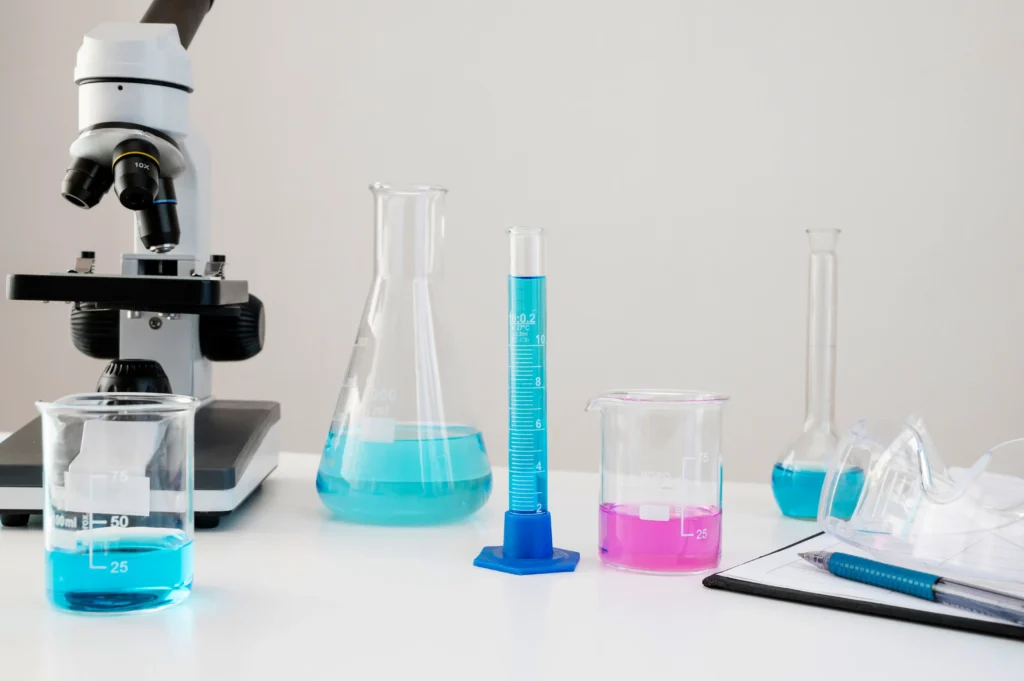
The Essence of the Lab: From “What it is” to “How to Use it”
Before diving into the inventory, it’s crucial to understand the principles that govern a lab. It’s not just a space filled with gadgets; it’s a system where precision, safety, and purpose intertwine. Every tool is an extension of the scientist’s hand, designed to guarantee reliable results.
Materials vs. Instruments: The Expert’s Key Distinction
While these terms are often used interchangeably, knowing how to tell them apart is the first step in speaking like a pro.
Lab Materials (Supplies)
Think of these as passive utensils. They are generally made of glass, porcelain, or plastic, and their primary function is to contain, mix, or transfer substances. They don’t require electricity. They are the skeleton of the lab. Classic examples include: beakers, flasks, and test tubes.
Lab Instruments (Equipment)
These are the “brains” or “machines” of the lab. They are more complex pieces of equipment, often electric, mechanical, or electronic. They are usually active, perform a specific function, and require power to operate. They are the technological heart of research. Examples: microscopes, centrifuges, spectrophotometers.
100 Laboratory Instruments
To make this guide truly useful, we’ve organized these 100 instruments into functional categories. This allows you to go straight to what you need, whether you’re looking for tools to measure, heat, or analyze.
Containment and Volume Measurement
This is the pillar of any lab the equipment we’ve all interacted with. It’s the ABCs of experimentation.
Erlenmeyer Flask
This wide-based, narrow-necked flask is designed for preparing solutions and carrying out titrations. Its unique shape minimizes splashing and solvent loss during vigorous swirling, making it indispensable for many chemical reactions.
- Pro Tip: Even though it has graduation marks, it is not a high-precision measuring tool. Use it for mixing and heating, but always measure final volumes with a graduated cylinder or pipette.
Beaker
Considered the workhorse of the lab, beakers are used to hold, mix, heat, or cool liquids. The pouring spout makes transferring liquids easy, and they are often used as containers to dissolve solids or collect filtrates.
- Pro Tip: The graduation is for reference only. If you need accuracy, a beaker will give you an approximation, but a graduated cylinder will give you the precision you’re looking for.
Graduated Cylinder
This cylindrical tool is specifically designed to measure liquid volumes with a much higher level of accuracy than a beaker. It’s the go-to choice for preparing solutions where the amount of solvent must be controlled with reasonable exactness.
- Pro Tip: To get an accurate reading, look at the meniscus (the curve of the liquid) at eye level. For water, read from the lowest point of the meniscus.
Volumetric Flask
The gold standard for analytical chemistry. It is used to prepare solutions with an extremely precise concentration. Its single graduation mark on the neck ensures the final volume is exact, which is vital for preparing standard solutions.
- Pro Tip: When diluting, add the solute first, then the solvent until just below the graduation mark. Finally, use a Pasteur pipette to add liquid drop by drop until the meniscus touches the line.
Burette
A highly precise volume measurement tool, primarily used in the titration process. The burette allows for the controlled, drop-by-drop dispensing of a liquid (the titrant) to determine the exact concentration of an unknown substance.
- Pro Tip: Before use, “prime” or purge the burette. Ensure there are no air bubbles in the tip. If there are bubbles, your measured volume won’t be accurate.
Volumetric Pipette
Used to transfer a fixed, exact volume of liquid. Its design with a single graduation mark makes it the most precise tool for specific volume transfers.
- Pro Tip: Do not blow out the remaining liquid in the tip; the pipette is calibrated so that that tiny volume is not meant to be transferred.
Graduated Pipette
Unlike the volumetric pipette, this tool has graduation marks along its body, allowing for the transfer of variable volumes of liquids. It’s used in procedures where good precision is needed, but not the extreme accuracy of a volumetric pipette.
- Pro Tip: They are less precise than volumetric pipettes but more versatile. Use them when extreme precision isn’t the deal-breaker.
Pasteur Pipette (Eyedropper)
A simple dropper, ideal for transferring small amounts of liquids non-quantitatively—meaning without measuring an exact volume. It’s perfect for adding indicators or reagents drop by drop.
- Pro Tip: It’s not designed for measurement, but for non-quantitative transfer. Perfect for adding reagents dropwise.
Wash Bottle
This flexible plastic bottle with a thin nozzle is used to rinse glassware or to add a solvent (usually distilled or deionized water) with precision, without the risk of contamination from a common tap.
- Pro Tip: When filling it, use a funnel to avoid spills and make sure to label it with its contents to avoid mix-ups.
Test Tube
The test tube is fundamental for performing small-scale chemical reactions, heating small amounts of liquids, and conducting qualitative tests. Its tubular design and ability to withstand high temperatures make it ideal for these experiments.
- Pro Tip: When heating a test tube, never point the mouth toward yourself or anyone else. The liquid can “bump” or boil over unexpectedly.
Round-Bottom Flask (Boiling Flask)
Its round base is ideal for heating liquids uniformly, as heat is distributed across the entire surface. It’s commonly used in distillation, reflux, and other reactions requiring prolonged, controlled heating, often in conjunction with a heating mantle.
- Pro Tip: Its spherical shape distributes heat more evenly than an Erlenmeyer, reducing “hot spots” and the chance of glass breakage.
Glass Funnel
Its main function is to facilitate the transfer of liquids or powders into containers with narrow necks, preventing spills. It’s also indispensable in gravity filtration when used with filter paper to separate solids from liquids.
- Pro Tip: A glass funnel with a 60° angle is ideal for standard filtrations.
Kitasato Flask (Filter Flask)
Also known as a vacuum flask, this is the key piece for vacuum filtration. Its side arm allows for connection to a vacuum pump, which speeds up the filtration process by creating negative pressure that sucks the liquid through the filter.
- Pro Tip: Always secure this flask with a clamp to prevent it from tipping over under the weight of the vacuum tubing.
Crystallizing Dish
A wide-mouthed, flat-bottomed container used for the evaporation of liquids at room temperature and for the crystallization process. As the solvent slowly evaporates, the solute separates and forms ordered crystals.
- Pro Tip: Evaporation must be slow for crystals to form in a pure, orderly fashion.
Imhoff Cone
A conical funnel with graduations at the bottom, used specifically to measure the volume of settleable solids in water. It’s a vital tool in wastewater analysis.
- Pro Tip: This vessel is designed for “quiet time” to allow solids to settle at the bottom. The settling time is key to an accurate measurement.
Dropper Bottle
Its cap with an integrated pipette allows for the controlled dispensing of liquids in tiny, dropwise amounts. They are perfect for adding indicators or reagents needed in very small volumes.
- Pro Tip: They are perfect for storing pH indicators or standard solutions, but ensure the bottle material is compatible with the reagent to prevent degradation.
Watch Glass
This concave glass disc has two main uses: covering beakers to prevent contamination and acting as a surface for weighing small amounts of solids or for low-scale evaporation.
- Pro Tip: It can be used to weigh small amounts of solids on a balance, as its convex shape makes transferring the material easier.
Mortar and Pestle
A classic tool for crushing, grinding, and mixing solid substances. The pestle is used to apply pressure and friction against the mortar, reducing particle size and increasing surface area for faster reactions.
- Pro Tip: Use circular motions with the pestle against the mortar for grinding rather than “hammering,” which can break the equipment.
Porcelain Evaporating Dish
A heat-resistant container used for heating solids to high temperatures or for evaporating solvents. It is the ideal material for calcination or ignition procedures in a muffle furnace.
- Pro Tip: While very sturdy, do not subject it to sudden temperature changes (thermal shock), as it could crack.
Büchner Funnel
Used in conjunction with the Kitasato flask for suction filtration. The funnel has a perforated base that supports the filter paper and allows the vacuum to pull the liquid through, making the filtration process much faster and more efficient.
- Pro Tip: Ensure the filter paper covers all the holes in the funnel for efficient filtration.
Glass Stirring Rod
A simple glass rod used to manually mix and homogenize solutions in a beaker or flask. It’s a simple but crucial tool for dissolving solids or mixing reagents.
- Pro Tip: Don’t use the stirring rod to scrape the walls of the beaker, as you might scratch or weaken the glass.
Separatory Funnel
A funnel with a stopcock at the bottom, designed to separate mixtures of immiscible liquids with different densities, such as oil and water. The stopcock allows you to drain the denser liquid slowly.
- Pro Tip: Remember to “vent” or release internal pressure periodically by opening the stopcock while inverted. Gas buildup can cause the funnel to pop open violently.
Stirring Rod
A glass or plastic tool used to stir and homogenize solutions manually. Essential for ensuring all components of a mixture are evenly distributed.
- Pro Tip: Don’t use the stirring rod to scrape the walls of the beaker, as you might damage the glass.
Reagent Bottle (Storage Flask)
Used to store reagents and solutions, protecting them from light or air. They come in different sizes and materials, such as amber glass for light-sensitive substances and plastic for strong acids or bases.
- Pro Tip: Choose amber glass bottles for light-sensitive (photosensitive) reagents.
Lab Spatula
A small, flat tool usually metal or plastic used to scoop and transfer small amounts of solids, whether powders, granules, or crystals. Indispensable for accurate weighing and preventing cross-contamination.
- Pro Tip: Keep spatulas clean and bone-dry to avoid contaminating reagents.
Measurement and Precision Equipment
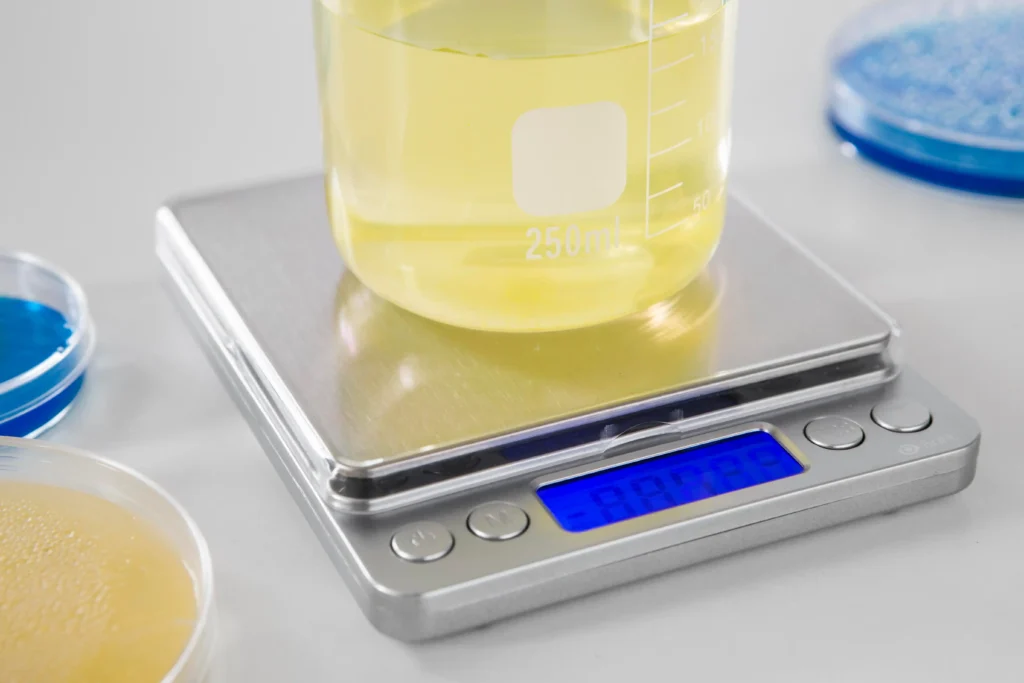
These tools are the heart of any quantitative experiment and are crucial for obtaining reproducible results.
Analytical Balance
A high-precision instrument used to measure mass with an accuracy of up to 0.0001g. It is vital in preparing standard solutions and in any quantitative experiment where mass must be measured with maximum precision.
- Pro Tip: Calibrate it regularly and always use it in an environment free of vibrations and drafts. The weighing chamber door must be closed to prevent air currents from affecting the reading.
Precision Balance
Similar to the analytical balance but with lower precision, it is used for weighing materials where maximum exactness is not required, such as in general-use solutions or weighing samples not critical to a reaction’s stoichiometry.
- Pro Tip: Even though it’s less sensitive, it’s still a delicate instrument. Handle it with care and clean any spills immediately.
pH Meter
This instrument measures the acidity or alkalinity of a solution precisely, expressed on the pH scale. It is much more accurate than litmus paper and is fundamental in biology, chemistry, and environmental science for monitoring reaction conditions or culture media.
- Pro Tip: The glass probe must always stay wet. Calibrate it before every use with buffer solutions (pH 4, 7, and 10) to guarantee accuracy.
Lab Thermometer
Designed to measure the temperature of liquids or solids over a wider range than clinical thermometers. It is essential for monitoring temperatures in chemical reactions, determining boiling or melting points, and in distillation processes.
- Pro Tip: Never use it as a stirring rod. If it breaks, mercury is dangerous; notify a supervisor immediately.
Thermal Cycler (PCR Machine)
An essential instrument in molecular biology and genetics. Its function is to program and automate the heating and cooling cycles necessary for the Polymerase Chain Reaction (PCR), a process that amplifies DNA sequences for study.
- Pro Tip: Correct programming of temperature cycles is vital. A mistake of even one degree can ruin a reaction.
Potentiometer
Used to measure the electrical potential of an electrochemical cell. It is a key instrument for performing potentiometric titrations, where the change in potential is measured as a reagent is added, or for determining the concentration of specific ions in a solution.
- Pro Tip: Ensure electrodes are clean and well-maintained to obtain accurate readings.
Conductivity Meter
Measures the electrical conductivity of a solution. This measurement indicates the total concentration of dissolved ions and is fundamental in water quality analysis or determining salt concentrations.
- Pro Tip: It’s ideal for determining the concentration of dissolved ions in water.
Spectrophotometer
The backbone of spectroscopy and colorimetry. It measures the amount of light a substance absorbs at different wavelengths. This instrument is crucial for identifying substances, measuring their concentration, and studying reaction kinetics.
- Pro Tip: Handling the cuvette is crucial; only touch the frosted sides so you don’t leave fingerprints that interfere with the light path.
Polarimeter
Measures the angle of rotation of polarized light passing through a sample. This instrument is used to identify and quantify optically active compounds, such as sugars and amino acids, in the pharmaceutical and food industries.
- Pro Tip: Temperature and sample concentration both affect the rotation reading.
Refractometer
Measures the refractive index of a substance. This value is a measure of the purity and concentration of a liquid and is commonly used in industry for quality control, such as measuring sugar content in fruit juices.
- Pro Tip: Just a few drops of the sample are usually enough.
Calorimeter
Measures the heat changes of a chemical reaction or physical process. It is fundamental for determining the enthalpy of a reaction and studying the thermodynamic properties of substances.
- Pro Tip: Insulate the calorimeter from the environment to prevent heat loss or gain that would affect measurement precision.
Voltmeter
Measures the electrical potential difference between two points in a circuit or in an electrochemical cell. It is fundamental in electrochemistry for potentiometric titration analysis and for determining the electrode potential of a reaction.
- Pro Tip: Ensure electrodes are clean and calibrated to avoid reading errors.
Dissolved Oxygen Meter
This instrument measures the amount of dissolved oxygen in a liquid, which is a crucial indicator of aquatic ecosystem health, water quality, and the efficiency of processes like fermentation or wastewater treatment.
- Pro Tip: Calibrate the meter before each use and keep the probe clean for accurate readings.
Moisture Analyzer
Determines the water content in a sample, whether solid, liquid, or gas. This instrument is crucial in industries like agriculture, pharmaceuticals, and food, where moisture control is vital for product quality and shelf life.
- Pro Tip: Proper sample preparation is fundamental to obtaining accurate results.
Density Meter (Densitometer)
Measures the density of a liquid or solid substance, aiding in material identification, product quality control, and determining solution concentration. Density is a physical property that doesn’t change with the amount of the sample.
- Pro Tip: Ensure the instrument is free of air bubbles, as they can significantly skew the reading.
Viscometer
Measures a fluid’s resistance to flow. This is an important property in the petroleum, food, and pharmaceutical industries, as it affects handling and final product quality from paint to yogurt.
- Pro Tip: Temperature is a critical factor in viscosity. Control the sample temperature to obtain comparable results.
Gas Chromatograph (GC)
An analytical technique for separating and analyzing compounds that can be vaporized without decomposition. Used to identify and quantify substances in a complex mixture, such as purity analysis of organic compounds or contaminant detection.
- Pro Tip: Instrument calibration and choosing the correct column are essential for reliable results.
High-Performance Liquid Chromatograph (HPLC)
A powerful analytical technique used to separate, identify, and quantify compounds in a mixture. Unlike GC, it is used for non-volatile or unstable compounds, making it fundamental in the pharmaceutical industry for drug quality control.
- Pro Tip: Solvent purity is critical; even trace impurities can affect the outcome.
Mass Spectrometer (MS)
Measures the mass-to-charge ratio of ions. It’s used to identify unknown compounds, quantify known ones, and determine molecular structures with extreme precision. It is often coupled with a GC or HPLC for complex mixture analysis.
- Pro Tip: Often coupled with a GC or HPLC for analyzing complex mixtures.
Nuclear Magnetic Resonance (NMR)
Used to determine the content and purity of a sample, as well as to analyze its molecular structure. One of the most powerful techniques for structural elucidation, providing detailed info about a molecule’s atomic skeleton.
- Pro Tip: The sample must be very pure, and the solvent must not contain the same nucleus as the sample.
Centrifuge
Separates the components of a heterogeneous mixture, such as cells, organelles, or precipitates. Centrifugal force causes denser components to settle at the bottom of the test tube.
- Pro Tip: Always counterbalance the centrifuge tubes. An imbalance can damage the instrument and be dangerous.
Freeze Dryer (Lyophilizer)
A dehydration process used to preserve perishable material or make it more convenient for transport. The freeze dryer freezes the material and then reduces the surrounding pressure to allow frozen water to sublime directly from solid to gas, preserving the material’s structure.
- Pro Tip: Ensure the sample is completely frozen before starting the sublimation process.
Sintered Glass Filter
A glass funnel with a porous glass disc used for filtrations requiring resistance to strong chemicals that might damage filter paper. Ideal for filtering acids or bases that could react with paper.
- Pro Tip: Do not use it with liquids containing particles that might clog the pores.
Water Bath
Heats substances in test tubes or flasks at a controlled and uniform temperature. Used when gentle heating is needed or when substances are sensitive to direct heat.
- Pro Tip: Ensure the water level is enough to submerge the flask but not so much that it overflows when the container is immersed.
Incubator
Maintains a controlled environment of temperature, humidity, and often CO2 for the growth of microorganisms, cells, or tissues. Indispensable in microbiology and cell culture.
- Pro Tip: Monitor temperature and CO2 concentration regularly to ensure optimal growth conditions.
Heating, Distillation, and Separation Equipment
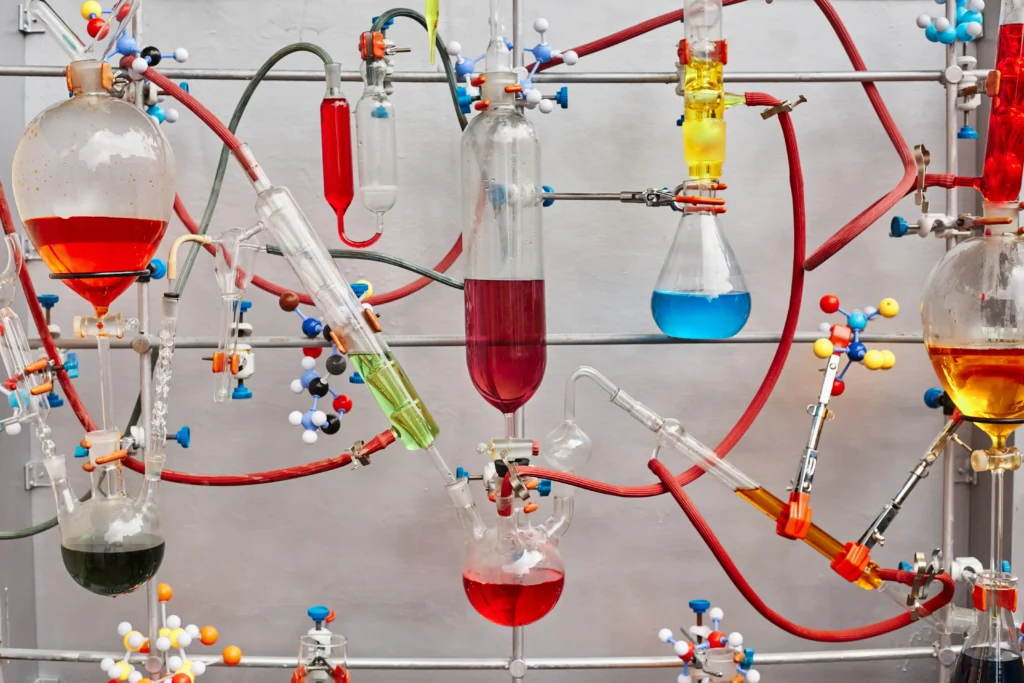
These tools allow you to manipulate matter in amazing ways.
Bunsen Burner
A controlled heat source that produces a single gas flame. Used for heating substances in glass or metal containers, sterilizing equipment, or even bending glass. Its ability to adjust the air-gas mixture allows for different types of flames.
- Pro Tip: For the hottest and safest flame, adjust the collar so the air mix produces a blue flame. The yellow flame is cooler and can generate soot.
Hot Plate with Magnetic Stirrer
This equipment combines two functions in one: heating and stirring solutions. The hot plate raises the temperature while a magnetic field spins a stir bar inside the vessel, ensuring the solution heats and mixes uniformly.
- Pro Tip: Stirring speed should be just enough to create a vortex, not to splash the contents. The stir bar must be the right size for the liquid volume.
Separatory Funnel
(Repeated for category consistency) A funnel with a stopcock at the bottom, designed to separate mixtures of immiscible (non-mixing) liquids, like water and oil.
- Pro Tip: Remember to vent periodically to release pressure.
Distillation Apparatus
Used to purify a liquid or separate the components of a liquid mixture based on their different boiling points. The liquid is heated until it evaporates, then the vapor is cooled and condensed into another container, leaving behind impurities or other components.
- Pro Tip: Ensure the condenser has a constant flow of cold water. This guarantees the vapor turns back into liquid efficiently.
Heating Mantle
Equipment designed to heat round-bottom flasks safely and uniformly. It uses an electric resistor to generate heat, eliminating the fire risk associated with using a Bunsen burner with flammable solvents.
- Pro Tip: Use a temperature controller to prevent overheating.
Vacuum Valve
Used in vacuum filtration and distillation systems to control air flow and regulate pressure. A key component for creating and maintaining the necessary vacuum in experiments.
- Pro Tip: Check that all joints are airtight before turning on the vacuum pump.
Water Aspirator
A type of vacuum pump that uses the Venturi effect to generate a vacuum from water flow. Commonly used in vacuum filtrations in labs with a water supply, serving as a simple alternative to electric vacuum pumps.
- Pro Tip: Use a vacuum trap to prevent water from back-flowing into your flask.
Glass Filtration Funnel
Used to separate a solid from a liquid. Filter paper is placed inside, and gravity does the work of separating the mixture. A simple but effective method for compound purification.
- Pro Tip: Always use filter paper that is compatible with the substance you are filtering.
Muffle Furnace
A high-temperature oven used to calcine materials, incinerate samples, or perform gravimetric analysis. Capable of reaching temperatures above 1000°C to completely remove volatile components.
- Pro Tip: Always use crucible tongs to remove materials from the furnace.
Sample Chamber
A sealed container used to keep a sample in an environment of controlled pressure and temperature. Crucial in experiments where the sample is sensitive to atmospheric conditions.
- Pro Tip: Ensure the sample chamber is clean and dry.
Rotary Evaporator (Rotovap)
Used to remove solvents from a sample by evaporation, usually under vacuum. The rotation of the flask increases the evaporation surface and the vacuum reduces the solvent’s boiling point, allowing fast, efficient removal without damaging the sample.
- Pro Tip: Using the rotovap can speed up solvent evaporation and reduce the chance of heat-damaging the sample.
Temperature Probe
Used to measure the sample temperature continuously and precisely. Designed to be submerged in liquids or inserted into solids for real-time readings.
- Pro Tip: Ensure the probe is fully submerged in the sample for an accurate reading.
Peristaltic Pump
Used to pump a variety of fluids through a tube without the fluid touching the pump’s moving parts. Ideal for transferring sterile or corrosive liquids.
- Pro Tip: Perfect for pumping corrosive or sterile liquids since only the tubing touches the substance.
Magnetic Stirrer
A lab instrument that uses a rotating magnetic field to spin a stir bar (or “flea”) submerged in a solution. Allows for homogeneous mixing without direct contact.
- Pro Tip: A magnet in the base of the bar connects with the machine’s magnetic field, causing it to spin.
Water Distiller
Used to purify water. Water is heated until it turns to vapor, then condensed in a separate container, leaving behind impurities and minerals.
- Pro Tip: Ensure the distiller is clean and well-maintained.
Porcelain Crucible
A small porcelain container used for heating solids to high temperatures. Very resistant to the heat of a burner or muffle furnace.
- Pro Tip: Use crucible tongs to handle the crucible.
Graphite Crucible
A small graphite container used for heating solids at high temperatures, especially for melting metals. Graphite is extremely heat-resistant.
- Pro Tip: Graphite is highly heat-resistant.
Pipette Controller (Pipettor)
Used for controlled and safe pipetting. Connects to a pipette to suction and release liquids, reducing error risk and avoiding mouth contact.
Pro Tip: Ensure the pipettor is compatible with the pipette size.
Flask Clamps
Fastening tools used to secure flasks and other glassware to a support stand. Used to hold glassware safely during heating, distillation, or filtration.
- Pro Tip: Ensure the clamps are tightened securely but not so tight they crush the glass.
Crucible Tongs
A gripping tool used to handle crucibles. The tips are often graphite-coated or designed to be heat-resistant to avoid damaging the crucible.
- Pro Tip: Use these specifically to remove materials from the muffle furnace.
Burette Clamps
A fastening tool used to hold burettes to a stand. Used to keep the burette in a perfectly vertical position during titration, which is essential for accurate measurement.
- Pro Tip: Ensure the clamps are tightened securely.
Ring Stand
A metal structure used to hold a variety of laboratory instruments at a specific height. It is the “skeleton” of an experimental setup, allowing for the attachment of flasks, burettes, thermometers, and other equipment.
- Expert Tip: Use the ring stand to secure clamps and other instruments.
Iron Ring
A metal ring used to hold a funnel or a flask to a stand. It is used in conjunction with a flask clamp or a wire gauze to hold glassware securely.
- Expert Tip: Use the iron ring with a flask clamp to hold the flask securely.
Wire Gauze
A wire mesh used to protect glassware from direct heat. It is placed over an iron ring and used when heating flasks with a Bunsen burner to distribute heat evenly.
- Expert Tip: Wire gauze is used with a flask clamp to hold the flask securely.
Clay Triangle
A metal triangle with a clay base used to support a crucible. It is placed on a ring stand and used to heat the crucible with a Bunsen burner.
- Expert Tip: The clay triangle is used with a stand and crucible tongs.
Microscopy and Biology Tools
Compound Light Microscope
This is the most iconic piece of equipment in biology. It is used to observe objects and specimens at a microscopic level, magnifying the image to reveal details invisible to the naked eye, such as cells, bacteria, and tissues. It is essential in biological and medical research.
- Expert Tip: Always start your observation with the lowest power objective lens and then move up. Never use the coarse adjustment knob with a high-power objective.
Petri Dish
A shallow, transparent, flat-bottomed culture vessel used to grow microorganisms and cells on a solid or liquid culture medium. They are fundamental to microbiology, where they are used to isolate and study bacterial colonies.
- Expert Tip: Always keep them upside down in the incubator. This prevents water vapor from condensing on the lid and dripping onto the culture, which would contaminate it.
Autoclave
A piece of sterilization equipment that uses high-pressure steam to kill bacteria, viruses, fungi, and spores. It is indispensable for sterilizing culture media, glassware, and reusable equipment, ensuring a contamination-free work environment.
- Expert Tip: Follow loading protocols to the letter. Do not overcrowd the autoclave and make sure materials have enough space for steam to circulate.
Laminar Flow Hood
A workspace designed to protect work materials from contamination. It uses HEPA filters to create a sterile, unidirectional airflow, which prevents the entry of contaminant particles and is essential for cell culture and sterile media preparation.
- Expert Tip: Always work about 6 inches (15cm) away from the front of the hood and avoid sudden movements to prevent breaking the airflow.
Transmission Electron Microscope (TEM)
This type of microscope uses electrons instead of light to create an image of the sample, allowing for much higher resolution and the observation of the internal structure of cells, viruses, and materials at a molecular level.
- Expert Tip: It requires very careful sample preparation and specialized training to operate.
Scanning Electron Microscope (SEM)
This also uses electrons, but to create three-dimensional images of a sample’s surface. It is ideal for studying the topography of materials and biological objects.
- Expert Tip: Samples must be coated with a conductive layer, such as gold or platinum, to prevent charge buildup.
Homogenizer
A laboratory instrument used to break up cells and tissues to release their internal components, such as proteins and nucleic acids. It is a crucial step in sample preparation for analyzing proteins and other cellular components.
- Expert Tip: The homogenizer is used to prepare samples for the analysis of proteins and other cellular components.
High-Speed Centrifuge
A type of centrifuge used to separate the components of a mixture at very high speeds, generating a centrifugal force much greater than that of a benchtop centrifuge. It is ideal for separating cellular organelles, macromolecules, and viruses.
- Expert Tip: It must be used with special centrifuge tubes that can withstand high speeds.
Gel Electrophoresis Equipment
Equipment used to separate DNA, RNA, or protein molecules based on their size and charge. The gel acts as a porous matrix that allows smaller molecules to move faster than larger ones.
- Expert Tip: You must use a gel and buffer that are compatible with the molecules being separated.
Real-Time PCR Machine (Thermal Cycler)
An instrument used to monitor DNA amplification in real-time. It is ideal for gene detection, nucleic acid quantification, and infectious disease diagnosis, as it allows for sample detection in a single step.
- Expert Tip: A fluorescent probe that binds to the DNA must be used to monitor amplification.
Micropipette (Automatic Pipette)
Used to transfer very small volumes of liquid with extreme precision, usually in the microliter range. They are essential for molecular biology, microbiology, and biochemistry.
- Expert Tip: Always use the correct tip for the volume you are transferring and calibrate the pipette regularly.
Vortex Mixer
A compact tool used to mix small test tubes or vials. It provides vigorous agitation to quickly homogenize samples.
- Expert Tip: Avoid using the vortex with liquids that might splash out.
Fume Hood
A ventilated enclosure used to protect workers from toxic fumes, hazardous gases, and dust. It is essential when working with volatile chemicals.
- Expert Tip: Make sure the hood is functioning correctly before you start working.
Analytical Balance (Sample Balance)
This balance is designed to weigh samples that are sensitive to atmospheric conditions, such as humidity or air currents. It features a sealed weighing chamber that protects the sample from the environment, which is essential for obtaining precise results in materials research or the pharmaceutical industry.
- Expert Tip: Use a glass container or weighing paper to weigh the sample.
Steam Distiller
Used to separate essential oils from plants. A stream of steam is used to carry the essential oils over.
- Expert Tip: A condenser must be used to condense the steam.
Ostwald Viscometer
Used to measure the viscosity of a fluid. A capillary tube is used to measure the time it takes for the fluid to flow through the tube.
- Expert Tip: The Ostwald viscometer is ideal for measuring the viscosity of liquids that are not very viscous.
Vacuum Pump
A machine used to generate a vacuum. It is used in filtration systems, distillation, and other lab processes that require a vacuum.
- Expert Tip: The vacuum pump is an essential piece of equipment in a laboratory.
Oil Bath
A metal container filled with oil used to heat substances to a controlled temperature. It is ideal for heating substances that are heat-sensitive.
- Expert Tip: Make sure the oil level is sufficient to submerge the flask.
Drying Oven
A temperature-controlled oven used to dry materials. It is ideal for drying samples of materials that are sensitive to moisture.
- Expert Tip: The drying oven is an essential piece of equipment in a laboratory.
Incubator
A temperature-controlled chamber used to incubate samples. It is ideal for incubating microorganism samples.
- Expert Tip: The incubator is an essential piece of equipment in a laboratory.
Liquid Nitrogen Tank
A tank used to store liquid nitrogen. Liquid nitrogen is used for the cryopreservation of samples.
- Expert Tip: Liquid nitrogen is a hazardous material.
Fluorescence Spectrometer
Measures the fluorescence of a sample. It is ideal for detecting molecules that emit fluorescence.
- Expert Tip: The sample must be compatible with the fluorescence spectrometer.
UV (Ultraviolet) Lamp
Used to sterilize materials and equipment. UV light kills bacteria and viruses.
- Expert Tip: UV light is dangerous to the eyes and skin.
Microplate Reader
An instrument used to measure the absorbance, fluorescence, and luminescence of samples.
- Expert Tip: The microplate reader is ideal for analyzing a large number of samples.
Data Logger
A device used to record experimental data. It is used with temperature, pressure, or humidity sensors.
- Expert Tip: The data logger is ideal for analyzing experimental data.
Expert Safety and Maintenance Standards: Beyond the Rules
I remember when I was a student and I thought safety protocols were just a list of boring rules. But the first time a classmate accidentally mixed two chemicals they shouldn’t have, and smoke started filling the flask, I got it. Safety isn’t a limitation; it’s a way to protect yourself, your colleagues, and the results of your hard work.
Essential Safety Protocols
- Personal Protective Equipment (PPE): Always wear safety goggles, gloves, and a lab coat. Latex gloves aren’t universal; some chemicals will eat right through them.
- Know the layout: You should always know where the emergency exits, fire extinguishers, and safety showers are located.
- Don’t mix blindly: If you aren’t sure of the reaction, don’t mix it. A “let’s see what happens!” moment can end very badly.
Maintenance and Calibration: A Good Scientist’s Secret
A poorly maintained instrument is as useless as a broken one.
- Cleaning: Wash all glassware immediately after use. Residue can contaminate the next experiment.
- Calibration: Analytical balances, pH meters, and thermometers must be calibrated regularly to ensure the accuracy of your measurements.
The Basic Kit to Start Your Own Lab 🔬
If you want to start your scientific adventure at home, here is a list of the 10 most essential instruments for a safe and fun start. With these tools, you’ll be able to perform a wide variety of basic experiments and understand the fundamental principles of chemistry and biology.
Safety Goggles
Safety first. A good pair of safety goggles protects your eyes from chemical splashes, irritating vapors, or small glass fragments. Never start an experiment without them.
Nitrile Gloves
Nitrile gloves are indispensable for protecting your hands from chemicals and avoiding sample contamination. Unlike latex, they are more resistant to many solvents.
Digital Precision Balance
A digital precision balance allows you to accurately measure small amounts of reagents. Measurement precision is crucial for your experiments to turn out right.
Erlenmeyer Flask
The Erlenmeyer flask, with its conical shape and narrow neck, is ideal for mixing, heating, or storing liquids. Its design prevents splashing during agitation.
Beakers
Beakers are graduated cylindrical glass or plastic containers. While they aren’t for high-precision measurements, they are perfect for preparing solutions and heating liquids.
Graduated Cylinder
A graduated cylinder is a cylindrical tube with a stable base and precise volume markings. It is the primary tool for measuring liquid volumes with high accuracy.
Stirring Rod
A glass stirring rod is used to mix reagents or dissolve solids in a liquid. It can also be useful for pouring liquids without spilling.
Transfer Pipettes (Eyedroppers)
Transfer pipettes, also known as eyedroppers, are perfect for moving small amounts of liquids from one container to another with control and precision.
Laboratory Funnel
The laboratory funnel is used to transfer liquids or powders into containers with narrow openings, like flasks. It is also fundamental for filtration processes.
Alcohol Burner
An alcohol burner is a safe and controlled heat source for heating liquids in test tubes or flasks. It is a safer alternative to a Bunsen burner for a home lab.
With this basic kit, you have everything you need to start exploring the fascinating world of science from the comfort of your home!
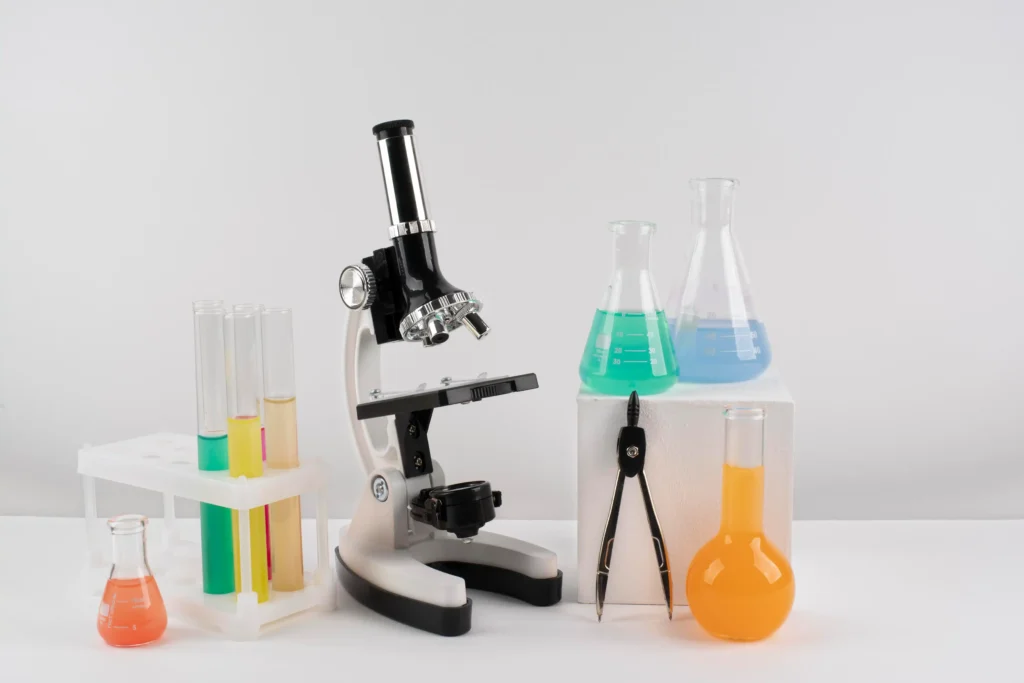
Frequently Asked Questions about Lab Instruments
What is a Pasteur pipette and what is its main use?
It’s a glass or plastic dropper used to transfer small amounts of liquid without measuring an exact volume.
What is a rotary evaporator used for in organic chemistry?
It’s used to remove solvents from a sample quickly and efficiently, especially those with a low boiling point.
What kind of instrument is used to measure the pH of very small solutions?
A pH microelectrode is used in conjunction with a pH meter for measurements in small volumes.
How do you calibrate a burette for an accurate titration?
The burette is primed (flushed) with the titrant to remove air bubbles before the titration.
What is the difference between an optical microscope and a scanning electron microscope?
The optical one uses light to see living cells, while the electron one uses electrons to get a 3D image of the surface of a non-living sample.
What is the mortar and pestle used for in a pharmacy lab?
To grind tablets or medications into powder to facilitate their dissolution or mixing into a formulation.
Why is a Büchner funnel used in vacuum filtration?
Its perforated base and design complement a side-arm flask (Kitasato flask) to speed up the separation of solids and liquids.
What is a potentiometer and how is it used to measure electrical potential?
A potentiometer is a voltmeter that measures the potential of an electrochemical cell, which is vital in potentiometric titrations.
How is a refractometer used to measure sugar content?
A few drops of the sample are placed on the refractometer, and the refractive index is read, which is directly related to the sugar concentration.
What is the use of a freeze-dryer (lyophilizer) in the food industry?
To dehydrate and preserve food without losing its structure or properties, as is the case with instant coffee.
The laboratory isn’t a place of magic, but of method, and every tool around you is a testament to the precision and passion that science demands. Knowing each instrument isn’t just about memorizing names; it’s about understanding their purpose, their limitations, and their potential.
Now that you’ve traveled the path from the beaker to the centrifuge, I invite you to take the next step. Which instrument did you find the most fascinating? Is there another one you consider indispensable that didn’t make our list? Leave us a comment!