
Learning is the core of the human experience. From the moment we are born, every stimulus, every mistake, and every social interaction shapes our understanding of the world. But have you ever wondered why some knowledge sticks with us forever, while other information fades within hours? This profound difference isn’t accidental; it stems from fundamental principles studied for over a century by psychologists and educators. To unravel this mystery, we must dive into the world of learning theories.
In essence, learning theories are the blueprints that explain how new skills and knowledge are acquired, modified, and retained. They are crucial tools for anyone dedicated to teaching from university professors to parents or instructional designers providing a scientific foundation to transform educational practice. Understanding their relevance not only improves teaching methods but also gives us a unique perspective on why any given learning process succeeds or fails.
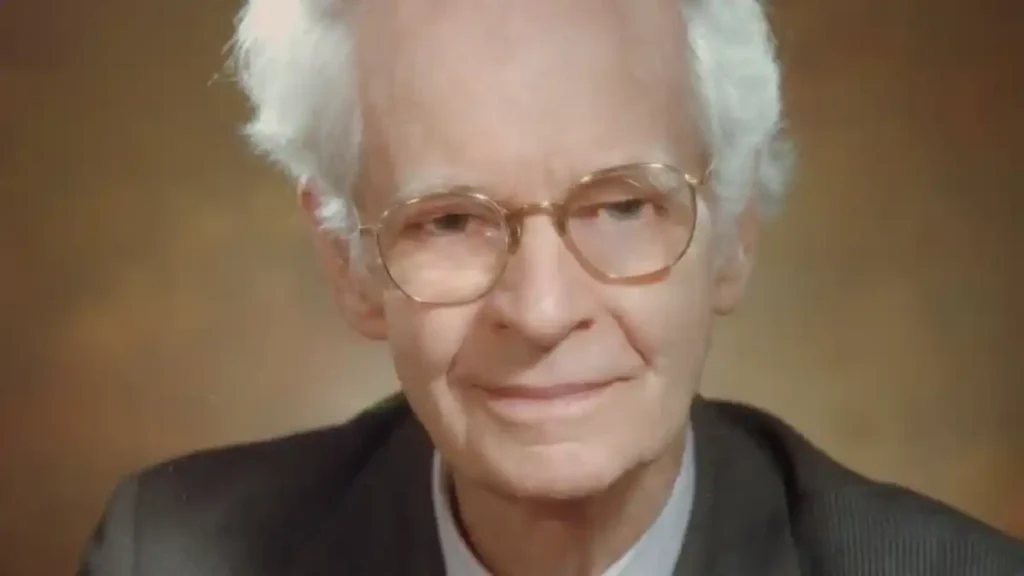
Classification and Evolution: The 4 Great Learning Theories
Throughout the history of educational psychology, researchers have attempted to frame the learning process from different angles, resulting in a rich variety of models. However, for practical purposes, most are grouped into four major paradigms that mark a shift in focus: from observable behavior to internal mental processes and, finally, to social interaction.
The most influential and contemporary theories include:
- Behaviorism: Focuses on behavioral change through external stimuli.
- Cognitivism: Focuses on internal mental processes like memory and problem-solving.
- Constructivism: Posits that knowledge is actively constructed by the individual.
- Social Constructivism: Learning occurs fundamentally through social and cultural interaction.
- Social Learning: Learning happens through the observation and imitation of models.
- Humanism: Prioritizes the student’s intrinsic motivation and emotional needs.
- Connectivism: A modern model that views learning as a network distributed across technological nodes.
The Central Debate: Behaviorism vs. Cognitivism
For decades, the field of psychology was polarized by an intense rivalry between behaviorism and cognitivism. The stakes were high: Is learning simply a series of conditioned responses (Behaviorism), or is it a complex mental act (Cognitivism)? While behaviorists saw the mind as an unobservable “black box,” cognitivists driven by the technological revolution and the need to understand processes like memory and language ventured to open it. This debate marked a historic transition in education: the focus shifted from what the student does to what the student thinks. Today, it is recognized that both approaches offer valuable tools depending on the learning objective.
Fundamental Differences Between Key Paradigms
To provide a clear vision of the core differences between the main theories, it is crucial to understand how each defines the learning process and the role of its participants:
Behaviorism (Pavlov, Skinner, Watson)
This paradigm centers on Stimulus-Response and Reinforcement. The student is seen as a Passive Recipient responding to external stimuli. Therefore, the teacher’s role is that of a Contingency Designer an environmental controller who administers reinforcements and punishments to achieve observable behavioral change.
Cognitivism (Piaget, Bruner, Ausubel)
Here, the focus shifts toward internal Information Processes and Mental Structures. The student is an Active Information Processor who encodes, stores, and retrieves data. The teacher acts as a Guide who organizes and structures content and teaching strategies to facilitate meaningful assimilation.
Constructivism (Genetic Piaget, Social Vygotsky)
The essence is the personal Construction of knowledge and reality. The student is an Active Schema Builder, not just a processor. The teacher transforms into a Facilitator who provides the materials and the necessary Scaffolding for the student to discover and build their own knowledge.
Social Learning (Bandura)
Based on Observation, Modeling, and Imitation. The student is an Observer and Reproducer who evaluates the models around them. The teacher’s role is to be the ideal Role Model and a motivator of the student’s Self-Efficacy, demonstrating how tasks are successfully performed.
Behaviorism: Conditioning, Reinforcement, and Punishment
Behaviorism has perhaps the most immediate and visible legacy in the classroom. Born in the early 20th century, its premise is simple: learning is an observable change in behavior resulting from exposure to external stimuli. For the behaviorist, if it can’t be seen, it can’t be studied.
Key Concepts of Behaviorism
Behaviorism emerged as a response to the subjectivism of introspection. Pioneers like John B. Watson argued that psychology should be a natural science, focusing only on what is measurable. This vision laid the groundwork for the rigorous study of the connection between the environment and the organism’s response.
Classical vs. Operant Conditioning (Skinner)
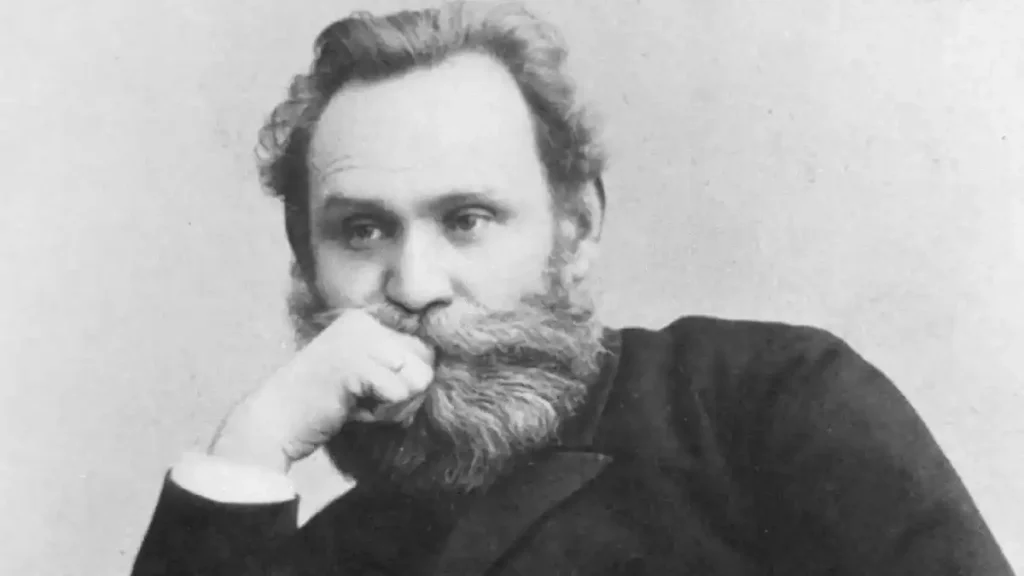
- Classical Conditioning (Pavlov and Watson): This is associative learning. Russian physiologist Ivan Pavlov demonstrated that a neutral stimulus (a bell) can be associated with an unconditioned stimulus (food) to elicit a conditioned response (salivation). In the classroom, this is seen when a student associates anxiety with the mere act of seeing an exam.
- Operant Conditioning (B.F. Skinner): Learning occurs through the consequences of behavior. The organism “operates” on the environment; if the action produces a desired result (reinforcement), it is repeated; if it produces an undesired result (punishment), it is suppressed. Key concepts include Positive Reinforcement (giving something pleasant), Negative Reinforcement (removing something unpleasant), Positive Punishment (giving something unpleasant), and Negative Punishment (removing something pleasant).
Classroom Strategies Based on Reinforcement and Behavior Modification (Practical Application)
Despite criticisms, behaviorism is indispensable for behavior management. A teacher who uses a point system for participation or provides immediate feedback is applying behaviorism.
Case Study: Token Economy in Elementary Education
In a third-grade class struggling with noise, the teacher implements a system: every time the class works quietly for 10 minutes, they earn a token. Upon accumulating 10 tokens, they earn 5 minutes of free time. This Token Economy system (Positive Reinforcement) is a direct behaviorist application, successfully modifying the behavior of an entire group in an observable and measurable way.
Who Postulated the 3 Laws of Learning? (Edward Thorndike)
Before Pavlov and Skinner, Edward Thorndike laid the foundation with his Laws of Learning, the result of his experiments with cats in “puzzle boxes”:
- Law of Effect: Responses followed by satisfaction (reward) are strengthened; those followed by discomfort (punishment) are weakened.
- Law of Exercise: Practice strengthens the connections between stimulus and response.
- Law of Readiness: The organism must be physically and mentally prepared for learning.
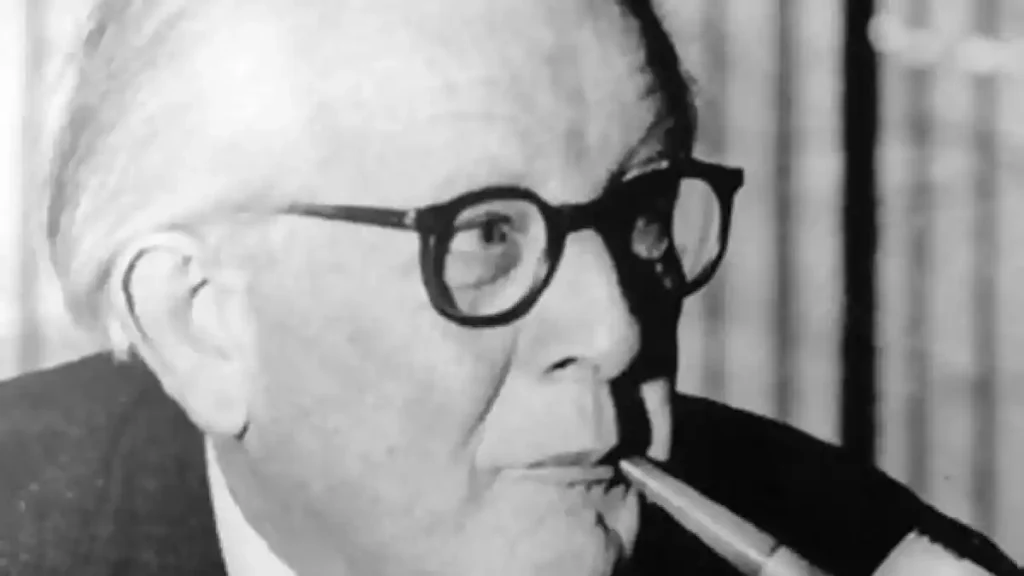
Cognitivism: The Architecture of Thought
While behaviorism focused on the external response, cognitivism starting in the 1950s dedicated itself to understanding what happens inside the mind. For cognitivists, learning is not just a reaction, but the acquisition and restructuring of information.
Gestalt Theory: Insight as Learning
Before cognitivism was fully established, Gestalt Psychology (Max Wertheimer, Wolfgang Köhler) already argued that learning isn’t always linear. This theory holds that the human mind organizes information into meaningful “wholes” before processing it (the famous “the whole is greater than the sum of its parts”). Its key concept is Insight: the sudden understanding of a problem or situation that occurs without the need for trial and error, marking a moment of instant cognitive restructuring. Gestalt reminds us that sometimes, we just need to see the pattern.
Information Processing and Memory
The rise of computing gave psychologists a powerful analogy: the mind as a computer. In this view, humans receive information (input), encode it, store it, and retrieve it (output).
- Sensory Memory: Holds information fleetingly.
- Working Memory (Short-Term): The mental space where we actively process information (limited to about 7 items).
- Long-Term Memory: The permanent storehouse of knowledge. The challenge of learning, from this perspective, is how to effectively move information from working memory to long-term memory.
Genetic Constructivism: What is Piaget’s Learning Theory?
Jean Piaget, a Swiss biologist and psychologist, transformed the view of the child from a passive recipient to an active explorer and “little scientist.” His theory, Genetic Constructivism, posits that knowledge is not received but constructed as the child interacts with the world.
- Assimilation: Using existing mental schemas to understand new information (e.g., calling a wolf a “dog”).
- Accommodation: Modifying existing schemas or creating new ones to fit new information (e.g., learning that not all four-legged animals are dogs).
- Equilibrium: The desired state of harmony between assimilation and accommodation. Piaget described four Stages of Cognitive Development (Sensorimotor, Preoperational, Concrete Operational, Formal Operational), arguing that logical reasoning capacity develops sequentially a crucial idea for knowing what can be taught and when.
Concept Acquisition: David Ausubel and Meaningful Learning
Psychologist David Ausubel approached classroom learning from the perspective of cognitive structure. For him, learning is meaningful (and lasting) only if the new material can be related non-arbitrarily and substantially to what the student already knows. What are the types of learning according to Ausubel? He identifies 3 types:
- Representational: Assigning meaning to a symbol (e.g., knowing the word “dog” represents the animal).
- Conceptual: Understanding classes of objects (e.g., understanding the concept of “mammal”).
- Propositional: Integrating complex ideas (e.g., understanding the relationship between “mammals” and “warm-blooded”).
Practical Application: Mind Maps, Graphic Organizers, and Chunking
If a history teacher simply recites dates, the student retains nothing; that is rote learning. If, instead, they use a mind map to connect events (Cause A -> Event B -> Consequence C), they are helping the brain structure the information, making the learning meaningful. Techniques like Chunking (grouping information into manageable blocks, like the digits of a phone number) are direct applications of cognitive working memory limitations.
Robert Gagné’s Nine Events of Instruction
Robert Gagné, a key figure in instructional design, offered a practical bridge between cognitive theory and teaching. His model breaks learning down into nine instructional events that must be implemented sequentially to ensure retention and transfer, serving as a roadmap for the teacher. These include: gaining attention, informing the learner of the objective, stimulating recall of prior learning, presenting the content, and crucially providing guidance and immediate feedback.
Social Constructivism and the Human Dimension
A key criticism of Piaget’s constructivism is its almost solitary focus on the individual. Social Constructivism and social learning bring the focus back to the context: we don’t learn alone; we learn with others.
Vygotsky’s Sociocultural Theory: Learning as Interaction
Lev Vygotsky, a contemporary of Piaget, argued that learning is rooted in culture and society. Interaction with more competent individuals is the engine of cognitive development.
Central Concept
The Zone of Proximal Development (ZPD): The distance between what a student can achieve alone and what they can achieve with the guidance of an expert or peer. The most effective learning occurs precisely in this potential zone.
Key Concepts
Internalization and Scaffolding: Scaffolding is the temporary support provided by the teacher or tutor to help the student perform a difficult task. Once the student achieves autonomy, the scaffolding is removed.
Social Learning Theory: Modeling, Self-Efficacy, and Bandura
Albert Bandura argued that much of human learning occurs vicariously: by observing others. His Bobo Doll experiment demonstrated that children can imitate aggressive behavior without having been directly reinforced.
- The Modeling Process: Involves four steps: Attention, Retention, Reproduction, and Motivation. A teacher doesn’t just teach content; they model how to think and solve problems.
- Self-Efficacy: A person’s belief in their own ability to execute a task. Bandura emphasized that successful modeling increases self-efficacy, a critical motivational factor.
- Reciprocal Determinism: Behavior, personal factors (beliefs, self-efficacy), and the environment constantly interact. For example, a student’s belief in their ability (personal) affects the difficulty of the task they accept (environment), which in turn affects their performance (behavior).
Implementing Scaffolding and ZPD in Collaborative Projects (Real Examples)
The social-constructivist classroom is a hub of collaboration. When a team of students tackles a project, the teacher doesn’t provide the answer but instead offers selective “scaffolding”: a resource list, a clear rubric, or a targeted Q&A session. Cooperative Learning (where advanced students help their peers) is the ultimate expression of the ZPD.
Humanistic Theory: Intrinsic Motivation and the Role of Emotion
Contrasting with the coldness of behavior and cognitive logic, Humanism (Carl Rogers, Abraham Maslow) introduced the Human Dimension. For them, learning only occurs when basic needs are met and the individual is intrinsically motivated.
Maslow
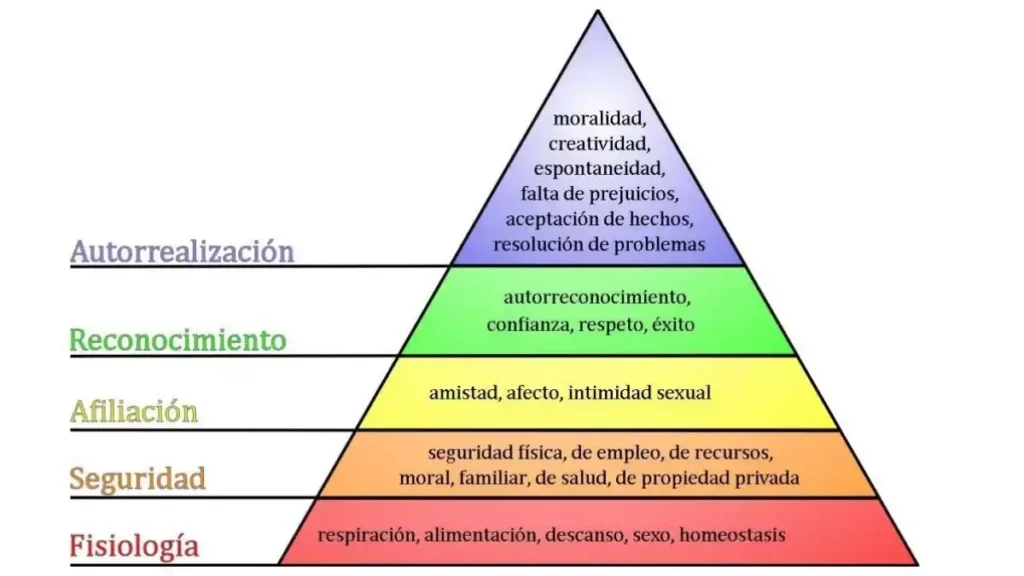
If a student is hungry or feels unsafe (basic needs in his hierarchy), their brain will be blocked from self-actualization or higher learning.
Rogers
Prioritizes facilitation over instruction. The key is an environment of respect, empathy, and unconditional positive regard.
Humanism and Diversity: The Theory of Multiple Intelligences (Gardner)
In line with the person-centered approach, Howard Gardner proposed a model that challenged the idea of a single intelligence measured by a single score (IQ). The theory of Multiple Intelligences suggests that intelligence is a set of capacities, such as linguistic, logical-mathematical, spatial, musical, kinesthetic, intrapersonal, and interpersonal. This perspective is fundamental for curriculum design, as it requires educators to diversify teaching and assessment methods, recognizing each student’s unique talent beyond traditional subjects.
Beyond Psychology: Neuroscience, Technology, and Modern Models
The 21st century has forced theories to expand and merge, incorporating findings from biology and technology.
Neuroeducation: The Brain and Biological Principles of Learning
Neuroeducation is not a theory in itself, but a bridge that validates psychological principles with brain evidence.
Connection between Dopamine, Emotion, and Memory
It has been proven that emotion (positive or negative) is the “glue” of memory. Dopamine, released during interest or reward, fixes learning. Teachers who successfully spark curiosity are, quite literally, reprogramming the brain to learn.
Myths and Realities
Neuroeducation helps dismantle fallacies such as the “learning styles myth” (visual, auditory, kinesthetic).
Connectivism: Learning as a Distributed Network (George Siemens)
In an information-saturated world, George Siemens argued that learning is no longer primarily an internal process but a process of connecting nodes of information.
Learning Theories and Technology
The key skill is not possessing knowledge, but knowing where to find it and how to integrate it. This is critical in the era of Big Data and Artificial Intelligence.
Cognitive Load Theory (John Sweller) and Educational Game Design
This theory is based on the limitations of working memory and is vital for effective instructional design.
Extrinsic vs. Intrinsic Load
Design should minimize extrinsic load (distractions, poorly organized information) to maximize intrinsic load (the mental effort dedicated to the essential concept). This explains why poorly designed user manuals are useless.
Experiential Learning (Kolb) and Flow Theory
David Kolb proposed a learning cycle based on experience, reflection, abstract conceptualization, and active experimentation. The state of “Flow,” studied by Mihaly Csikszentmihalyi, is the goal: the moment an individual is so absorbed in a task that time stops and skill perfectly matches the challenge. Designing activities that promote flow is the culmination of successful instructional design.
From Theory to Practice: Integrating Paradigms in Instructional Design
A high-performing teacher or instructional designer doesn’t choose just one theory; they become a “theoretical eclectic,” selecting the most appropriate tool for each moment and objective.
Assessment and Theories: How to Measure Constructivist Learning?
How we assess is a direct reflection of the theory we follow. A common mistake is to teach constructivistically (teamwork, projects) but assess purely behavioristically (a multiple-choice exam).
- For Behaviorism, assessment is summative and measures observable performance.
- In contrast, Constructivism and Social Learning require richer, formative assessment. This involves rubrics, portfolios, self-assessment, and peer-assessment that measure the process, not just the product. This ensures assessment is consistent with the teaching philosophy. (If you’re interested in solid assessment plans, read our guide on the ADDIE Model).
The Eclectic Approach: How a Top-Tier Educator Uses All Theories
- Use of Behaviorism: For discipline (setting clear rules) and acquiring basic facts (e.g., multiplication tables).
- Use of Cognitivism: For structuring complex information (using flowcharts, summaries).
- Use of Social Constructivism: For developing social skills and critical thinking (debates, collaborative projects).
Educational Models Based on Theory Synthesis
- Problem-Based Learning (PBL): Combines constructivism (active student solving) with social constructivism (done in groups).
- Flipped Classroom: Uses behaviorism/cognitivism for information acquisition outside the classroom and social constructivism for practice and discussion inside the classroom.
Types of Learning: An Operational and Definitive Classification
This classification helps identify how the student interacts with the content:
- Discovery Learning (Jerome Bruner): The student reorganizes content to fit their schemas.
- Observational or Vicarious Learning: Acquisition of behavior through imitation (Bandura).
- Trial and Error Learning: Use of feedback to correct a response until finding the right one (Thorndike).
- Latent Learning: Knowledge acquired without reinforcement that manifests only when there is a reward or need.
- Cooperative/Dialogic Learning: Occurs through interaction and conversation with others (Vygotsky).
- Self-Directed Learning: The student takes the initiative in their process, from diagnosis of needs to assessment.
Frequently Asked Questions
Here are concise answers to the 10 most searched questions:
What are the 7 most important learning theories?
Behaviorism, Cognitivism, Constructivism (Genetic and Social), Social Learning, Humanism, and Connectivism.
What is Skinner’s learning theory?
It is Operant Conditioning, which holds that behavior is learned through the consequences that follow (reinforcements and punishments).
What is Piaget’s learning theory?
Genetic Constructivism. It posits that knowledge is actively built as children interact with their environment across four developmental stages.
What are pedagogical theories?
These are models describing the ideal way to conduct teaching (practice), based on learning theories (the explanation of how the mind learns).
Who proposed the 3 laws of learning?
Edward Thorndike (Law of Effect, Law of Exercise, and Law of Readiness).
What are the 4 types of learning according to Ausubel?
Ausubel described learning as either meaningful or rote. Meaningful learning is classified into three types: Representational, Conceptual, and Propositional.
What is the Zone of Proximal Development (ZPD)?
A Vygotsky concept describing the gap between what a student can do alone and what they can achieve with a guide or peer.
What is the most important learning theory today?
There isn’t just one. The current trend is the Eclectic approach, combining Constructivism and Social Learning for complex skills, integrated with Cognitivist and Behaviorist tools.
How is Cognitive Load Theory applied?
By minimizing distractions (extrinsic load) so the student can focus working memory on the essential concept (intrinsic load).
What is scaffolding in education?
A social-constructivist technique where a teacher provides temporary, structured support for a task just above the student’s current skill level.
Reflecting on the vast landscape of learning theories, it is clear that none is a universal solution. Behaviorism is brilliant for memorization and quick habit modification; Cognitivism is unsurpassed for teaching how to structure complex ideas; and Constructivism, in its various forms, is essential for developing critical thinking and collaboration skills. Choosing the “best” theory comes down to humility and precision: What is your goal, and who is your audience?
The future of teaching lies not in blind adherence to a single guru, but in a teacher’s ability to merge principles. The true expert is the one who, seeing a frustrated or unmotivated student, knows whether to apply a behavioral reinforcement, restructure the cognitive information, or simply provide the social scaffolding the moment requires. We invite every reader to become an eclectic instructional designer, analyzing the goal before selecting the tool. We invite you to transform your practice: download our Theoretical Eclecticism Lesson Plan Template today and start building truly memorable learning experiences in less than five minutes.