
The figure of Simon Bolivar cannot be reduced to the equestrian statues that grace thousands of plazas across the Americas. Bolivar was a storm of ambition, military genius, and, above all, a political thinker whose mind was constantly at war with both anarchy and tyranny. His letters, speeches, and proclamations are not mere historical documents; they are the portrait of a man who carried the weight of a continent on his shoulders, feeling every betrayal, every victory, and, ultimately, every failure in his very soul. His words, steeped in pain and prophetic vision, compose the thoughts of Simon Bolivar an intellectual heritage that continues to define the destiny and the challenges of the nations he liberated.
This analysis does not merely seek to list his famous quotes but to unravel the emotional and geopolitical context in which they were born. Each quote is a lightning bolt illuminating a facet of his complex personality: the educator who believed in the power of the mind, the soldier weary of war, and the statesman who, fearing absolutism, ended up exercising it. In the end, these thoughts of Simon Bolivar are a mirror reflecting the eternal dilemmas of liberty, justice, and human dignity in Latin America.
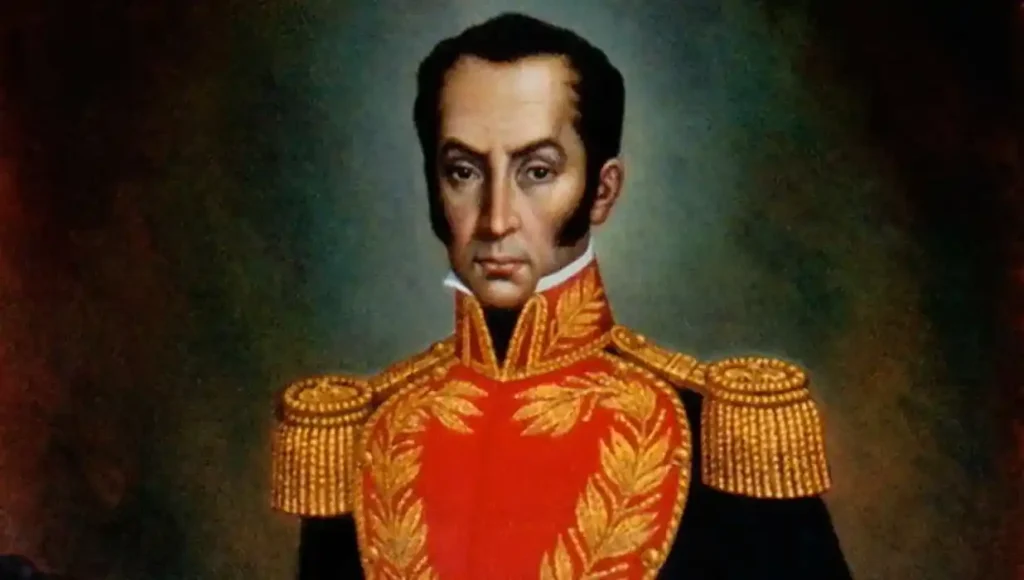
The Foundation of Leadership: What is the Thought of Simon Bolivar?
The thought of Simon Bolivar, known as Bolivarianism, is an ideological compendium forged between the study of the European Enlightenment and the harsh reality of colonial America. It was not a “parlor theory” but a pragmatic doctrine, written with a sword across the map.
The Definition: What Ideas Did Bolivar’s Thought Defend?
“Bolivarian Thought” rests on four non-negotiable pillars: Popular Sovereignty (power emanates from the people), Continental Unity (the need for a Great American Nation to resist external powers), Civic Education (morality and enlightenment as the foundation of the Republic), and Centralization of Power (a strong, life-long or at least prolonged presidency to prevent anarchy). In essence, Bolivar defended a republican system but with strong authoritarian safeguards, convinced that newly emancipated peoples were not ready for pure democracy. To delve into the thoughts of Simon Bolivar is to understand the tension between these poles.
The Cita Central: What Was Bolivar’s Most Important Thought?
If one phrase had to be chosen to encapsulate his vision, it would be the one that defines the ultimate purpose of any State, revealing his profound humanism and social objective:
- “The most perfect system of government is that which produces the greatest sum of happiness possible, the greatest sum of social security, and the greatest sum of political stability.”
This declaration, taken from the Angostura Address (1819), is the cornerstone of his philosophy. For Bolivar, politics was not an end in itself, but a means to guarantee the dignity and well-being of the citizen.
Quick Summary: 10 Short and Essential Thoughts of Simon Bolivar
This section is dedicated to the phrases that, due to their conciseness and emotional impact, have become timeless symbols and are perfect for sharing or memorizing. These short thoughts of Simon Bolivar summarize his ideology.
Top 10: The Most Influential and Shared Quotes of Simon Bolivar
If you are looking for 5 short thoughts of Simon Bolivar or need 10 short thoughts for a presentation, these are the ten essentials that condense his worldview:
- “Morality and enlightenment are our primary needs.”
- “A being without an education is an incomplete being.”
- “I have plowed the sea.”
- “Liberator of Venezuela: a title more glorious and satisfying to me than the scepter of all the empires of the Earth.”
- “Nothing is so dangerous as to permit the same citizen to remain long in power.”
- “Justice is the queen of republican virtues.”
- “The art of winning is learned through defeats.”
- “Glory lies in being great and being useful.”
- “Flee the country where a single person exercises all powers: it is a country of slaves.”
- “Liberty is the essence of man.”
5 Thoughts of Simon Bolivar on Fortune and Perseverance
Bolivar understood that life, especially that of a revolutionary, is a pendulum between euphoria and misfortune. These are short thoughts of Simon Bolivar on resilience:
- “The art of winning is learned through defeats.” (A lesson in resilience forged in every exile).
- “Glory lies in being great and being useful.” (Fame is empty without service to humanity).
- “Let us have a righteous conscience and let time work wonders.” (A call for patience and moral rectitude, even in chaos).
- “Instinct is a loyal advisor.” (A lesson from his military life: trusting intuition in decisive moments).
- “Perseverance is the only virtue that guides us to the end of the endeavor.”
The Social Axis: Morality, Education, and the Fight Against Ignorance
For Bolivar, the true revolution was not won with cannons, but with books. His crusade against ignorance was as fierce as his struggle against the Spanish army.
The Bolivarian Motto: The Motto of Simon Bolivar and its Meaning
The motto of Simon Bolivar, repeated like a mantra in his speeches, is a demand upon the Republic:
- “Morality and enlightenment are our primary needs.”
“Lights” (education, knowledge) were the antidote to superstition and manipulation; “Morality” was the ethical foundation upon which the free citizen could build the Republic without falling into corruption. Without both, liberty would be only an illusion. Hence one of the most widely shared thoughts of Simon Bolivar, an essential quote to understand his pedagogical vision:
- “A being without an education is an incomplete being.”
The Liberator believed that a lack of education condemned republics to be “blind instruments of their own destruction.”
Education: Thoughts of Simon Bolivar on Civic Development
Simon Bolivar’s thoughts on education were absolute. Training was state policy, a weapon more powerful than any army. These are thoughts of Simon Bolivar on education:
- “The teaching of good customs or social habits is as essential as instruction.” (Morality precedes technique; the good citizen must know how to behave before knowing how to read).
- “An ignorant people is a blind instrument of its own destruction.” (The bitterest cry against dominance, pointing out that the slave is doubly so if he does not understand his own misery).
- “The first duties of the government are public health, individual security, enlightenment, and justice.” (Education is a public duty, not a private option, on par with justice and security).
Ethics and Citizenship: Morality Thoughts of Simon Bolivar
Bolivar valued utility over personal glory. His essential values were public utility and personal sacrifice:
- “I despised ranks and distinctions. I aspired to a more honorable fate: to shed my blood for the liberty of my homeland.”
The Liberator did not only seek military glory but constantly reaffirmed that his greatest honor was the title of citizen. Humility in power, rectitude in public life, and the value of being useful to others are the ethical pillars he left us.
The Origin of Ideas: Political Thought in Key Works
The true authority of Bolivar’s thoughts resides in the documents where they were recorded. Citing his fundamental works elevates the academic quality of the analysis.
The Analysis of Anarchy: Key Phrases from the Cartagena Manifesto (1812)
The Cartagena Manifesto (1812) was written from exile after the fall of the First Republic. It is an urgent text, full of self-criticism and desperation, where Bolivar’s thought identifies anarchy as the worst enemy:
- “Our discords have their origin in the two most copious sources of public calamity: ignorance and weakness.”
In this document, the Liberator blamed the weakness of federalist governments for allowing the spirit of internal contention to destroy unity. It is a call for immediate action and the construction of a centralized and effective power.
The Vision Continental: Reflections from the Jamaica Letter (1815)
Written during his exile in Kingston, the Jamaica Letter is Bolivar’s most prophetic and geopolitical work. Here, he describes the future of the new American states with astonishing precision:
- “Americans, under the Spanish system… occupy no other place in society than that of servants fit for labor, and at most, that of simple consumers.”
The Letter is a declaration of faith in the viability of independence and a call for union. In it, Bolivar conceived the idea of a great confederation of Hispanic American nations, recognizing that fragmentation would be their undoing.
The Critique of Power: Political Thoughts of Simon Bolivar on Government
The greatest irony of Bolivar is that, being a liberator, he was forced to create systems of government with autocratic tendencies. His fear of tyranny was genuine, but his fear of anarchy was greater.
The Advertencia sobre el Poder: Short Thought of Simon Bolivar
This is perhaps his most powerful reflection on human vice in public office:
- “Nothing is so dangerous as to permit the same citizen to remain long in power. The people grow accustomed to obeying him, and he to commanding them, from which usurpation and tyranny originate.”
This quote by Simon Bolivar, delivered in the Angostura Address (1819), is the critical conscience of the leader. The Liberator warned that habit, not law, was the greatest risk to democracy, gradually transforming the citizen into a slave and the leader into a tyrant. It is a call for the alternation of power and constant republican vigilance.
The Continental Dream: What Was the Latin American Thought of Simon Bolivar?
His continental thought was based on the concept of Gran Colombia as a necessary counterweight to the powers of the North and Europe.
- “Unity does everything and, for that very reason, we must preserve this precious principle.”
Bolivar dreamed of an America united by history and language, convinced that only cohesion could guarantee sovereignty. His Latin American thought is the ideal of a single nation that, despite internal differences, would maintain a common voice and strength on the world stage.
Comparative Analysis: Bolivar vs. Other Liberators
To understand Bolivar’s uniqueness, it is necessary to contrast his thought with that of other giants of his era, especially those with whom he shared the battlefield.
Bolivar vs. San Martin: Contrasting Phrases and Political Visions
The famous “Guayaquil Interview” (1822) marked the clash of two opposing visions. While Bolivar advocated for centralized republics with a strong executive, Jose de San Martin more skeptical of immediate democracy looked favorably upon a constitutional monarchy as a solution for the newly liberated Peru.
- Bolivar (Centralization): “Flee the country where a single person exercises all powers: it is a country of slaves.” (Despite his centralist leanings, he hated absolutism.)
- San Martin (Selflessness): “Let us be free, the rest matters not.” (San Martin prioritized the cause over power, retiring in an act of profound self-detachment that Bolivar could never fully emulate).
The Thought of Bolivar and the American Revolution
Bolivar admired the institutional solidity of the United States, but he doubted that the federalist model could work in the chaos of Hispanic America, marked by three centuries of servitude.
While leaders like Thomas Jefferson trusted in local autonomy and minimal government intervention, Bolivar advocated for a strong and paternalistic State that had to educate the people before handing them full power. Bolivar saw a risk in liberty without order, while the North Americans saw a threat in strong government.
The 100 Essential Thoughts of Simon Bolivar and Their Meaning
The following is the definitive list of over 100 thoughts of Simon Bolivar and their meaning, classified thematically for a deep understanding of his ideology. If you were looking for 50 thoughts of Simon Bolivar and their meaning, here you will find double, with a rigorous analysis of each.
War and the Soldier: Tactics, Honor, and Sacrifice
This section brings together quotes born in the heat of battle, where military pragmatism merges with idealism:
- “The art of winning is learned through defeats.” (Proclamation, 1813). Failure is the school of the strategist.
- “Liberator of Venezuela: a title more glorious and satisfying to me than the scepter of all the empires of the Earth.” (Speech, 1813). His ambition was limited to the cause of liberty.
- “Cursed be the soldier who turns his weapons against his people.” (Letter, 1817). Betrayal is the capital sin of the military man.
- “Victory without glory is no triumph.” (Informal phrase). Honor must accompany strength.
- “We need to gather all our forces to achieve a blow capable of changing the luck of the country.” (Cartagena Manifesto, 1812). The need for concentration of military power.
- “War will be the path, but peace will be the reward.” (Proclamation, 1813). War is a painful means toward a noble end.
- “A happy soldier acquires no right to command his homeland. He is the defender of its liberty.” (Angostura Address, 1819). Defining the military role in the republic.
- “He who abandons everything to be useful to his country loses nothing, and gains all that he consecrates to it.” (Letter to Roscio, 1814). Personal sacrifice is the only valid currency.
- “To achieve triumph, it has always been indispensable to follow the path of sacrifice.” (Letter to Sucre, 1823). Victory demands a high price.
- “I became a soldier to serve liberty.” (Informal phrase). The purpose of his military career.
- “Instinct is a loyal advisor.” (Letter to Olmedo, 1827). Intuition as part of military tactics.
- “Revolution is an element that cannot be managed. It is more unruly than the wind.” (Letter to O’Higgins, 1818). The chaotic nature of the war of independence.
- “He who is not with liberty can count on the chains of misfortune and universal disapproval.” (Letter to O’Leary, 1828). A call to take a side.
- “Honor is the soldier’s only wealth.” (Proclamation, 1824). Virtue above loot.
- “Adversity is a powerful stimulus for the human spirit.” (Maxims, 1822). Difficulty as the engine of greatness.
- “The sword of the law is short, but its edge is fearsome.” (Speech, 1826). The power of justice, even in war.
- “Discipline and obedience are the supreme law of the army.” (Decree, 1824). The basis of military order.
- “Arms have been the only means of saving the homeland.” (Letter to Santander, 1825). Justification of the armed path.
- “Perseverance is the only virtue that guides us to the end of the endeavor.” (Letter to Sucre, 1823). Persistence in the face of exhaustion.
- “Let us not lose what we gained with the sword; let us maintain it with the law.” (Common phrase). The transition from soldier to statesman.
- “Force is the remedy and liberty is the object.” (Proclamation, 1813). Definition of the war of independence.
- “All of life is a combat.” (Maxims, 1822). An existentialist vision of his mission.
- “The value of the soldier lies in sacrifice, not in the prize.” (Proclamation, 1824). Morality over materialism.
- “Republics are ephemeral; tyranny is more stable.” (Lament, 1829). A pessimism based on his experience.
- “Fear is the worst of all passions.” (Informal phrase). The internal enemy of courage.
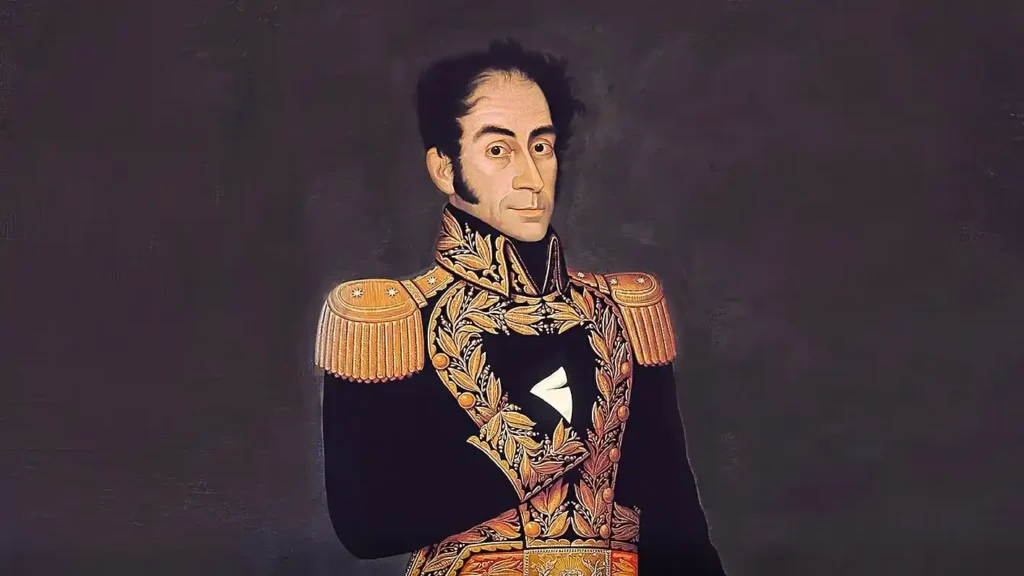
Geopolitics and American Unity: The Continental Dream
These phrases of Simon Bolivar reflect the supreme ideal of Bolivar: the creation of a great American nation. They are quotes imbued with prophetic vision and grandeur.
- “Unity does everything and, for that very reason, we must preserve this precious principle.” (Letter to Paez, 1826). The Bolivarian maxim on cohesion.
- “I desire the liberty of America more than all my glory.” (Letter to Santander, 1820). His priority for the continent.
- “Americans, under the Spanish system… occupy no other place in society than that of servants fit for labor.” (Jamaica Letter, 1815). Denouncing the colonial condition.
- “The destiny of America has been irrevocably fixed; the bond that united it to Spain is severed.” (Jamaica Letter, 1815). The declaration of continental independence.
- “How beautiful it would be if the Isthmus of Panama were to us what the Isthmus of Corinth was to the Greeks!” (Jamaica Letter, 1815). Vision of the canal and interoceanic trade.
- “You must all work for the inestimable good of union.” (Proclamation, 1814). A desperate call for cohesion.
- “Independence is the only good we have left.” (Letter, 1814). Supreme valuation of sovereignty.
- “I have faith in America, that she will rise.” (Letter to Flores, 1830). His persistent optimism despite failures.
- “Yoked to the triple yoke of ignorance, tyranny, and vice, the American people have been unable to acquire knowledge, power, or virtue.” (Jamaica Letter, 1815). Diagnosis of colonial ills.
- “America is ungovernable for us.” (Lament, 1829). Recognition of the difficulty of his project.
- “Peace will be welcome, if it comes at the hands of justice.” (Letter to O’Leary, 1828). Peace without justice is unacceptable.
- “The New World must be a nation of republics, not of tyrannies.” (Proclamation, 1820). Ideal for the system of government.
- “Our America will be free, though it be late.” (Letter to O’Leary, 1828). The certainty of emancipation.
- “America is the seat of liberty.” (Speech, 1826). The continent as a beacon of sovereignty.
- “The time of empires has passed. Now is the time of republics.” (Informal phrase). Faith in the new order.
- “We are a small human species; we possess a world apart.” (Jamaica Letter, 1815). The uniqueness of American identity.
- “The sea of liberty is vaster and deeper than that of slavery.” (Proclamation, 1816). The immensity of the liberty gained.
- “The union of the peoples of America is my only ambition.” (Letter to O’Leary, 1829). His final purpose.
- “The greatness of America must be its justice, its liberty, and its morality.” (Speech, 1826). The pillars of the nation.
- “Hope lies in the future of a united America.” (Letter to Santander, 1825). The future as a driver.
- “Disunion is the primary cause of our ruin.” (Cartagena Manifesto, 1812). The root of failure.
- “Let it be known that the union of Gran Colombia was my only will.” (Final Proclamation, 1830). His posthumous wish.
- “Independence is the dawn of America.” (Proclamation, 1813). The start of a new era.
- “The sun of liberty will never set in America.” (Common phrase). An unquenchable optimism.
- “Peace can only be the work of justice and the law.” (Letter, 1825). Requirements for tranquility.
The Citizen and Public Ethics: Morality and Education
Here, the focus shifts to Bolivar as an educator and moralist the foundation of the Republic in the individual, addressing in depth the educational thoughts of Simon Bolivar.
- “Morality and enlightenment are our primary needs.” (Angostura Address, 1819). His fundamental motto and the essence of morality thoughts of Simon Bolivar.
- “A being without an education is an incomplete being.” (Letter to Simon Rodriguez, 1823). The necessity of continuous formation.
- “Justice is the queen of republican virtues, and through her, equality and liberty are sustained.” (Speech, 1819). The primacy of justice.
- “The teaching of good customs or social habits is as essential as instruction.” (Letter to Simon Rodriguez, 1825). Ethics are a priority.
- “An ignorant people is a blind instrument of its own destruction.” (Angostura Address, 1819). The danger of lack of knowledge.
- “The first duties of the government are public health, individual security, enlightenment, and justice.” (Speech, 1826). Education as a state obligation.
- “The destruction of public morality soon causes the dissolution of the State.” (Letter to O’Leary, 1828). Ethics as social cement.
- “The man of honor has no other homeland than that in which the rights of citizens are protected.” (Letter to Flores, 1830). The homeland is a principle of justice.
- “Public offices belong to the State; they are not the patrimony of individuals.” (Letter, 1825). The fight against corruption.
- “Conscience must give us peace. Good faith is not enough; it must be shown.” (Letter to Flores, 1830). The need for transparency.
- “The greatest victory is that which is achieved over oneself.” (Maxims, 1822). The importance of self-discipline.
- “Chess is a useful and honest game, indispensable in the education of youth.” (Letter to Sucre, 1824). Valuation of strategic thinking.
- “To do good and to learn the truth are the only advantages Providence has granted us on earth.” (Maxims, 1822). His moral creed.
- “Man is the master of his destiny.” (Proclamation, 1813). A call to individual responsibility.
- “Legislators certainly need a school of morality.” (Angostura Address, 1819). The law must be grounded in ethics.
- “I prefer the title of citizen to that of Liberator, because the latter emanates from war and the former from the law.” (Letter, 1814). The primacy of civility.
- “The people are the true sovereign, but they need to be guided.” (Speech, 1819). The balance between democracy and order.
- “Virtue is the base of the Republic; courage, the arm; justice, the law.” (Common phrase). Essential components of the nation.
- “The law must be equal for all, without distinction of wealth or birth.” (Decree, 1825). The principle of legal equality.
- “Man is the most imperfect and miserable being of creation.” (Lament, 1829). A bleak view of the human condition.
- “One must be useful before being great.” (Informal phrase). Social function as a value.
- “Marriage is the basis of society; it must be protected by the law.” (Decree, 1826). Valuation of the family institution.
- “My only thought has been liberty.” (Letter to O’Leary, 1829). His ultimate purpose in life.
- “Respect for order is the guarantee of liberty.” (Proclamation, 1825). Order as a condition for freedom.
- “Truth is the only religion that man should profess.” (Maxims, 1822). Honesty as a supreme value.
Power and Tyranny: Warnings from the Statesman
This section covers the political thoughts of Simon Bolivar and prophetic warnings regarding corruption, ingratitude, and the fragility of power in Latin America.
- “Nothing is so dangerous as to permit the same citizen to remain long in power.” (Angostura Address, 1819). His most cited warning against caudillismo.
- “Flee the country where a single person exercises all powers: it is a country of slaves.” (Angostura Address, 1819). Condemnation of totalitarianism.
- “If one man were necessary to sustain the State, that State should not exist.” (Letter to O’Leary, 1829). The nation must be institutional, not personalistic.
- “The continuity of authority in the same individual has frequently been the end of democratic governments.” (Angostura Address, 1819). His fear of usurpation by habit.
- “The most active tyranny is that which is exercised through the law.” (Letter to O’Leary, 1828). Legal oppression is the hardest to combat.
- “Ingratitude is the most enormous crime.” (Letter to Montilla, 1825). His pain in the face of betrayal.
- “It is harder to lead a people out of servitude than to subjugate a free one.” (Letter to Montilla, 1819). The difficulty of mental emancipation.
- “We behold with affliction that almost all of the Earth has been, and still is, the victim of its governments.” (Angostura Address, 1819). A bleak view of global politics.
- “States are slaves by the nature of their constitution or by the abuse of it.” (Letter to O’Leary, 1828). The double source of oppression.
- “A people is slave when the government, by its essence or its vices, leaves a mark and usurps the rights of the citizen.” (Letter to O’Leary, 1828). Definition of oppression.
- “Ambition and intrigue corrupt the simplicity of the people.” (Letter to Santander, 1825). The negative influence of leaders.
- “Power is blind, and those who exercise it, blinder still.” (Informal phrase). Critique of arrogance.
- “Slander is the bolt that sets the soul on fire.” (Lament, 1828). Insult as a political weapon.
- “Flattery is the poison that kills virtue.” (Maxims, 1822). Warning against excessive praise of leaders.
- “Despotism is nothing more than the consequence of anarchy.” (Cartagena Manifesto, 1812). Tyranny as a reaction to chaos.
- “True federalism leads us into anarchy.” (Letter to O’Leary, 1828). His rejection of the federal model for Hispanic America.
- “Liberty is a luxury that only strong peoples can afford.” (Lament, 1829). Liberty demands responsibility and order.
- “The man of integrity must be indifferent to the shocks of bad luck and envy.” (Informal phrase). A stoic ethic against attack.
- “Glory is a torch that illuminates the world, but burns the one who carries it.” (Lament, 1830). The personal cost of leadership.
- “I have plowed the sea.” (Final Proclamation, 1830). The lament over the failure of unity.
- “The law of nature is necessity; the law of justice, equity.” (Speech, 1826). Distinction between the inevitable and the moral.
- “What is written on paper is not fulfilled by the will of men.” (Lament, 1829). The failure of constitutions against human passions.
- “I fear peace more than war, if it is not accompanied by union.” (Letter, 1828). The risk of fragmentation in times of peace.
- “In the shadow of mystery, only crime works.” (Letter to O’Leary, 1828). The need for public transparency.
- “The violence of force carries within itself the principles of its own destruction.” (Letter to Flores, 1830). The instability of power based on coercion.
The Tragic Legacy and Modern Relevance
Bolivar’s life ended in profound bitterness. The man who had liberated a continent saw how his Gran Colombia disintegrated and his dreams of unity shattered.
The Despedida Final: What Did Simon Bolivar Say Before Dying?
The last words of Simon Bolivar recorded from his pen, captured in his 1830 proclamation, are a harrowing lament summarizing his pain over ingratitud and anarchy:
- “I have plowed the sea!”
This phrase is the emotional climax of his life. It represents the frustration of a titan who fought against an untamable element (the idiosyncrasies of the new nations) and felt that all his effort, his blood, and his sacrifice left no lasting mark. It is the epitaph of an idealist defeated by reality.
The Thought of the Liberator in the 21st Century: Why Does It Still Matter?
The thoughts of the Liberator are a guide and a warning for contemporary America. Their relevance lies in the fact that the problems he diagnosed are still present:
- The Threat of Caudillismo: His warning about the permanence of a single man in power is the handbook for understanding the populism and dictatorships of our era.
- The Battle Against Ignorance: Education remains the region’s pending debt, and his maxim of “Morality and enlightenment” resonates as the only real solution to inequality.
- The Ghost of Disunion: The Bolivarian dream of a strong and cohesive America remains a political and economic ideal that few have managed to materialize.
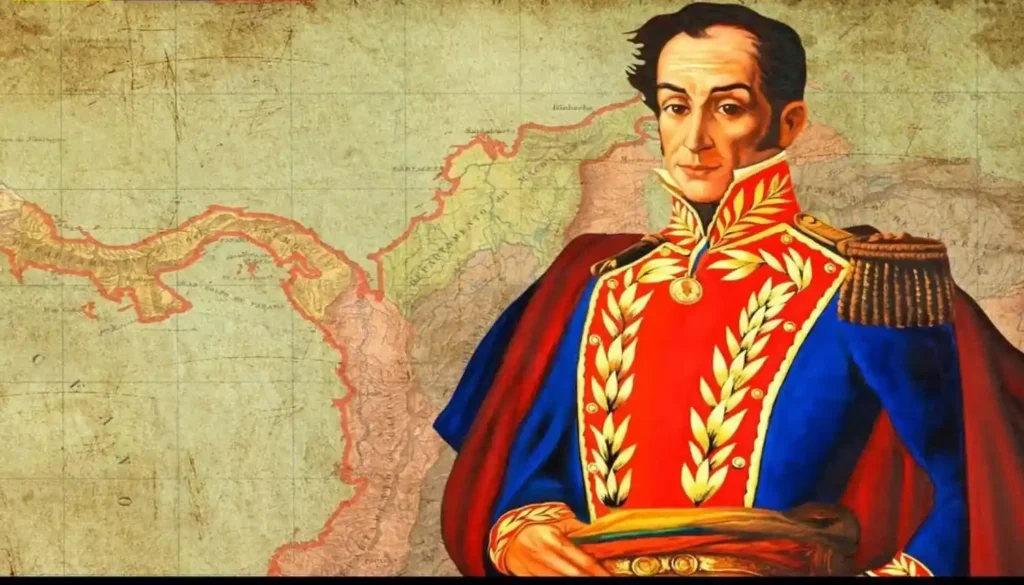
Frequently Asked Questions about quotes from Simón Bolívar
Below are answers to the most searched long-tail questions about the Liberator, focusing on the thoughts of the liberator Simon Bolivar and key phrases:
What is Simon Bolivar’s most important phrase?
It is the one that defines the objective of government: “The most perfect system of government is that which produces the greatest sum of happiness possible, the greatest sum of social security, and the greatest sum of political stability.”
What are 10 short thoughts of Simon Bolivar?
They are the ten listed in H3 2.1, including: “Morality and enlightenment are our primary needs,” “I have plowed the sea,” and “Glory lies in being great and being useful.”
What was Simon Bolivar’s motto?
His educational and civic motto was “Morality and enlightenment.” Also very famous is his celebrated phrase on education: “A being without an education is an incomplete being.”
What values does Simon Bolivar teach us?
Primarily public utility, sacrifice for the homeland, honesty, and the primacy of justice over revenge.
What was Simon Bolivar’s Latin American thought?
It centered on continental unity and the creation of a confederation of republics to ensure their sovereignty and mutual prosperity.
What did Simon Bolivar say before dying?
His final lament was: “I have plowed the sea!”, referring to the failure of his Gran Colombia project.
What are 3 thoughts of Simon Bolivar on education?
“An ignorant people is a blind instrument of its own destruction.” / “The teaching of good customs… is as essential as instruction.” / “Legislators certainly need a school of morality.”
What was Simon Bolivar’s most outstanding achievement?
Leading the independence of five nations: Venezuela, Colombia, Ecuador, Peru, and Bolivia.
How many thoughts did Bolivar have?
It is impossible to quantify, but his correspondence which includes thousands of letters and documents is an inexhaustible source of his thought. Here we analyzed over 100 thoughts of Simon Bolivar and their meaning.
Who was his primary mentor?
Simon Rodriguez, who instilled in him the values of the Enlightenment, liberty, and a love for education.
Simon Bolivar left a legacy that transcends his military successes. His greatest contribution was the articulation of a body of ideas that still struggles to make its way across the continent. The liberation of five nations is his most notable feat, but the thoughts he left regarding morality, education, and the danger of power are the richest heritage for any citizen of the Americas.